
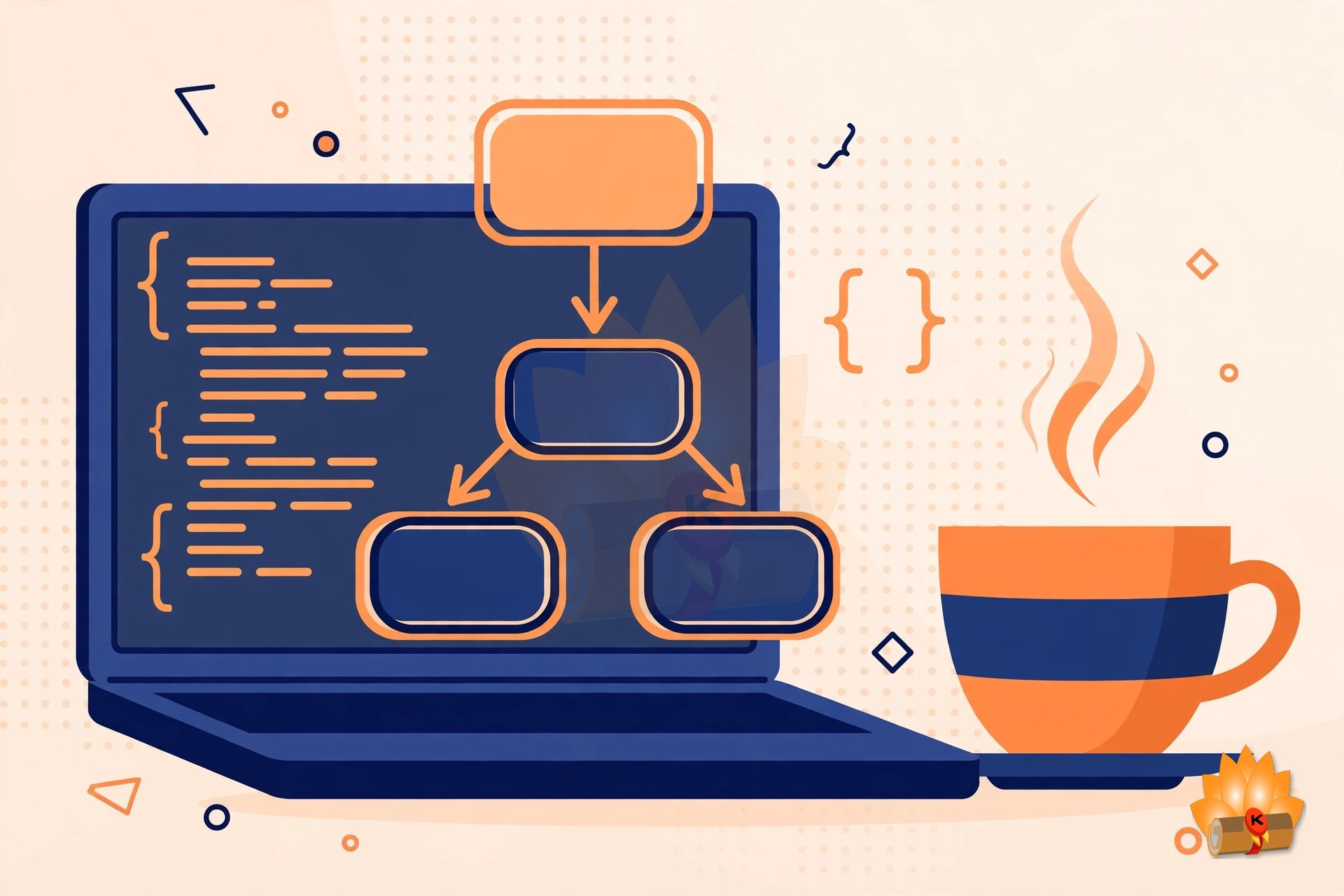
Object Oriented Programming Using Java — What This Subject Is About
To offer the modern programming language Java so students can implement object-orientation practically and program in object-oriented technology using Java. By the end you should be able to: install a Java IDE, compiler and Java virtual machines and understand basic Java concepts; implement basic Java programs; explain and implement object-oriented programming; explain and implement abstract classes, interfaces and polymorphism; and understand exceptions and develop multithreaded programs.
Subject 5.1 (Practicum) • Total 100 Marks • 3 Credits • L 1 – P 4 • 5th Semester — Computer Science & Engineering • Session 2026–27

What You Will Study
Unit 1 — Introduction and Features (2 Periods, 15%)
Fundamentals of object-oriented programming — procedure-oriented vs object-oriented programming (OOP); OOP concepts — classes, object, object reference, abstraction, encapsulation, inheritance, polymorphism; introduction of Eclipse (IDE) for developing programs in Java.
Why OOP exists, how it differs from the older procedure-based style, and the core vocabulary — class, object, inheritance, polymorphism — plus your first tool, the Eclipse IDE.
Unit 2 — Language Constructs (3 Periods, 15%)
Variables; data types — integer, floating point, character, boolean; operators; iteration and jump statements; conditional expressions; input using Scanner class and output statements; loops; switch-case; arrays; introduction to methods.
The Java basics: storing values, making decisions, repeating work, reading input, and grouping code into methods.
Unit 3 — Classes and Objects (3 Periods, 30%)
Class fundamentals; constructors; declaring objects (object and object reference); creating and accessing variables and methods; static and non-static variables/methods; defining packages; creating and accessing a package; importing packages; understanding CLASSPATH; auto-boxing; String and StringBuffer. Inheritance: definition; protected/private/public data; constructor chaining; order of invocation; types of inheritance (single, multilevel, hierarchical, hybrid); access control (private vs public vs protected vs default).
The heart of the subject — and the heaviest-weighted unit. How to build classes, how objects are created, how code is organised into packages, and how one class inherits from another.
Unit 4 — Abstract Class, Interface and Polymorphism (3 Periods, 20%)
Defining an interface; key points of abstract class and interface; difference between an abstract class and an interface; implementation of multiple inheritance through interface; method and constructor overloading; method overriding; up-casting and down-casting.
How Java handles the tricky parts: partial blueprints (abstract classes), pure contracts (interfaces), and the same method name behaving differently — polymorphism.
Unit 5 — Exception Handling and Multithreading (3 Periods, 20%)
Definition of exception handling; implementation of keywords try, catch, finally, throw and throws; built-in exceptions; difference between multi-threading and multi-tasking; thread life cycle; creating threads; thread priorities.
How programs survive errors gracefully instead of crashing, and how one program can do several things at the same time with threads.
Practical Work
- WAP to create a simple class to find out the area and perimeter of a rectangle and a box, using super and this keywords.
- WAP to design a class Account using inheritance and static members, showing all functions of a bank (withdrawal, deposit).
- WAP to design a class using abstract methods and classes.
- WAP to design a String class that performs string methods (equal, reverse the string, change case).
- Consider a class of Cars under which Santro Xing, Alto and Wagon R are individual objects, each with model, year of manufacture, colour, top speed, etc. as properties and Create(), Sold() and display() as methods of the Car class.
- In a software company, Software Engineers, Sr. Software Engineers, Module Leads, Technical Leads, Project Leads, Project Managers, Program Managers and Directors are all employees but differ in work, perks, roles and responsibilities. Create an Employee base class providing common behaviours/properties that all employees must have.
The complete list of 12 practicals is in the Complete Syllabus section below — and in the PDF.
Complete Syllabus
The full examination scheme, the complete practicals list and the reference books from the official syllabus. The unit-wise topics are in the "What You Will Study" section above.
Examination Scheme
| Code | Paper | Type | L – P | Credits | Internal | External | Total |
|---|---|---|---|---|---|---|---|
| 5.1 | Object Oriented Programming Using Java | Practicum | 1 – 4 | 3 | 60 | Practical 40 (3 hrs) | 100 |
| Java Total | 3 | 60 | 40 | 100 | |||
Units at a Glance
| Unit | Topic | Periods | Marks Share |
|---|---|---|---|
| 1 | Introduction and Features | 2 | 15% |
| 2 | Language Constructs | 3 | 15% |
| 3 | Classes and Objects | 3 | 30% |
| 4 | Abstract Class, Interface and Polymorphism | 3 | 20% |
| 5 | Exception Handling and Multithreading | 3 | 20% |
Complete Practicals List
This is the complete list of practicals from the official syllabus.
- WAP to create a simple class to find out the area and perimeter of a rectangle and a box, using super and this keywords.
- WAP to design a class Account using inheritance and static members, showing all functions of a bank (withdrawal, deposit).
- WAP to design a class using abstract methods and classes.
- WAP to design a String class that performs string methods (equal, reverse the string, change case).
- Consider a class of Cars under which Santro Xing, Alto and Wagon R are individual objects, each with model, year of manufacture, colour, top speed, etc. as properties and Create(), Sold() and display() as methods of the Car class.
- In a software company, Software Engineers, Sr. Software Engineers, Module Leads, Technical Leads, Project Leads, Project Managers, Program Managers and Directors are all employees but differ in work, perks, roles and responsibilities. Create an Employee base class providing common behaviours/properties that all employees must have.
- Using multiple inheritance, create classes: Shape, Circle, Square, Cube, Sphere and Cylinder, with specified class variables, constructors and base classes, with Area and/or Volume methods.
- WAP to handle exceptions using try and multiple catch blocks.
- WAP that implements nested try statements.
- WAP to create a package that accesses members of an external class as well as of the same package.
- WAP that shows the partial implementation of an interface.
- WAP to create a thread that implements the Runnable interface.
Reference Books
As listed in the syllabus:
- Programming with Java: A Primer — E. Balagurusamy
- Head First Java — Kathy Sierra & Bert Bates, O'Reilly
- OCA Java SE Programmer I Certification Guide — Mala Gupta, Wiley
- Programmer's Guide to Java SE 8 — Khalid A. Mughal, Pearson
Frequently Asked Questions
How many marks is Java worth in the 5th semester?
100 marks, 3 credits. It is a practicum subject (1 lecture + 4 practical hours a week): internal 60, practical 40.
Which unit carries the most weightage in Java?
Classes and Objects, 30% (3 periods). Abstract Class, Interface and Polymorphism and Exception Handling and Multithreading are 20% each; Introduction and Language Constructs are 15% each.
What practical programs will I write in Java?
12 programs: a rectangle/box area class, a bank Account class, an abstract class, String methods, a Car class, an Employee hierarchy, a Shape hierarchy, exceptions, a package, an interface and a Runnable thread. The complete list is in the Complete Syllabus section above.
Which IDE is used for Java in this subject?
Eclipse, which is introduced in Unit 1 along with the Java compiler and Java virtual machines.
Do I need to know C before learning Java?
C programming is taught in the 3rd semester and Java in the 5th semester, so the C foundation comes first.
How can I download the OOP Using Java syllabus PDF?
The PDF is free to download — use the download link in the Download section below. It is prepared by KAMALDNP from the official BTEUP syllabus.
Related Syllabus Posts
- BTEUP CSE 5th Semester Syllabus 2026-27
- BTEUP CSE Complete Syllabus 2026-27 — 1st, 3rd & 5th Semester (All Subjects)
- Computer Programming Using C — BTEUP CSE 3rd Semester Syllabus 2026-27
- Fundamentals of Internet of Things — BTEUP CSE 5th Semester Syllabus 2026-27
- Mobile App Development — BTEUP CSE 5th Semester Syllabus 2026-27
Notes, Question Bank & Practice Sets — Object Oriented Programming Using Java
The syllabus PDF on this page stays 100% FREE — no login, no payment, always. The study material below is a paid KAMALDNP product: buy once for just ₹10 and you get both the Hindi and English PDFs. Every PDF is generated with your name and enrolment number and is password-locked, so it remains personal to you. After purchase, the PDF is also sent to your email, and it is always available for download on the My Downloads page.
Short Notes (English + Hindi) — ₹10
Unit-wise short revision notes prepared from the official BTEUP 2026-27 syllabus of this subject.
Buy / Download — My DownloadsQuestion Bank (English + Hindi) — ₹10
One original practice (model) paper with a model-answer outline. This is a KAMALDNP practice paper — NOT a BTEUP board paper, and no question in it is promised to appear in your exam.
Buy / Download — My DownloadsPractice Sets (English + Hindi) — ₹10
10 Practice Sets — practice/guess sets only (no verified previous-year board papers available for this subject yet)
Buy / Download — My DownloadsAlready purchased? You will find the Download button on the same My Downloads page — you will not be charged again.
Download the Object Oriented Programming Using Java Syllabus PDF
Download the complete Object Oriented Programming Using Java syllabus PDF below — prepared by KAMALDNP, with the full topic list, practicals and reference books.
Download the Object Oriented Programming Using Java Syllabus PDF
Source: BTEUP 3rd Year curriculum (folder2627), approved in C.D.C. meeting held on 16.07.2026. Topic lists follow the official syllabus; short explanations are the author's own plain-English summaries, not syllabus text. Please confirm with your own polytechnic for any local changes.
Comments (0)
Share your question or experience about this syllabus. Your comment will appear after review.
No comments yet — be the first to share your thoughts!