
Design of RCC Structures — What This Subject Is About
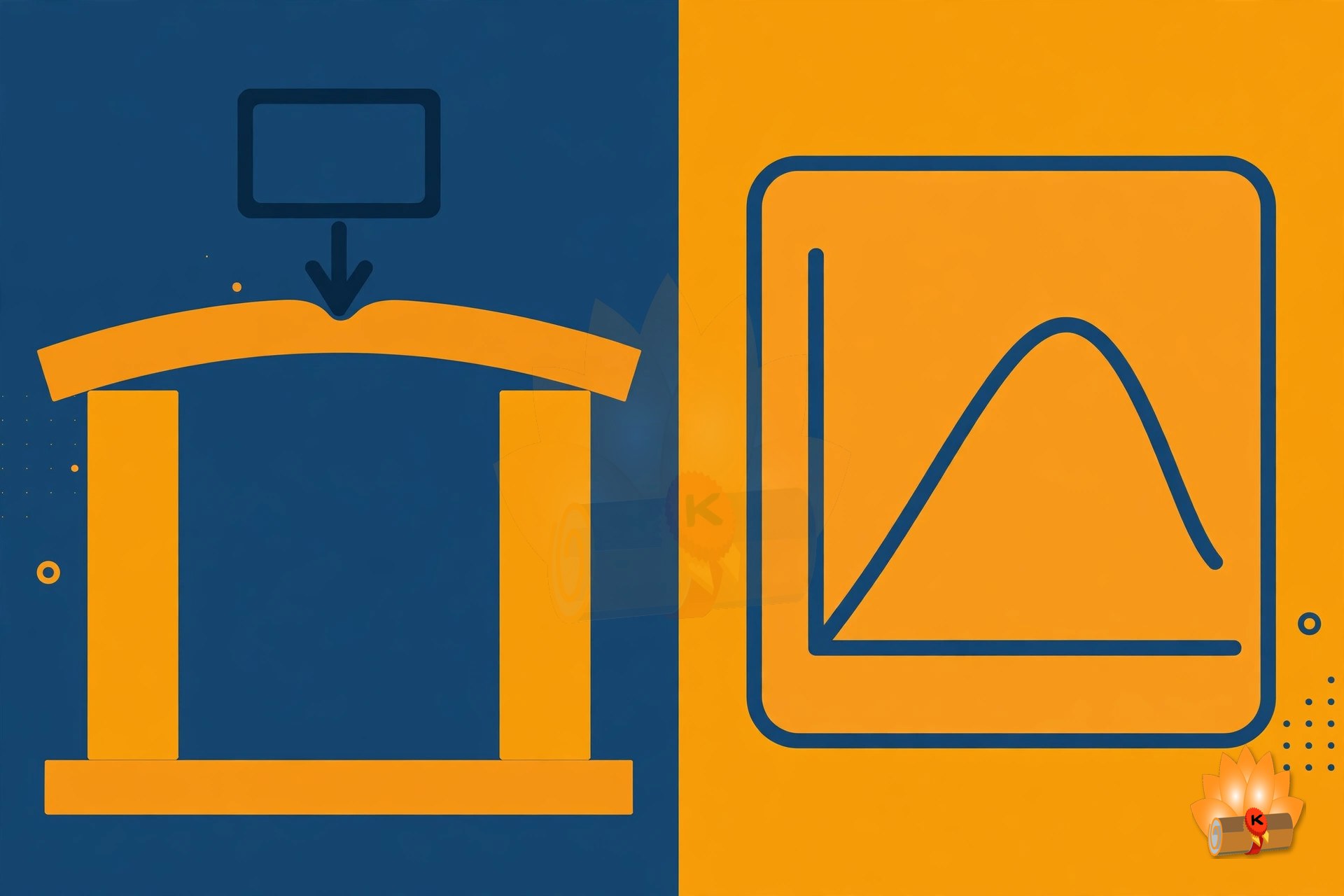
Concrete is strong in compression and weak in tension — so it is reinforced with steel, and the combination is the most used structural material in the world. Design of Reinforced Cement Concrete Structures teaches you to design it, by the limit state method of IS:456. It is a theory subject (4.6) of 100 marks and 3 credits, and it is the subject the next subject — RCC Structures Drawing — depends on.
You will design singly and doubly reinforced beams, one-way and two-way slabs, and axially loaded square, rectangular and circular short columns — all by the limit state method, with sketches showing the reinforcement details. The last unit adds pre-stressed concrete: pre-tensioning and post-tensioning, their advantages, and the losses in pre-stress.
Subject 4.6 (Theory) • Total 100 Marks • 3 Credits • L 2 – T 1 • 4th Semester — Civil Engineering • Session 2026–27

What You Will Study
Unit 1 — Introduction (8 Periods, 20%)
Concept of Reinforced Cement Concrete (RCC); reinforcement materials: suitability of steel as reinforcing material, properties of mild steel, HYSD steel and TMT bars; loading on structures as per IS: 875; introduction to following methods of RCC design: working stress method — definition and basic assumptions; limit state method — definition and basic assumptions; working stress method: shear and development length; problems of singly, doubly and T beam analysis by working stress method; shear as per IS: 456-2000 by working stress method — (i) shear strength of concrete without shear reinforcement, (ii) maximum shear stress, (iii) shear reinforcement, (iv) development length.
The basics — what RCC is, why steel is the right reinforcement, the loads on structures as per IS:875, and the working stress method.
Unit 2 — Concept of Limit State Method (8 Periods, 20%)
Concept of limit state method: definitions and assumptions made in limit state of collapse (flexure); partial factor of safety for materials; partial factor of safety for loads; design loads; stress block, parameters.
The limit state method — its definitions and assumptions, partial factors of safety, design loads and the stress block.
Unit 3 — Design of Reinforced Concrete Beams by Limit State Method (9 Periods, 20%)
Singly reinforced beam: theory and design of singly reinforced beam by limit state method; doubly reinforced beams: theory and design of simply supported doubly reinforced rectangular beam by limit state method; behaviour of T beam, inverted T beam, isolated T beam and 'L' beams; simple problems related to moment capacity.
Beams — singly reinforced, doubly reinforced, and T, inverted T and L beams, designed by the limit state method.
Unit 4 — Design of One Way and Two Way Slab (9 Periods, 20%)
One way slab: theory and design of simply supported one way slab including sketches showing reinforcement details (plan and section) by limit state method; two way slab: theory and design of two-way simply supported slab with corners free to lift, no provisions for torsional reinforcement by limit state method including sketches showing reinforcement details (plan and two sections).
Slabs — one-way and two-way simply supported slabs, with sketches of the reinforcement in plan and section.
Unit 5 — Design of Axially Loaded RCC Column and Pre-stressed Concrete (9 Periods, 20%)
Axially loaded column: definition and classification of columns; effective length of column; specifications for longitudinal and lateral reinforcement; design of axially loaded square, rectangular and circular short columns by limit state method including sketching of reinforcement (sectional elevation and plan). Pre-stressed concrete: concept of pre-stressed concrete; methods of pre-stressing: pre-tensioning and post-tensioning; advantages and disadvantages of pre-stressing; losses in pre-stress.
Columns and pre-stressed concrete — axially loaded short columns, and pre-tensioning, post-tensioning and pre-stress losses.
Complete Syllabus
The full examination scheme, the complete practicals list and the reference books from the official syllabus. The unit-wise topics are in the “What You Will Study” section above.
Examination Scheme
| Code | Paper | Type | L – P | Credits | Internal | External | Total |
|---|---|---|---|---|---|---|---|
| 4.6 | Design of Reinforced Cement Concrete Structures | Theory | 2 – 0 | 3 | Theory 40 | Theory 60 (3 hrs) | 100 |
| Design of RCC Structures Total | 3 | 40 | 60 | 100 | |||
Units at a Glance
| Unit | Topic | Periods | Marks Share |
|---|---|---|---|
| 1 | Introduction | 8 | 20% |
| 2 | Concept of Limit State Method | 8 | 20% |
| 3 | Design of Reinforced Concrete Beams by Limit State Method | 9 | 20% |
| 4 | Design of One Way and Two Way Slab | 9 | 20% |
| 5 | Design of Axially Loaded RCC Column and Pre-stressed Concrete | 9 | 20% |
Reference Books
As listed in the syllabus:
- Shah, V. L., and Karve, S.R., Limit State Theory and Design of Reinforced Concrete Structures, Structures Publications, Pune, 2014.
- Sinha N.C., and Roy S.K., Fundamentals of Reinforced Concrete, S. Chand & Co., New Delhi.
- D.V. Gupta, Vikram Singh, Reinforced Concrete Technology, Asian Publishers, Muzaffarnagar, ISBN: 978-93-5502-123-6.
- Krishna Raju, and N. Pranesh, R.N., Reinforced Concrete Design Principles and Practice, New Age International, Mumbai.
- Pillai, S.U., and Menon, Devdas, Reinforced Concrete Design, McGraw Hill Publications, New Delhi.
- Varghese, P. C., Limit State Design of Reinforced Concrete, Prentice Hall India Learning Private Limited, Delhi.
Frequently Asked Questions
How many marks is Design of RCC Structures worth in the 4th semester?
100 marks in total and 3 credits. Design of Reinforced Cement Concrete Structures: 100 marks (internal Theory 40, external Theory 60 (3 hrs)).
Which units carry the most weightage in Design of RCC Structures?
Every unit carries the same weightage — 20% each — so none of them can be skipped.
Which books should I refer to for Design of RCC Structures?
The syllabus lists 6 books, including Shah, V. L., and Karve, S.R., Limit State Theory and Design of Reinforced Concrete Stru… and Sinha N.C., and Roy S.K., Fundamentals of Reinforced Concrete, S. Chand & Co., New Delhi., among others. The full list is in the Complete Syllabus section above.
Is Design of RCC Structures a theory subject or a practical subject?
Design of Reinforced Cement Concrete Structures is theory (L–P 2 – 0).
Why do the objectives of this subject mention steel members?
The Course Objectives and Outcomes in the source PDF mention the “design of steel tension and compression member” and “design of steel beams”, although the subject content is RCC design. That is reproduced as printed — most likely a copy-paste error in the official PDF. The units themselves are all about RCC design.
How can I download the Design of RCC Structures syllabus PDF?
The PDF is free to download — use the download link in the Download section below. It is prepared by KAMALDNP Academy from the official BTEUP syllabus.
Related Syllabus Posts
- BTEUP Civil 4th Semester Syllabus 2026-27
- BTEUP Civil Engineering Complete Syllabus 2026-27 — All Years, All Semesters
- Hydraulics — BTEUP Civil 4th Semester Syllabus 2026-27
- Advance Surveying — BTEUP Civil 4th Semester Syllabus 2026-27
- Theory of Structure — BTEUP Civil 4th Semester Syllabus 2026-27
- RCC Structures Drawing — BTEUP Civil 4th Semester Syllabus 2026-27
Download the Design of RCC Structures Syllabus PDF
Download the complete Design of RCC Structures syllabus PDF below — prepared by KAMALDNP Academy, with the full topic list, practicals and reference books.
Download the Design of RCC Structures Syllabus PDF
Source: BTEUP 2nd Year curriculum (IIMT mirror of the official curriculum), approved in C.D.C. meeting held on 16.07.2026. Topic lists follow the official syllabus; short explanations are the author's own plain-English summaries, not syllabus text. Please confirm with your own polytechnic for any local changes.


Comments (0)
Share your question or experience about this syllabus. Your comment will appear after review.
No comments yet — be the first to share your thoughts!