Green Building and Energy Conservation — What This Subject Is About
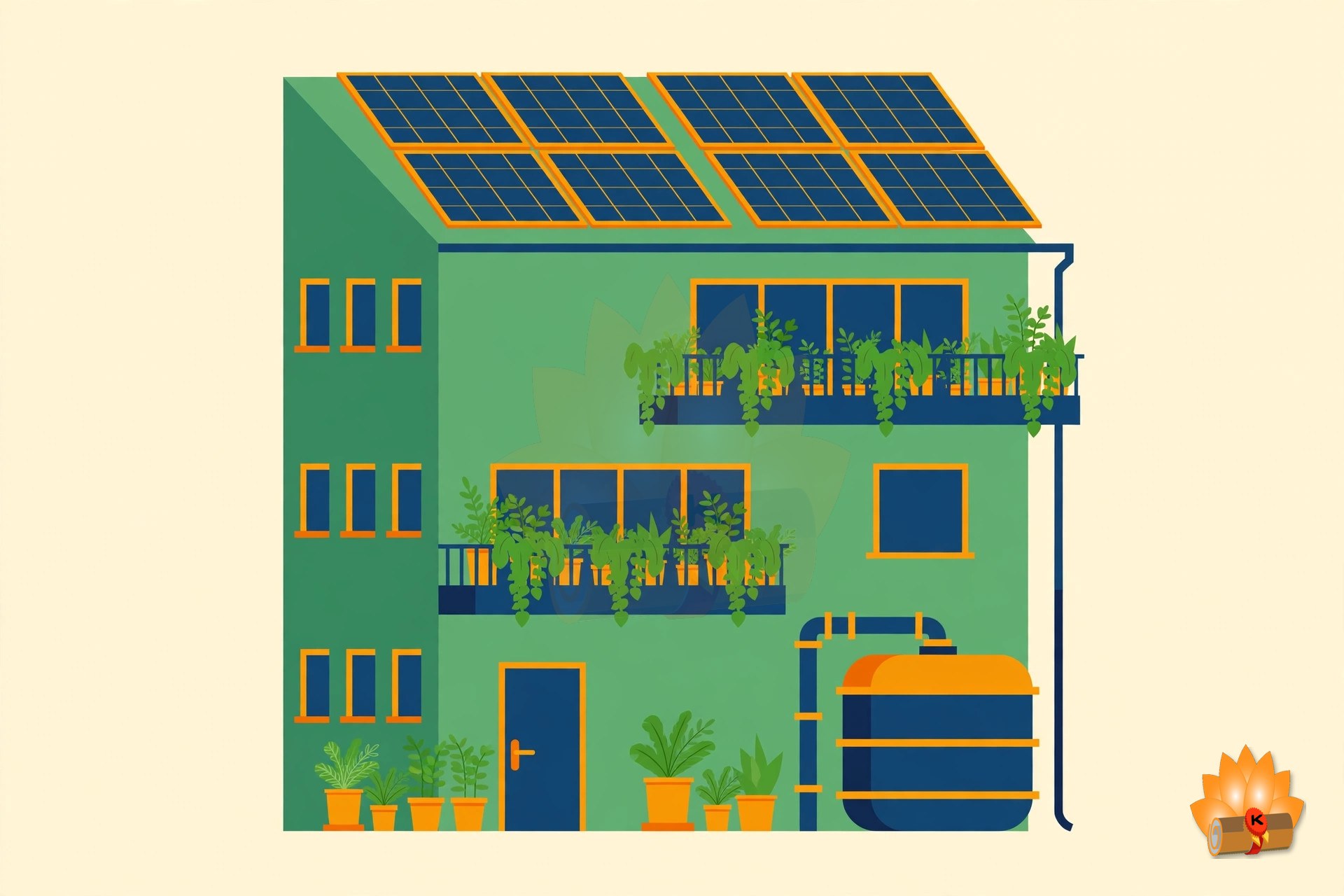
Buildings use a huge share of the world's energy and water — so the way we design them matters more every year. Green Building and Energy Conservation is Program Elective-1, Option A: you take this or Repair and Maintenance of Building, not both. It teaches you what makes a building “green”, how its environmental impact is assessed, and how green buildings are rated in India.
The subject moves from design (site selection, orientation, passive heating and cooling, green materials like bamboo and rice husk ash concrete) to measurement (energy audit and Environmental Impact Assessment) to ratings — LEED, IGBC and GRIHA — and the government bodies behind energy conservation: NPC, MNRE and BEE.
Subject 5.5 (Program Elective-1, Option A) • Total 100 Marks • 2 Credits • L 2 • Choose this OR Repair and Maintenance of Building • 5th Semester — Civil Engineering • Session 2026–27
What You Will Study
Unit 1 — Introduction to Green Building and Design Features (5 Periods, 10%)
Definition of green building, benefits of green building, components/features of green building, site selection, energy efficiency, water efficiency, material efficiency, indoor air quality; site selection strategies, landscaping, building form, orientation, building envelope and fenestration, material and construction techniques, roofs, walls, fenestration and shaded finishes, advanced passive heating and cooling techniques, waste reduction during construction.
What a green building is, why it matters, and the design features that make a building green — site, orientation, envelope, materials and waste reduction.
Unit 2 — Energy Audit and Environmental Impact Assessment (EIA) (6 Periods, 25%)
Energy audit: meaning, necessity, procedures, types, energy management programs. Environmental Impact Assessment (EIA): introduction, EIA regulations, steps in environmental impact assessment process, benefits of EIA, limitations of EIA, environmental clearance for the civil engineering projects.
How energy use is audited, and how the environmental impact of a project is assessed (EIA) before it is cleared.
Unit 3 — Energy and Energy Conservation (6 Periods, 25%)
Renewable energy resources: solar energy, wind energy, ocean energy, hydro energy, bio-mass energy, geo thermal energy. Non-renewable energy resources: coal, petroleum, natural gas, nuclear energy, chemical sources of energy, fuel cells, hydrogen, biofuels. Energy conservation: introduction, specific objectives, present scenario, need of energy conservation, LEED India Rating System and energy efficiency.
Where energy comes from — renewable sources like solar, wind and biomass, and non-renewable ones like coal and petroleum — and why conservation is now urgent.
Unit 4 — Green Building (6 Periods, 25%)
Introduction: definition of green building, benefits of green building. Principles: principles and planning of green building. Features: salient features of green building, environmental design (ED) strategies for building construction. Heating Ventilation Air Conditioning (HVAC) unit in green building. Process: improvement in environmental quality in civil structure. Materials: green building materials and products — bamboo, rice husk ash concrete, plastic bricks, bagasse particle board, insulated concrete forms; reuse of waste material — plastic, rubber, newspaper wood, nontoxic paint, green roofing.
The principles and features of green buildings — passive heating and cooling, HVAC, and green materials like bamboo, rice husk ash concrete and plastic bricks.
Unit 5 — Rating System (5 Periods, 15%)
Introduction to (LEED) criteria; Indian Green Building Council (IGBC) green rating; Green Rating for Integrated Habitat Assessment (GRIHA) criteria; functions of government organisation working for Energy Conservation and Audit (ECA): National Productivity Council (NPC), Ministry of New and Renewable Energy (MNRE), Bureau of Energy Efficiency (BEE).
How buildings are rated green — LEED, IGBC and GRIHA — and the government bodies that work on energy conservation: NPC, MNRE and BEE.
Complete Syllabus
The full examination scheme, the complete practicals list and the reference books from the official syllabus. The unit-wise topics are in the “What You Will Study” section above.
Examination Scheme
| Code | Paper | Type | L – P | Credits | Internal | External | Total |
|---|---|---|---|---|---|---|---|
| 5.5 | Program Elective-1: Green Building and Energy Conservation | Theory | 2 – 0 | 2 | Theory 40 | Theory 60 (3 hrs) | 100 |
| Green Building and Energy Conservation Total | 2 | 40 | 60 | 100 | |||
Units at a Glance
| Unit | Topic | Periods | Marks Share |
|---|---|---|---|
| 1 | Introduction to Green Building and Design Features | 5 | 10% |
| 2 | Energy Audit and Environmental Impact Assessment (EIA) | 6 | 25% |
| 3 | Energy and Energy Conservation | 6 | 25% |
| 4 | Green Building | 6 | 25% |
| 5 | Rating System | 5 | 15% |
Reference Books
As listed in the syllabus:
- Kibert, C.J., Sustainable construction: Green Building design and Delivery, John Wiley, Hoboken, New Jersey.
- Chauhan, D S, Sreevasthava, S K., Non-conventional Energy Resources, New Age International Publishers, New Delhi.
- O.P. Gupta, Energy Technology, Khanna Publishing House, New Delhi.
- Jagadeesh, K S, Reddy Venkatta Rama & Nanjunda Rao, K S., Alternative Building Materials and Technologies, New Age International Publishers, Delhi.
- Sam Kubba., Handbook of Green Building Design and Construction, Butterworth-Heinemann.
- Means R S, Green Building - Project Planning and Cost Estimating, John Wiley & Sons.
- Sharma K V, Venkataseshaiah P., Energy Management and Conservation, IK International.
Frequently Asked Questions
How many marks is Green Building and Energy Conservation worth in the 5th semester?
100 marks in total and 2 credits. Program Elective-1: Green Building and Energy Conservation: 100 marks (internal Theory 40, external Theory 60 (3 hrs)).
Which units carry the most weightage in Green Building and Energy Conservation?
Energy Audit and Environmental Impact Assessment (EIA) (25%, 6 periods); Energy and Energy Conservation (25%, 6 periods); Green Building (25%, 6 periods) — the highest weightage in the subject. The complete unit-wise weightage table is in the Complete Syllabus section above.
Which books should I refer to for Green Building and Energy Conservation?
The syllabus lists 7 books, including Kibert, C.J., Sustainable construction: Green Building design and Delivery, John Wiley,… and Chauhan, D S, Sreevasthava, S K., Non-conventional Energy Resources, New Age Internatio…, among others. The full list is in the Complete Syllabus section above.
Is Green Building and Energy Conservation a theory subject or a practical subject?
Program Elective-1: Green Building and Energy Conservation is theory (L–P 2 – 0).
Do I have to study both Green Building and Repair and Maintenance of Building?
No. Green Building and Energy Conservation is Program Elective-1, Option A, and Repair and Maintenance of Building is Option B. You choose one of the two. Both are 100 marks and 2 credits.
How can I download the Green Building and Energy Conservation syllabus PDF?
The PDF is free to download — use the download link in the Download section below. It is prepared by KAMALDNP Academy from the official BTEUP syllabus.
Related Syllabus Posts
- BTEUP Civil 5th Semester Syllabus 2026-27
- BTEUP Civil Complete Syllabus 2026-27 — 5th & 6th Semester (All Subjects)
- Transportation Engineering — BTEUP Civil 5th Semester Syllabus 2026-27
- Estimating Costing and Valuation — BTEUP Civil 5th Semester Syllabus 2026-27
- Geotechnical Engineering — BTEUP Civil 5th Semester Syllabus 2026-27
- Design of Steel Structure and Drawing — BTEUP Civil 5th Semester Syllabus 2026-27
Download the Green Building and Energy Conservation Syllabus PDF
Download the complete Green Building and Energy Conservation syllabus PDF below — prepared by KAMALDNP Academy, with the full topic list, practicals and reference books.
Download the Green Building and Energy Conservation Syllabus PDF
Source: BTEUP 3rd Year curriculum (folder2627), approved in C.D.C. meeting held on 16.07.2026. Topic lists follow the official syllabus; short explanations are the author's own plain-English summaries, not syllabus text. Please confirm with your own polytechnic for any local changes.


Comments (0)
Share your question or experience about this syllabus. Your comment will appear after review.
No comments yet — be the first to share your thoughts!