
Green Building and Energy Conservation — यह विषय किस बारे में है
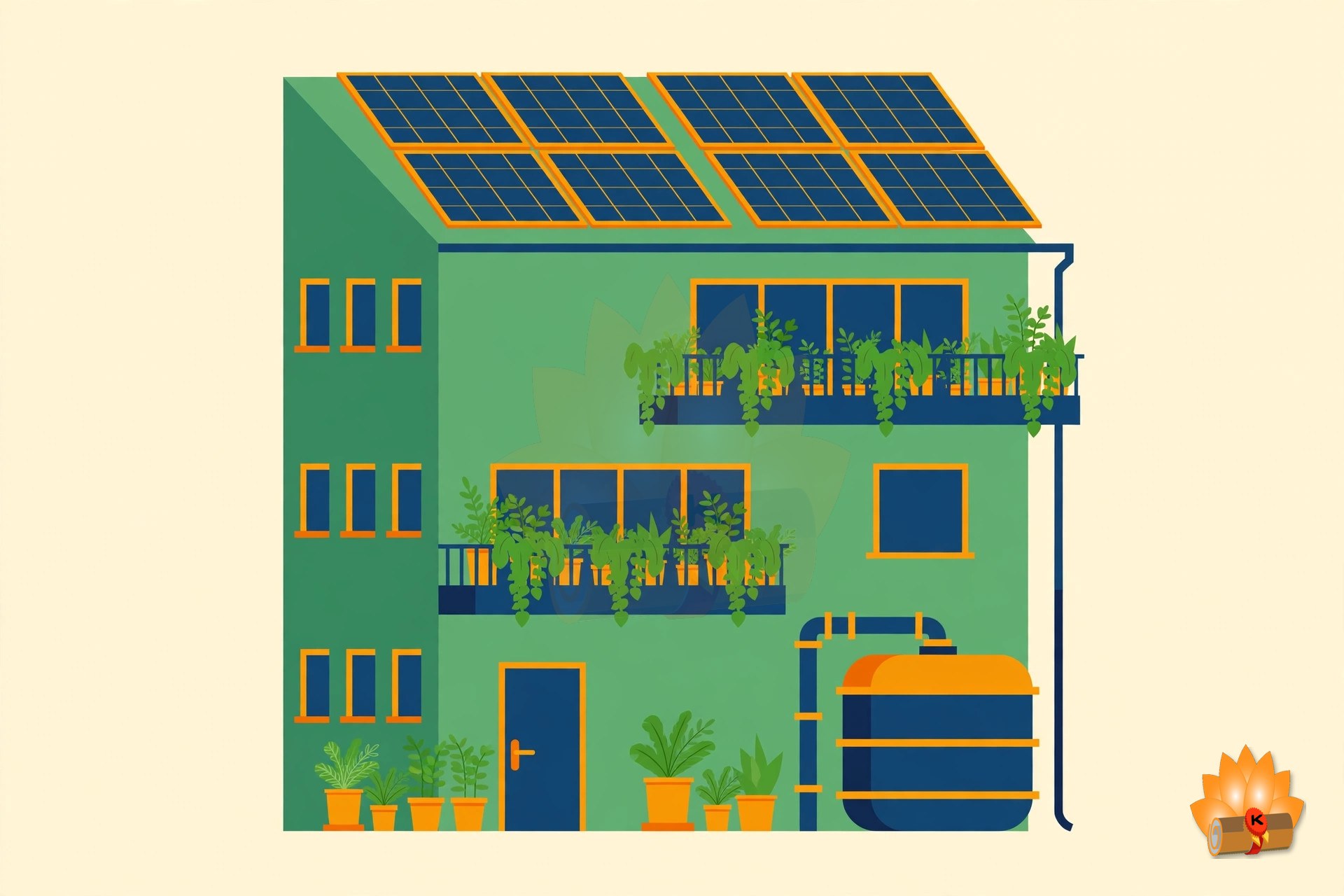
Buildings दुनिया की ऊर्जा और पानी का बहुत बड़ा हिस्सा इस्तेमाल करती हैं — इसलिए हम उन्हें कैसे डिज़ाइन करते हैं, यह हर साल और ज़्यादा मायने रखता है। Green Building and Energy Conservation Program Elective-1, Option A है: आप यह लेंगे या Repair and Maintenance of Building, दोनों नहीं। यह सिखाता है कि किसी building को “green” क्या बनाता है, उसके पर्यावरणीय प्रभाव का आकलन कैसे होता है, और भारत में green buildings की rating कैसे होती है।
विषय डिज़ाइन से शुरू होता है (site selection, orientation, passive heating और cooling, bamboo और rice husk ash concrete जैसी green materials), फिर मापन की ओर बढ़ता है (energy audit और Environmental Impact Assessment), और अंत में ratings पर आता है — LEED, IGBC और GRIHA — और energy conservation के पीछे काम करने वाली सरकारी संस्थाएँ: NPC, MNRE और BEE।
विषय 5.5 (Program Elective-1, Option A) • कुल 100 अंक • 2 क्रेडिट • L 2 • Choose this OR Repair and Maintenance of Building • पाँचवाँ सेमेस्टर — Civil Engineering • सत्र 2026–27
आप क्या पढ़ेंगे
Unit 1 — Introduction to Green Building and Design Features (5 Periods, 10%)
Definition of green building, benefits of green building, components/features of green building, site selection, energy efficiency, water efficiency, material efficiency, indoor air quality; site selection strategies, landscaping, building form, orientation, building envelope and fenestration, material and construction techniques, roofs, walls, fenestration and shaded finishes, advanced passive heating and cooling techniques, waste reduction during construction.
Green building क्या होती है, वह क्यों मायने रखती है, और वे design features जो किसी building को green बनाते हैं — site, orientation, envelope, materials और waste reduction।
Unit 2 — Energy Audit and Environmental Impact Assessment (EIA) (6 Periods, 25%)
Energy audit: meaning, necessity, procedures, types, energy management programs. Environmental Impact Assessment (EIA): introduction, EIA regulations, steps in environmental impact assessment process, benefits of EIA, limitations of EIA, environmental clearance for the civil engineering projects.
Energy use का audit कैसे होता है, और किसी project के पर्यावरणीय प्रभाव का आकलन (EIA) उसे मंज़ूरी मिलने से पहले कैसे किया जाता है।
Unit 3 — Energy and Energy Conservation (6 Periods, 25%)
Renewable energy resources: solar energy, wind energy, ocean energy, hydro energy, bio-mass energy, geo thermal energy. Non-renewable energy resources: coal, petroleum, natural gas, nuclear energy, chemical sources of energy, fuel cells, hydrogen, biofuels. Energy conservation: introduction, specific objectives, present scenario, need of energy conservation, LEED India Rating System and energy efficiency.
ऊर्जा कहाँ से आती है — solar, wind और biomass जैसे renewable स्रोत, और coal और petroleum जैसे non-renewable स्रोत — और conservation अब इतना ज़रूरी क्यों है।
Unit 4 — Green Building (6 Periods, 25%)
Introduction: definition of green building, benefits of green building. Principles: principles and planning of green building. Features: salient features of green building, environmental design (ED) strategies for building construction. Heating Ventilation Air Conditioning (HVAC) unit in green building. Process: improvement in environmental quality in civil structure. Materials: green building materials and products — bamboo, rice husk ash concrete, plastic bricks, bagasse particle board, insulated concrete forms; reuse of waste material — plastic, rubber, newspaper wood, nontoxic paint, green roofing.
Green buildings के सिद्धांत और features — passive heating और cooling, HVAC, और bamboo, rice husk ash concrete और plastic bricks जैसी green materials।
Unit 5 — Rating System (5 Periods, 15%)
Introduction to (LEED) criteria; Indian Green Building Council (IGBC) green rating; Green Rating for Integrated Habitat Assessment (GRIHA) criteria; functions of government organisation working for Energy Conservation and Audit (ECA): National Productivity Council (NPC), Ministry of New and Renewable Energy (MNRE), Bureau of Energy Efficiency (BEE).
Buildings की green rating कैसे होती है — LEED, IGBC और GRIHA — और energy conservation पर काम करने वाली सरकारी संस्थाएँ: NPC, MNRE और BEE।
पूरा सिलेबस
आधिकारिक सिलेबस से पूरी परीक्षा योजना, practicals की पूरी सूची और संदर्भ पुस्तकें। यूनिट के अनुसार topics ऊपर “आप क्या पढ़ेंगे” वाले हिस्से में दिए गए हैं।
परीक्षा योजना
| कोड | पेपर | प्रकार | L – P | क्रेडिट | आंतरिक | बाह्य | कुल |
|---|---|---|---|---|---|---|---|
| 5.5 | Program Elective-1: Green Building and Energy Conservation | Theory | 2 – 0 | 2 | Theory 40 | Theory 60 (3 hrs) | 100 |
| Green Building and Energy Conservation Total | 2 | 40 | 60 | 100 | |||
एक नज़र में यूनिट्स
| यूनिट | विषय | पीरियड | अंकों का हिस्सा |
|---|---|---|---|
| 1 | Introduction to Green Building and Design Features | 5 | 10% |
| 2 | Energy Audit and Environmental Impact Assessment (EIA) | 6 | 25% |
| 3 | Energy and Energy Conservation | 6 | 25% |
| 4 | Green Building | 6 | 25% |
| 5 | Rating System | 5 | 15% |
संदर्भ पुस्तकें
सिलेबस में दिए अनुसार:
- Kibert, C.J., Sustainable construction: Green Building design and Delivery, John Wiley, Hoboken, New Jersey.
- Chauhan, D S, Sreevasthava, S K., Non-conventional Energy Resources, New Age International Publishers, New Delhi.
- O.P. Gupta, Energy Technology, Khanna Publishing House, New Delhi.
- Jagadeesh, K S, Reddy Venkatta Rama & Nanjunda Rao, K S., Alternative Building Materials and Technologies, New Age International Publishers, Delhi.
- Sam Kubba., Handbook of Green Building Design and Construction, Butterworth-Heinemann.
- Means R S, Green Building - Project Planning and Cost Estimating, John Wiley & Sons.
- Sharma K V, Venkataseshaiah P., Energy Management and Conservation, IK International.
अक्सर पूछे जाने वाले प्रश्न
Green Building and Energy Conservation पाँचवें सेमेस्टर में कितने अंकों का है?
कुल 100 अंक और 2 क्रेडिट। Program Elective-1: Green Building and Energy Conservation: 100 अंक।
Green Building and Energy Conservation में किन यूनिट्स का weightage सबसे ज़्यादा है?
Energy Audit and Environmental Impact Assessment (EIA) (25%, 6 periods); Energy and Energy Conservation (25%, 6 periods); Green Building (25%, 6 periods) — तीनों बराबर सबसे ज़्यादा।
Green Building and Energy Conservation के लिए किन किताबों को देखें?
सिलेबस में 7 किताबें दी गई हैं, जिनमें Kibert, C.J., Sustainable construction: Green Building design and Delivery, John Wiley, Hoboken, New Jersey. और Chauhan, D S, Sreevasthava, S K., Non-conventional Energy Resources, New Age International Publishers, New Delhi. सहित अन्य किताबें शामिल हैं। पूरी सूची ऊपर “पूरा सिलेबस” वाले हिस्से में है।
Green Building and Energy Conservation theory विषय है या practical विषय?
Program Elective-1: Green Building and Energy Conservation theory है (L–P 2 – 0)।
क्या मुझे Green Building और Repair and Maintenance of Building दोनों पढ़ने होंगे?
नहीं। Green Building and Energy Conservation Program Elective-1, Option A है, और Repair and Maintenance of Building Option B है — दोनों में से एक चुनना है।
Green Building and Energy Conservation सिलेबस PDF कैसे डाउनलोड करें?
PDF मुफ़्त डाउनलोड के लिए है — नीचे Download वाले हिस्से में दिए गए download link का इस्तेमाल करें। यह KAMALDNP द्वारा तैयार किया गया है।
संबंधित सिलेबस पोस्ट
- BTEUP Civil पाँचवाँ सेमेस्टर सिलेबस 2026-27
- BTEUP Civil पूरा सिलेबस 2026-27 — पाँचवाँ और छठा सेमेस्टर (सभी विषय)
- Transportation Engineering — BTEUP Civil पाँचवाँ सेमेस्टर सिलेबस 2026-27
- Estimating Costing and Valuation — BTEUP Civil पाँचवाँ सेमेस्टर सिलेबस 2026-27
- Geotechnical Engineering — BTEUP Civil पाँचवाँ सेमेस्टर सिलेबस 2026-27
- Design of Steel Structure and Drawing — BTEUP Civil पाँचवाँ सेमेस्टर सिलेबस 2026-27
Green Building and Energy Conservation सिलेबस PDF डाउनलोड करें
पूरा Green Building and Energy Conservation सिलेबस PDF नीचे डाउनलोड करें — KAMALDNP द्वारा तैयार।
स्रोत: BTEUP तृतीय वर्ष पाठ्यक्रम (folder2627), C.D.C. की 16.07.2026 को हुई बैठक में स्वीकृत। Topic सूचियाँ आधिकारिक सिलेबस के अनुसार हैं; छोटे सारांश लेखक के अपने सरल शब्दों में लिखे गए हैं, सिलेबस का मूल पाठ नहीं हैं। कृपया अपने पॉलिटेक्निक से किसी भी स्थानीय बदलाव की पुष्टि कर लें।


Comments (0)
Share your question or experience about this syllabus. Your comment will appear after review.
No comments yet — be the first to share your thoughts!