
Microwave and Radar — यह विषय किस बारे में है
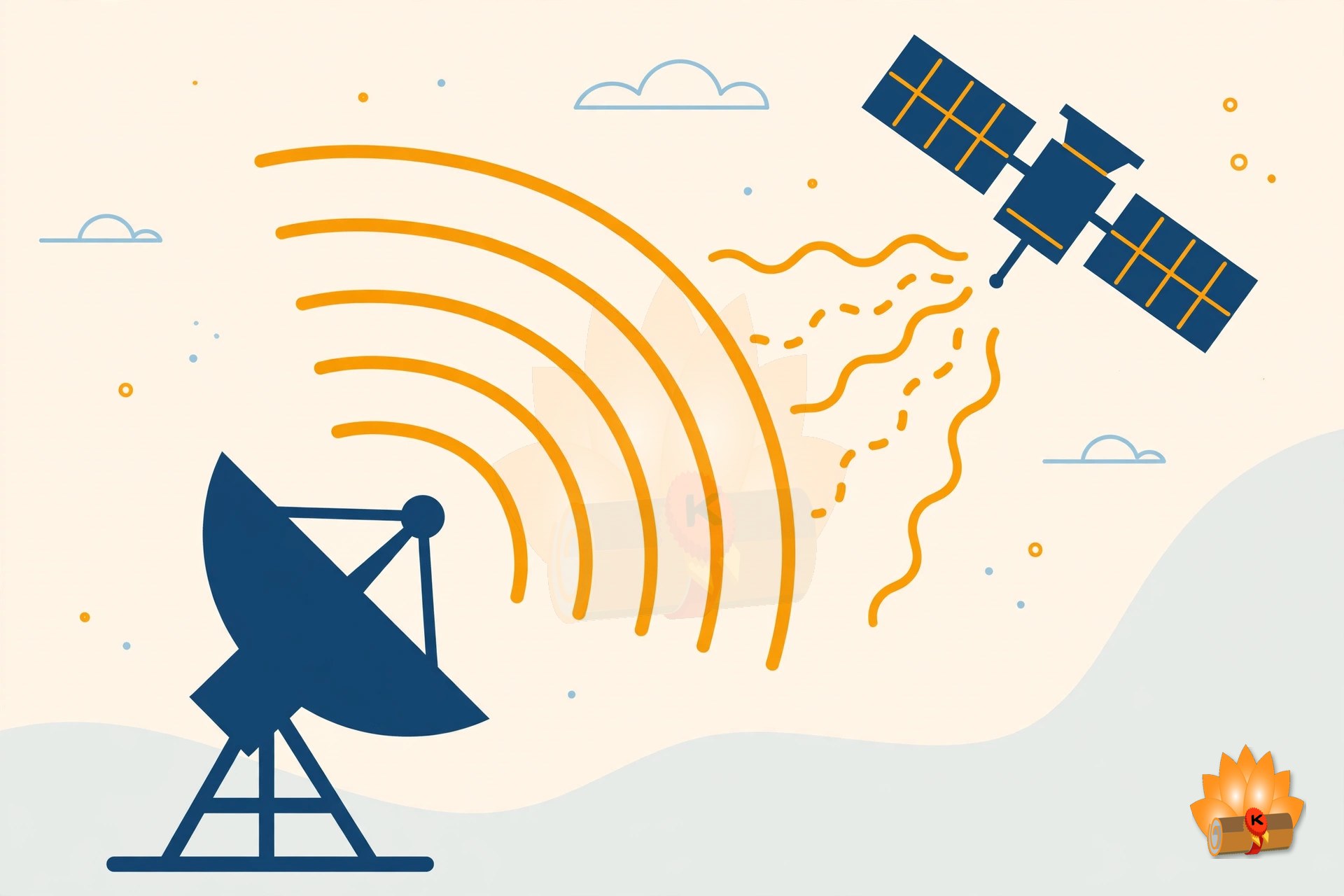
Microwave and Radar में microwave frequencies पर communication और radar — जो defence, satellite और weather में उपयोग होते हैं।
To enhance the technical skills of diploma engineers in the operation, maintenance and troubleshooting of microwave and RADAR-based telecommunication systems — microwave communication being the backbone of terrestrial communication and fundamental to mobile communication systems.
Subject 5.2.2 — Program Elective-1, Option 2 (Theory) • Total 100 Marks • 3 Credits • L 3 – P 0 • Choose this OR Control System & PLC OR Digital Communication Systems • पाँचवाँ सेमेस्टर — Electronics Engineering • सत्र 2026–27
आप क्या पढ़ेंगे
यूनिट 1 — Fundamentals of Microwave Communication (4 पीरियड, 10%)
History, Microwave frequency spectrum, band designations and applications of microwave in various fields, Simple block diagram of microwave transmitter, receiver and microwave link repeater. Types of propagation- Ground wave, Sky Wave and Space Wave. Introduction to Transmission Lines, their types and applications.
Microwaves: their frequency bands and uses, how signals propagate (ground, sky and space waves), and the basic transmitter-receiver link.
यूनिट 2 — Introduction to Microwave Devices (14 पीरियड, 33%)
Microwave Passive Devices: Directional Coupler, Power Divider, Attenuator, Resonator. Microwave vacuum tube devices: Construction working, specifications and applications of two cavity Klystron amplifier, Reflex Klystron, Magnetron and Helix TWT. Compare the performance of Klystron, Magnetron and TWT. Microwave semiconductor devices: Construction, working, specifications, characteristics and applications of Gunn diode. IMPATT diode. Tunnel diode, PIN diode
The devices that generate and handle microwaves: passive components, vacuum tubes (klystron, magnetron, travelling-wave tube) and semiconductor devices (Gunn, IMPATT, tunnel and PIN diodes).
यूनिट 3 — Wave Guides (8 पीरियड, 19%)
Types of Waveguides, and Propagation of waves in rectangular and circular waveguides and their applications. Advantages and disadvantages of rectangular and circular wave guides. Modes of wave guide; Propagation constant of a rectangular wave guide, cut off wavelength, guide wavelength and their relationship with free space wavelength (no mathematical derivation). Impossibility of TEM mode in a wave guide. Comparison of wave guide with Transmission line and comparison of rectangular waveguide with circular waveguide.
Waveguides — hollow pipes that carry microwaves: their modes, cut-off wavelength, and why the TEM mode cannot exist inside one.
यूनिट 4 — Radar Systems (8 पीरियड, 19%)
Introduction to RADAR Fundamentals: Basic block diagram of RADAR system, RADAR performance factors: RADAR range equation, factors influencing range, effect of noise. Types of RADAR Systems: Basic pulse RADAR system: Block diagram and description, applications. Doppler Effect, CW Doppler RADAR: Block diagram, operation and application. FM CW RADAR: Block diagram. Operation and application. MTI: Block diagram, operation concept of blind speed, application. Automatic target detection RADAR, SONAR system: Working principle and applications.
Radar: how it detects targets and measures range, pulse radar, Doppler radar, FM-CW radar, moving-target indication, and sonar.
यूनिट 5 — Satellite Communication (8 पीरियड, 19%)
Introduction. Advantages & disadvantages of satellite system. Frequency bands, uplink & downlink frequencies. Kepler's First Law. Kepler's Second Law. Kepler 's Third Law. Definitions of Terms for Earth-Orbiting Satellites. Orbital Elements. Apogee and Perigee Heights. Orbit Perturbations, Effects of a non-spherical earth. Atmospheric drag. Satellite angles, satellite repeaters. Station keeping. attitude control. satellite positioning. LEO, MEO, GEO satellite overview. Satellite communication system. Transponders. Crosslink, Satellite frequency allocation and frequency reuse. Block diagram of satellite earth station.
Satellites: Kepler's laws, orbits (LEO, MEO, GEO), transponders, frequency reuse, and the earth station that talks to them.
पूरा सिलेबस
आधिकारिक सिलेबस से पूरी परीक्षा योजना, practicals की पूरी सूची और संदर्भ पुस्तकें। यूनिट के अनुसार topics ऊपर "आप क्या पढ़ेंगे" वाले हिस्से में दिए गए हैं।
परीक्षा योजना
| Code | Paper | Type | L – P | Credits | Internal | External | Total |
|---|---|---|---|---|---|---|---|
| 5.2.2 | Program Elective-1: Microwave and Radar | Theory | 3 – 0 | 3 | Theory 40 | Theory 60 (3 hrs) | 100 |
| Microwave and Radar Total | 3 | 40 | 60 | 100 | |||
एक नज़र में यूनिट्स
| यूनिट | विषय | पीरियड | अंकों का हिस्सा |
|---|---|---|---|
| 1 | Fundamentals of Microwave Communication | 4 | 10% |
| 2 | Introduction to Microwave Devices | 14 | 33% |
| 3 | Wave Guides | 8 | 19% |
| 4 | Radar Systems | 8 | 19% |
| 5 | Satellite Communication | 8 | 19% |
संदर्भ पुस्तकें
सिलेबस में दिए अनुसार:
- RADAR systems and radio aids to navigation Sen, A. K. and Bhattacharya, A. B. Mercury Learning information. PVT.LTD. New Delhi, 2017.
- Microwave Engineering, Das, Annapurna and Das, S. K. Mc Graw Hill, New Delhi (3rd edition)
- Microwave Engineering, Gupta, Sanjeev, Khanna publication 2015 New Delhi
- Microwave and RADAR Engineering, Gautam, A. K., S.K. Kataria Publication New Delhi.
- Microwave and RADAR Engineering, Kulkarni, M. Umesh Publications, New Delhi, 2009.
अक्सर पूछे जाने वाले प्रश्न
पाँचवाँ सेमेस्टर में Microwave and Radar कितने अंकों का है?
Program Elective-1: Microwave and Radar (5.2.2) 100 अंक। कुल: 100 अंक, 3 क्रेडिट। पूरी योजना ऊपर "पूरा सिलेबस" वाले हिस्से में है।
Microwave and Radar में किन यूनिट्स का weightage सबसे ज़्यादा है?
Introduction to Microwave Devices, 33% प्रत्येक। यूनिट के अनुसार weightage की पूरी तालिका ऊपर "पूरा सिलेबस" वाले हिस्से में है।
Microwave and Radar के लिए किन किताबों को देखें?
सिलेबस में RADAR systems and radio aids to navigation Sen, A. K. and Bhattacharya, A. B. Mercury Learning information. PVT.LTD. New Delhi, 2017. और Microwave Engineering, Das, Annapurna and Das, S. K. Mc Graw Hill, New Delhi (3rd edition), सहित अन्य किताबें दी गई हैं। पूरी सूची ऊपर "पूरा सिलेबस" वाले हिस्से में है।
क्या Microwave and Radar theory विषय है या practical विषय?
इसका मूल्यांकन Theory के रूप में होता है — परीक्षा योजना ऊपर "पूरा सिलेबस" वाले हिस्से में देखें।
Microwave and Radar सिलेबस PDF कैसे डाउनलोड करें?
PDF मुफ़्त में डाउनलोड के लिए उपलब्ध है — नीचे Download वाले हिस्से में दिए गए download link का उपयोग करें। यह KAMALDNP द्वारा आधिकारिक BTEUP सिलेबस से तैयार किया गया है।
संबंधित सिलेबस पोस्ट
- BTEUP Electronics पाँचवाँ सेमेस्टर सिलेबस 2026-27
- BTEUP Electronics पूरा सिलेबस 2026-27 — तीसरा, चौथा, पाँचवाँ और छठा सेमेस्टर (सभी विषय)
- Optical Fiber Communication — BTEUP Electronics पाँचवाँ सेमेस्टर सिलेबस 2026-27
- Control System & PLC — BTEUP Electronics पाँचवाँ सेमेस्टर सिलेबस 2026-27
- Digital Communication Systems — BTEUP Electronics पाँचवाँ सेमेस्टर सिलेबस 2026-27
Microwave and Radar सिलेबस PDF डाउनलोड करें
नीचे पूरा Microwave and Radar सिलेबस PDF डाउनलोड करें — KAMALDNP द्वारा तैयार, जिसमें topics की पूरी सूची, practicals और संदर्भ पुस्तकें हैं।
Microwave and Radar सिलेबस PDF डाउनलोड करें
स्रोत: BTEUP 3rd Year curriculum (folder2627), approved in C.D.C. meeting held on 16.07.2026। Topic सूचियाँ आधिकारिक सिलेबस के अनुसार हैं; छोटे सारांश लेखक के अपने सरल शब्दों में लिखे गए हैं, सिलेबस का मूल पाठ नहीं हैं। कृपया अपने पॉलिटेक्निक से किसी भी स्थानीय बदलाव की पुष्टि कर लें।



Comments (0)
Share your question or experience about this syllabus. Your comment will appear after review.
No comments yet — be the first to share your thoughts!