Mobile and Wireless Communication — What This Subject Is About
To equip students with fundamental knowledge and practical understanding of wireless and mobile communication systems — their functioning, architecture and operational principles — so they stay updated with current and emerging communication technologies, as mobile communication has largely replaced traditional landline systems.
Subject 6.3.1 — Elective (Specialisation), Option 1 (Practicum) • Total 100 Marks • 3 Credits • L 2 – P 3 • Choose this OR VLSI Using VHDL OR Power Electronic Devices • 6th Semester — Electronics Engineering • Session 2026–27
Note: No marks-distribution table and no reference-books list are given for this subject in the PDF, so unit weightages and books are not shown.
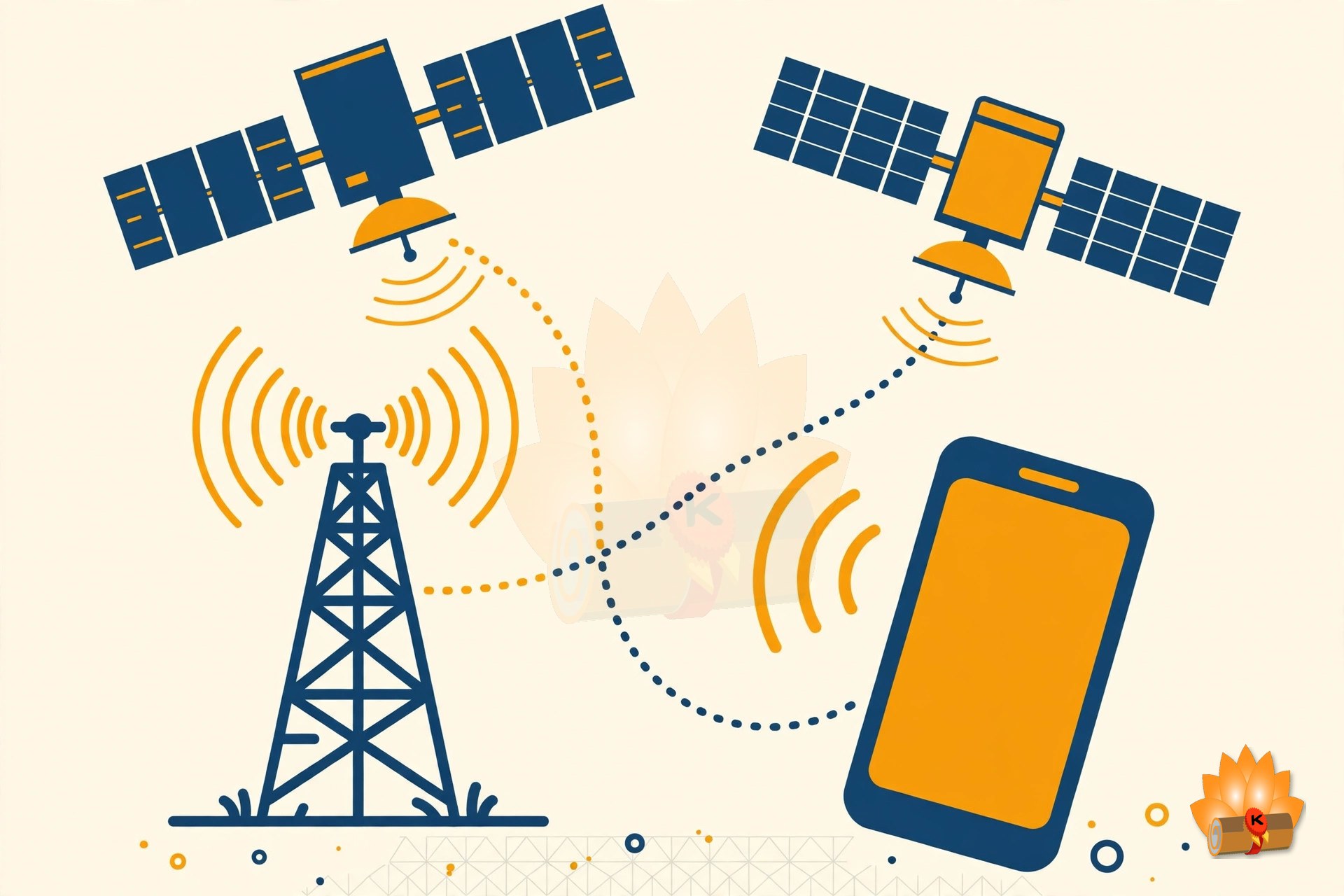
What You Will Study
Unit 1 — Wireless Communication and Propagation (6 Periods)
Basics, Advantages of wireless communication, Electromagnetic waves, Frequency Spectrum used, Cellular Network Systems, Link budget, Free-space path loss, Noise figure of receiver, Multipath fading, Shadowing, fading margin, Shadowing margin
Wireless basics: the spectrum used, cellular systems, link budgets, path loss, and the fading and shadowing that weaken signals.
Unit 2 — Overview of Cellular Systems (8 Periods)
Evolution 1G/2G/3G/4G/5G. Cellular Concepts – Cell area, Cell site structure, Capacity of cell, Frequency reuse, Co-channel and Adjacent Channel Interference, Power Control for reducing Interference, Fundamentals of cellular network planning: Coverage planning, Capacity planning, Cell splitting and sectoring. Antenna diversity, wireless channel capacity and MIMO
Cellular systems from 1G to 5G: cells, frequency reuse, interference, network planning (coverage, capacity, cell splitting and sectoring), antenna diversity and MIMO.
Unit 3 — Multiple Access Techniques for Wireless Communication (6 Periods)
Introduction to Multiple Access. Frequency Division Multiple Access (FDMA). Time Division Multiple Access (TDMA), Distinction between TDMA FDD and TDMA TDD, Code Division Multiple Access (CDMA), WCDMA
How many users share the airwaves: FDMA, TDMA (FDD and TDD) and CDMA/WCDMA.
Unit 4 — Mobile Communication Systems (8 Periods)
Introduction of Global Systems for Mobile Communication (GSM) and its architecture, Introduction of CDMA System, comparison of CDMA and GSM Systems and frequency bands. Introduction to GPRS and EDGE, Introduction to Architecture and Features of UMTS HSPA (High Speed Packet Access), Features and Architecture of LTE (Long Term Evolution), Vo-LTE (Voice Over Long-Term Evolution)
The systems themselves: GSM and CDMA compared, GPRS and EDGE, UMTS/HSPA, LTE and voice over LTE.
Note: no marks-distribution table is given for this subject in the official syllabus, so unit weightages are not shown.
Practical Work
- To understand the path loss.
- Understand the path loss with shadowing.
- Understanding the Flat fading.
- Understanding the Frequency selective fading.
- Understanding the Multipath channel for the following objectives: a. No Fading; b. Flat Fading; c. Dispersive Fading.
- Study the features, specification and working of cellular mobile.
And more — the complete list of 14 practicals is inside the PDF.
Complete Syllabus
The full examination scheme, the complete practicals list and the reference books from the official syllabus. The unit-wise topics are in the "What You Will Study" section above.
Examination Scheme
| Code | Paper | Type | L – P | Credits | Internal | External | Total |
|---|---|---|---|---|---|---|---|
| 6.3.1 | Elective (Specialisation): Mobile and Wireless Communication | Practicum | 2 – 3 | 3 | Practical 60 | Practical 40 | 100 |
| Mobile and Wireless Communication Total | 3 | 60 | 40 | 100 | |||
Complete Practicals List
This is the complete list of practicals from the official syllabus.
- To understand the path loss.
- Understand the path loss with shadowing.
- Understanding the Flat fading.
- Understanding the Frequency selective fading.
- Understanding the Multipath channel for the following objectives: a. No Fading; b. Flat Fading; c. Dispersive Fading.
- Study the features, specification and working of cellular mobile.
- To understand the cellular frequency reuse concept to find the co-channel cells for a particular cell.
- To simulate a dipole antenna (λ, λ/4, λ/2, 3λ/2) for a particular frequency using 4NEC2.
- Perform following experiments using CDMA trainer kit: a. PSK modulation and demodulation experiment; b. Bit synchronization extraction experiment; c. Error correction encoding experiment.
- Measurement of signal strength at various points from a transmitting antenna.
- Demonstration of Base Trans Receiver (BTS) with nearby cellular tower.
- Observing call processing of GSM trainer kit.
- Repair of a GSM mobile phone.
- Troubleshooting GSM Mobile Phone: a. Assembling and dissembling of GSM phone; b. Study parts of Mobile Phone; c. Testing of various parts.
Reference Books
Reference books are not listed for this subject in the official syllabus.
Frequently Asked Questions
How many marks is Mobile and Wireless Communication worth in the 6th semester?
Elective (Specialisation): Mobile and Wireless Communication (6.3.1) is 100 marks. Total: 100 marks, 3 credits. The full scheme table is in the Complete Syllabus section above.
Which units carry the most weightage in Mobile and Wireless Communication?
No marks-distribution table is given for this subject in the official syllabus, so unit weightages are not published. The unit-wise topic list and periods are given in the Complete Syllabus section above.
What practical work is there in Mobile and Wireless Communication?
14 practicals/experiments, including: To understand the path loss.; Understand the path loss with shadowing.; Understanding the Flat fading.. The complete list is in the Complete Syllabus section above.
Which books should I refer to for Mobile and Wireless Communication?
Reference books are not listed for this subject in the official syllabus.
Is Mobile and Wireless Communication a theory subject or a practical subject?
It is assessed as practicum — see the examination scheme in the Complete Syllabus section above.
How can I download the Mobile and Wireless Communication syllabus PDF?
The PDF is free to download — use the download link in the Download section below. It is prepared by KAMALDNP Academy from the official BTEUP syllabus.
Related Syllabus Posts
- BTEUP Electronics 6th Semester Syllabus 2026-27
- BTEUP Electronics Complete Syllabus 2026-27 — 3rd, 4th, 5th & 6th Semester (All Subjects)
- Entrepreneurship and Start-Up — BTEUP Electronics 6th Semester Syllabus 2026-27
- Managerial Economics — BTEUP Electronics 6th Semester Syllabus 2026-27
- Finance Fundamentals — BTEUP Electronics 6th Semester Syllabus 2026-27
Download the Mobile and Wireless Communication Syllabus PDF
Download the complete Mobile and Wireless Communication syllabus PDF below — prepared by KAMALDNP Academy, with the full topic list, practicals and reference books.
Download the Mobile and Wireless Communication Syllabus PDF
Source: BTEUP 3rd Year curriculum (folder2627), approved in C.D.C. meeting held on 16.07.2026. Topic lists follow the official syllabus; short explanations are the author's own plain-English summaries, not syllabus text. Please confirm with your own polytechnic for any local changes.




Comments (0)
Share your question or experience about this syllabus. Your comment will appear after review.
No comments yet — be the first to share your thoughts!