
Mobile and Wireless Communication — यह विषय किस बारे में है
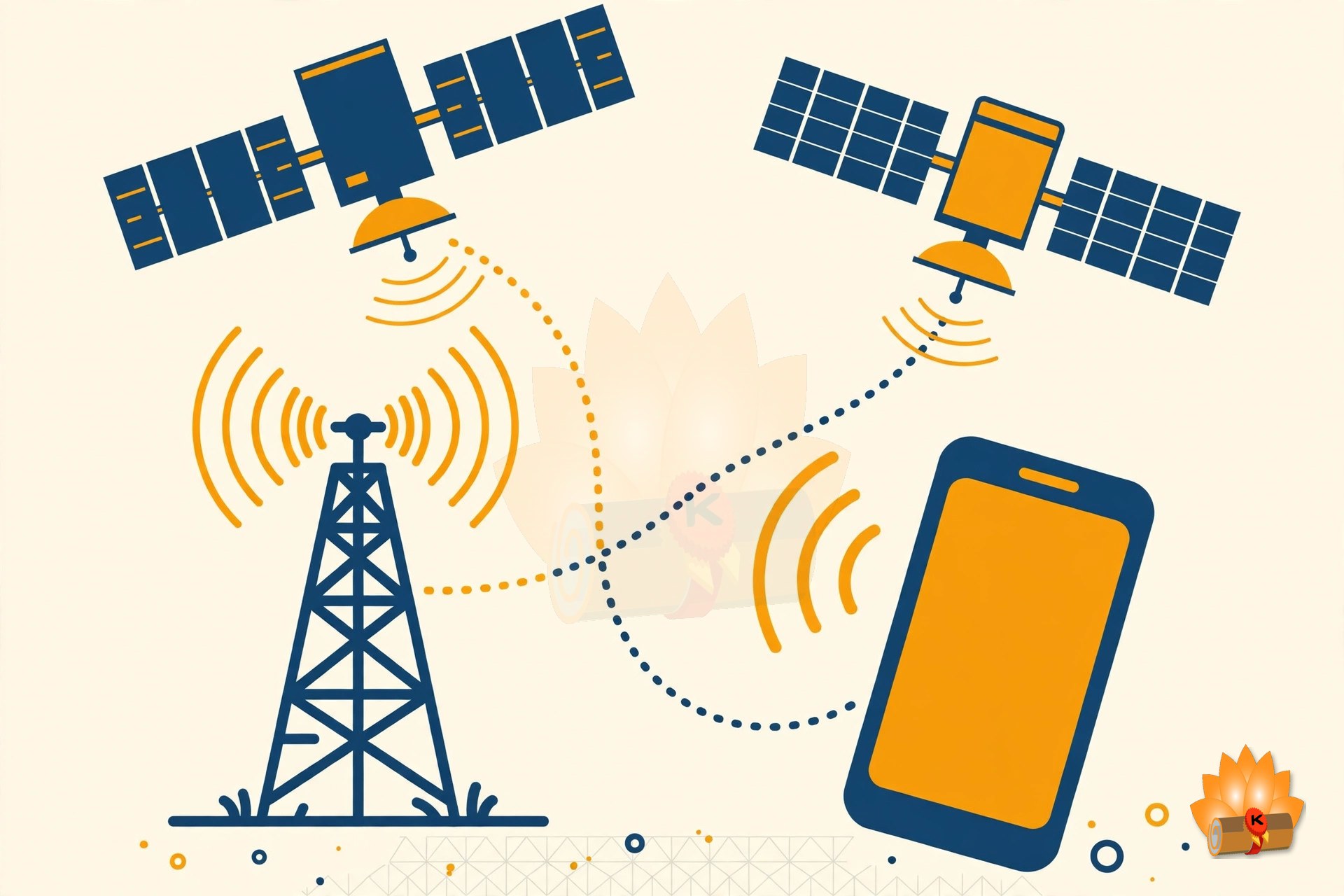
Mobile and Wireless Communication में mobile networks, 4G/5G और wireless technology।
To equip students with fundamental knowledge and practical understanding of wireless and mobile communication systems — their functioning, architecture and operational principles — so they stay updated with current and emerging communication technologies, as mobile communication has largely replaced traditional landline systems.
Subject 6.3.1 — Elective (Specialisation), Option 1 (Practicum) • Total 100 Marks • 3 Credits • L 2 – P 3 • Choose this OR VLSI Using VHDL OR Power Electronic Devices • छठा सेमेस्टर — Electronics Engineering • सत्र 2026–27
Note: No marks-distribution table and no reference-books list are given for this subject in the PDF, so unit weightages and books are not shown.
आप क्या पढ़ेंगे
यूनिट 1 — Wireless Communication and Propagation (6 पीरियड)
Basics, Advantages of wireless communication, Electromagnetic waves, Frequency Spectrum used, Cellular Network Systems, Link budget, Free-space path loss, Noise figure of receiver, Multipath fading, Shadowing, fading margin, Shadowing margin
Wireless basics: the spectrum used, cellular systems, link budgets, path loss, and the fading and shadowing that weaken signals.
यूनिट 2 — Overview of Cellular Systems (8 पीरियड)
Evolution 1G/2G/3G/4G/5G. Cellular Concepts – Cell area, Cell site structure, Capacity of cell, Frequency reuse, Co-channel and Adjacent Channel Interference, Power Control for reducing Interference, Fundamentals of cellular network planning: Coverage planning, Capacity planning, Cell splitting and sectoring. Antenna diversity, wireless channel capacity and MIMO
Cellular systems from 1G to 5G: cells, frequency reuse, interference, network planning (coverage, capacity, cell splitting and sectoring), antenna diversity and MIMO.
यूनिट 3 — Multiple Access Techniques for Wireless Communication (6 पीरियड)
Introduction to Multiple Access. Frequency Division Multiple Access (FDMA). Time Division Multiple Access (TDMA), Distinction between TDMA FDD and TDMA TDD, Code Division Multiple Access (CDMA), WCDMA
How many users share the airwaves: FDMA, TDMA (FDD and TDD) and CDMA/WCDMA.
यूनिट 4 — Mobile Communication Systems (8 पीरियड)
Introduction of Global Systems for Mobile Communication (GSM) and its architecture, Introduction of CDMA System, comparison of CDMA and GSM Systems and frequency bands. Introduction to GPRS and EDGE, Introduction to Architecture and Features of UMTS HSPA (High Speed Packet Access), Features and Architecture of LTE (Long Term Evolution), Vo-LTE (Voice Over Long-Term Evolution)
The systems themselves: GSM and CDMA compared, GPRS and EDGE, UMTS/HSPA, LTE and voice over LTE.
ध्यान दें: इस विषय के लिए आधिकारिक सिलेबस में marks-distribution तालिका नहीं दी गई है, इसलिए यूनिट के अनुसार weightage नहीं दिखाया गया है।
प्रैक्टिकल कार्य
- To understand the path loss.
- Understand the path loss with shadowing.
- Understanding the Flat fading.
- Understanding the Frequency selective fading.
- Understanding the Multipath channel for the following objectives: a. No Fading; b. Flat Fading; c. Dispersive Fading.
- Study the features, specification and working of cellular mobile.
और भी बहुत कुछ — 14 practicals की पूरी सूची PDF के अंदर है।
पूरा सिलेबस
आधिकारिक सिलेबस से पूरी परीक्षा योजना, practicals की पूरी सूची और संदर्भ पुस्तकें। यूनिट के अनुसार topics ऊपर "आप क्या पढ़ेंगे" वाले हिस्से में दिए गए हैं।
परीक्षा योजना
| Code | Paper | Type | L – P | Credits | Internal | External | Total |
|---|---|---|---|---|---|---|---|
| 6.3.1 | Elective (Specialisation): Mobile and Wireless Communication | Practicum | 2 – 3 | 3 | Practical 60 | Practical 40 | 100 |
| Mobile and Wireless Communication Total | 3 | 60 | 40 | 100 | |||
प्रैक्टिकल्स की पूरी सूची
यह आधिकारिक सिलेबस से practicals की पूरी सूची है।
- To understand the path loss.
- Understand the path loss with shadowing.
- Understanding the Flat fading.
- Understanding the Frequency selective fading.
- Understanding the Multipath channel for the following objectives: a. No Fading; b. Flat Fading; c. Dispersive Fading.
- Study the features, specification and working of cellular mobile.
- To understand the cellular frequency reuse concept to find the co-channel cells for a particular cell.
- To simulate a dipole antenna (λ, λ/4, λ/2, 3λ/2) for a particular frequency using 4NEC2.
- Perform following experiments using CDMA trainer kit: a. PSK modulation and demodulation experiment; b. Bit synchronization extraction experiment; c. Error correction encoding experiment.
- Measurement of signal strength at various points from a transmitting antenna.
- Demonstration of Base Trans Receiver (BTS) with nearby cellular tower.
- Observing call processing of GSM trainer kit.
- Repair of a GSM mobile phone.
- Troubleshooting GSM Mobile Phone: a. Assembling and dissembling of GSM phone; b. Study parts of Mobile Phone; c. Testing of various parts.
संदर्भ पुस्तकें
इस विषय के लिए आधिकारिक सिलेबस में reference books नहीं दी गई हैं।
अक्सर पूछे जाने वाले प्रश्न
छठा सेमेस्टर में Mobile and Wireless Communication कितने अंकों का है?
Elective (Specialisation): Mobile and Wireless Communication (6.3.1) 100 अंक। कुल: 100 अंक, 3 क्रेडिट। पूरी योजना ऊपर "पूरा सिलेबस" वाले हिस्से में है।
Mobile and Wireless Communication में किन यूनिट्स का weightage सबसे ज़्यादा है?
इस विषय के लिए आधिकारिक सिलेबस में marks-distribution तालिका नहीं दी गई है, इसलिए यूनिट के अनुसार weightage प्रकाशित नहीं है। यूनिट के अनुसार topics और periods ऊपर "पूरा सिलेबस" वाले हिस्से में दिए गए हैं।
Mobile and Wireless Communication में क्या प्रैक्टिकल कार्य है?
14 practicals/experiments, जिनमें शामिल हैं: To understand the path loss.; Understand the path loss with shadowing.; Understanding the Flat fading.। पूरी सूची ऊपर "पूरा सिलेबस" वाले हिस्से में है।
Mobile and Wireless Communication के लिए किन किताबों को देखें?
इस विषय के लिए आधिकारिक सिलेबस में reference books नहीं दी गई हैं।
क्या Mobile and Wireless Communication theory विषय है या practical विषय?
इसका मूल्यांकन Practicum के रूप में होता है — परीक्षा योजना ऊपर "पूरा सिलेबस" वाले हिस्से में देखें।
Mobile and Wireless Communication सिलेबस PDF कैसे डाउनलोड करें?
PDF मुफ़्त में डाउनलोड के लिए उपलब्ध है — नीचे Download वाले हिस्से में दिए गए download link का उपयोग करें। यह KAMALDNP द्वारा आधिकारिक BTEUP सिलेबस से तैयार किया गया है।
संबंधित सिलेबस पोस्ट
- BTEUP Electronics छठा सेमेस्टर सिलेबस 2026-27
- BTEUP Electronics पूरा सिलेबस 2026-27 — तीसरा, चौथा, पाँचवाँ और छठा सेमेस्टर (सभी विषय)
- Entrepreneurship and Start-Up — BTEUP Electronics छठा सेमेस्टर सिलेबस 2026-27
- Managerial Economics — BTEUP Electronics छठा सेमेस्टर सिलेबस 2026-27
- Finance Fundamentals — BTEUP Electronics छठा सेमेस्टर सिलेबस 2026-27
Mobile and Wireless Communication सिलेबस PDF डाउनलोड करें
नीचे पूरा Mobile and Wireless Communication सिलेबस PDF डाउनलोड करें — KAMALDNP द्वारा तैयार, जिसमें topics की पूरी सूची, practicals और संदर्भ पुस्तकें हैं।
Mobile and Wireless Communication सिलेबस PDF डाउनलोड करें
स्रोत: BTEUP 3rd Year curriculum (folder2627), approved in C.D.C. meeting held on 16.07.2026। Topic सूचियाँ आधिकारिक सिलेबस के अनुसार हैं; छोटे सारांश लेखक के अपने सरल शब्दों में लिखे गए हैं, सिलेबस का मूल पाठ नहीं हैं। कृपया अपने पॉलिटेक्निक से किसी भी स्थानीय बदलाव की पुष्टि कर लें।


Comments (0)
Share your question or experience about this syllabus. Your comment will appear after review.
No comments yet — be the first to share your thoughts!