
Power Electronic Devices — यह विषय किस बारे में है
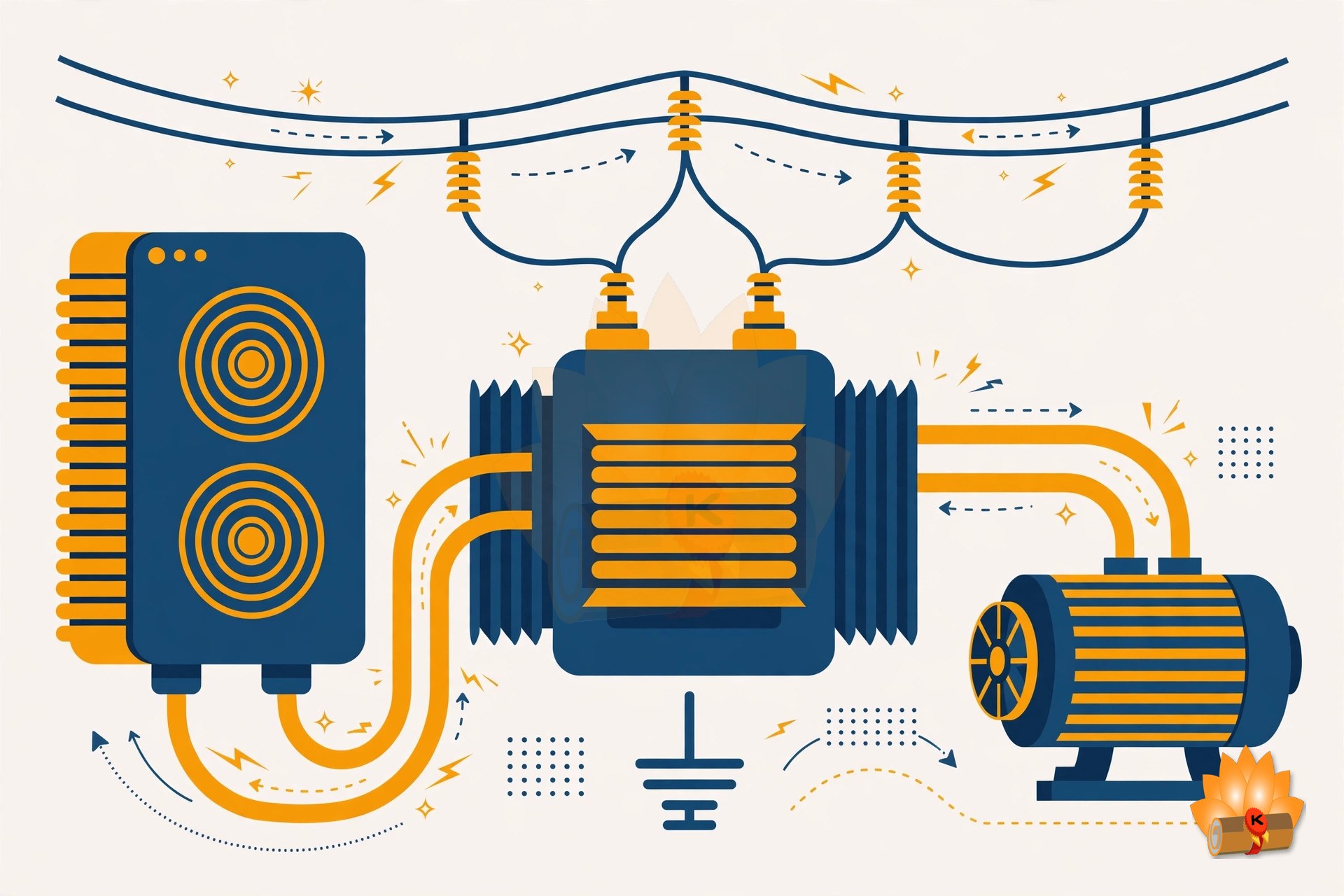
Power Electronic Devices में heavy power को control करने वाले devices — SMPS, inverter और motor drives।
To introduce the fundamental concepts, principles and applications of power electronics and power semiconductor devices — MOSFETs, IGBTs and thyristors — and the operation, analysis and applications of power converters (DC–DC converters/choppers and inverters), with practical exposure through hands-on experiments and simulations, and integration in renewable energy applications such as solar and wind, with power quality considerations.
Subject 6.3.3 — Elective (Specialisation), Option 3 (Practicum) • Total 100 Marks • 3 Credits • L 2 – P 3 • Choose this OR Mobile and Wireless Communication OR VLSI Using VHDL • छठा सेमेस्टर — Electronics Engineering • सत्र 2026–27
Note: No marks-distribution table and no reference-books list are given for this subject in the PDF, so unit weightages and books are not shown. Unit 3’s topic text repeats the inverter introduction that Unit 4 then covers in full (as printed in the PDF).
आप क्या पढ़ेंगे
यूनिट 1 — Introduction to Power Electronics and Power Semiconductor Devices (6 पीरियड)
Introduction to Power Electronics: Definition, Basic concepts and Applications, Power Metal Oxide Semiconductor Field Effect Transistor (MOSFET)-N-channel Enhancement Power MOSFET, Insulated Gate Bipolar Transistor (IGBT)- Symbol, Principle of Working, Voltage-Current (V-I) Characteristics, and its applications.
Power electronics: what it is, and its two key switches — the power MOSFET and the IGBT — their symbols, working and V-I characteristics.
यूनिट 2 — Thyristor Family Devices (6 पीरियड)
SCR, DIAC, TRIAC, UJT – Symbol, working principle, Characteristics and applications.
The thyristor family: SCR, DIAC, TRIAC and UJT — their symbols, working, characteristics and applications.
यूनिट 3 — Choppers & Converters (5 पीरियड)
Introduction to DC-DC converters (Choppers), Working principle and classification of choppers : Step-up (Boost) Converter, Step-down (Buck) Converter, Buck-Boost Converter, Cuk Converter, Types of Choppers, Applications of Choppers. Single Phase Full Controlled Bridge Converter with R Load and RL load. Introduction to Inverters, Types of inverters, Basic Operation, Control Strategies, Applications.
DC–DC converters (choppers): boost, buck, buck-boost and Cuk types, plus controlled bridge converters — and a first introduction to inverters.
यूनिट 4 — Inverters (5 पीरियड)
Introduction to Inverters, Types of inverters, Basic Operation, Control Strategies, Applications. Inverter with Resistive Load, Single Phase Inverter with RL load –Methods to obtain Sine Wave output from an Inverter.
Inverters in full: their types, operation and control, with resistive and inductive loads, and how to get a sine-wave output.
यूनिट 5 — Applications of Power Electronics in Renewable Energy Systems (6 पीरियड)
Solar Power Electronics: Solar cells, solar panels, and the working principle of photovoltaic systems, Power converters in solar systems: DC-DC converters, MPPT (Maximum Power Point Tracking), and solar inverters, Grid integration of solar power, Wind Power Electronics: Wind energy conversion systems and their components, Power electronics for controlling wind turbines and grid integration, Energy Storage Systems: Role of energy storage in renewable energy systems: Batteries, supercapacitors, and hybrid systems. Power quality issues in renewable energy and their mitigation using power electronics.
Power electronics in renewable energy: solar PV with MPPT and solar inverters, wind energy conversion, energy storage, and power quality issues.
ध्यान दें: इस विषय के लिए आधिकारिक सिलेबस में marks-distribution तालिका नहीं दी गई है, इसलिए यूनिट के अनुसार weightage नहीं दिखाया गया है।
प्रैक्टिकल कार्य
- Explore the working principle and applications of an N-channel enhancement MOSFET.
- Demonstrate the working principle and real-world applications of an IGBT.
- Visualize the Voltage-Current (V-I) characteristics of IGBT.
- Explore real-world applications of MOSFETs and IGBTs.
- To study the characteristics and applications of an SCR and observe its switching behaviour.
- To study the characteristics of the DIAC and observe its switching behaviour.
और भी बहुत कुछ — 15 practicals की पूरी सूची PDF के अंदर है।
पूरा सिलेबस
आधिकारिक सिलेबस से पूरी परीक्षा योजना, practicals की पूरी सूची और संदर्भ पुस्तकें। यूनिट के अनुसार topics ऊपर "आप क्या पढ़ेंगे" वाले हिस्से में दिए गए हैं।
परीक्षा योजना
| Code | Paper | Type | L – P | Credits | Internal | External | Total |
|---|---|---|---|---|---|---|---|
| 6.3.3 | Elective (Specialisation): Power Electronic Devices | Practicum | 2 – 3 | 3 | Practical 60 | Practical 40 | 100 |
| Power Electronic Devices Total | 3 | 60 | 40 | 100 | |||
प्रैक्टिकल्स की पूरी सूची
यह आधिकारिक सिलेबस से practicals की पूरी सूची है।
- Explore the working principle and applications of an N-channel enhancement MOSFET.
- Demonstrate the working principle and real-world applications of an IGBT.
- Visualize the Voltage-Current (V-I) characteristics of IGBT.
- Explore real-world applications of MOSFETs and IGBTs.
- To study the characteristics and applications of an SCR and observe its switching behaviour.
- To study the characteristics of the DIAC and observe its switching behaviour.
- To study the characteristics and switching behaviour of a TRIAC and observe its use in controlling AC loads.
- To study the characteristics of the UJT and use it in triggering applications like relaxation oscillators.
- Design and Simulation of a Boost Converter.
- Implement a simple application using a DC-DC converter, such as a power supply for a microcontroller.
- Design and Simulation of a Basic Inverter.
- Design and simulate a pure sine wave inverter.
- Study the characteristics of a solar panel and design an MPPT controller.
- Design and implement a basic solar inverter.
- Analyze a small wind energy conversion system with a focus on power electronics.
संदर्भ पुस्तकें
इस विषय के लिए आधिकारिक सिलेबस में reference books नहीं दी गई हैं।
अक्सर पूछे जाने वाले प्रश्न
छठा सेमेस्टर में Power Electronic Devices कितने अंकों का है?
Elective (Specialisation): Power Electronic Devices (6.3.3) 100 अंक। कुल: 100 अंक, 3 क्रेडिट। पूरी योजना ऊपर "पूरा सिलेबस" वाले हिस्से में है।
Power Electronic Devices में किन यूनिट्स का weightage सबसे ज़्यादा है?
इस विषय के लिए आधिकारिक सिलेबस में marks-distribution तालिका नहीं दी गई है, इसलिए यूनिट के अनुसार weightage प्रकाशित नहीं है। यूनिट के अनुसार topics और periods ऊपर "पूरा सिलेबस" वाले हिस्से में दिए गए हैं।
Power Electronic Devices में क्या प्रैक्टिकल कार्य है?
15 practicals/experiments, जिनमें शामिल हैं: Explore the working principle and applications of an N-channel enhancement MOSFET.; Demonstrate the working principle and real-world applications of an IGBT.; Visualize the Voltage-Current (V-I) characteristics of IGBT.। पूरी सूची ऊपर "पूरा सिलेबस" वाले हिस्से में है।
Power Electronic Devices के लिए किन किताबों को देखें?
इस विषय के लिए आधिकारिक सिलेबस में reference books नहीं दी गई हैं।
क्या Power Electronic Devices theory विषय है या practical विषय?
इसका मूल्यांकन Practicum के रूप में होता है — परीक्षा योजना ऊपर "पूरा सिलेबस" वाले हिस्से में देखें।
Power Electronic Devices सिलेबस PDF कैसे डाउनलोड करें?
PDF मुफ़्त में डाउनलोड के लिए उपलब्ध है — नीचे Download वाले हिस्से में दिए गए download link का उपयोग करें। यह KAMALDNP द्वारा आधिकारिक BTEUP सिलेबस से तैयार किया गया है।
संबंधित सिलेबस पोस्ट
- BTEUP Electronics छठा सेमेस्टर सिलेबस 2026-27
- BTEUP Electronics पूरा सिलेबस 2026-27 — तीसरा, चौथा, पाँचवाँ और छठा सेमेस्टर (सभी विषय)
- Entrepreneurship and Start-Up — BTEUP Electronics छठा सेमेस्टर सिलेबस 2026-27
- Managerial Economics — BTEUP Electronics छठा सेमेस्टर सिलेबस 2026-27
- Finance Fundamentals — BTEUP Electronics छठा सेमेस्टर सिलेबस 2026-27
Power Electronic Devices सिलेबस PDF डाउनलोड करें
नीचे पूरा Power Electronic Devices सिलेबस PDF डाउनलोड करें — KAMALDNP द्वारा तैयार, जिसमें topics की पूरी सूची, practicals और संदर्भ पुस्तकें हैं।
Power Electronic Devices सिलेबस PDF डाउनलोड करें
स्रोत: BTEUP 3rd Year curriculum (folder2627), approved in C.D.C. meeting held on 16.07.2026। Topic सूचियाँ आधिकारिक सिलेबस के अनुसार हैं; छोटे सारांश लेखक के अपने सरल शब्दों में लिखे गए हैं, सिलेबस का मूल पाठ नहीं हैं। कृपया अपने पॉलिटेक्निक से किसी भी स्थानीय बदलाव की पुष्टि कर लें।

Comments (0)
Share your question or experience about this syllabus. Your comment will appear after review.
No comments yet — be the first to share your thoughts!