
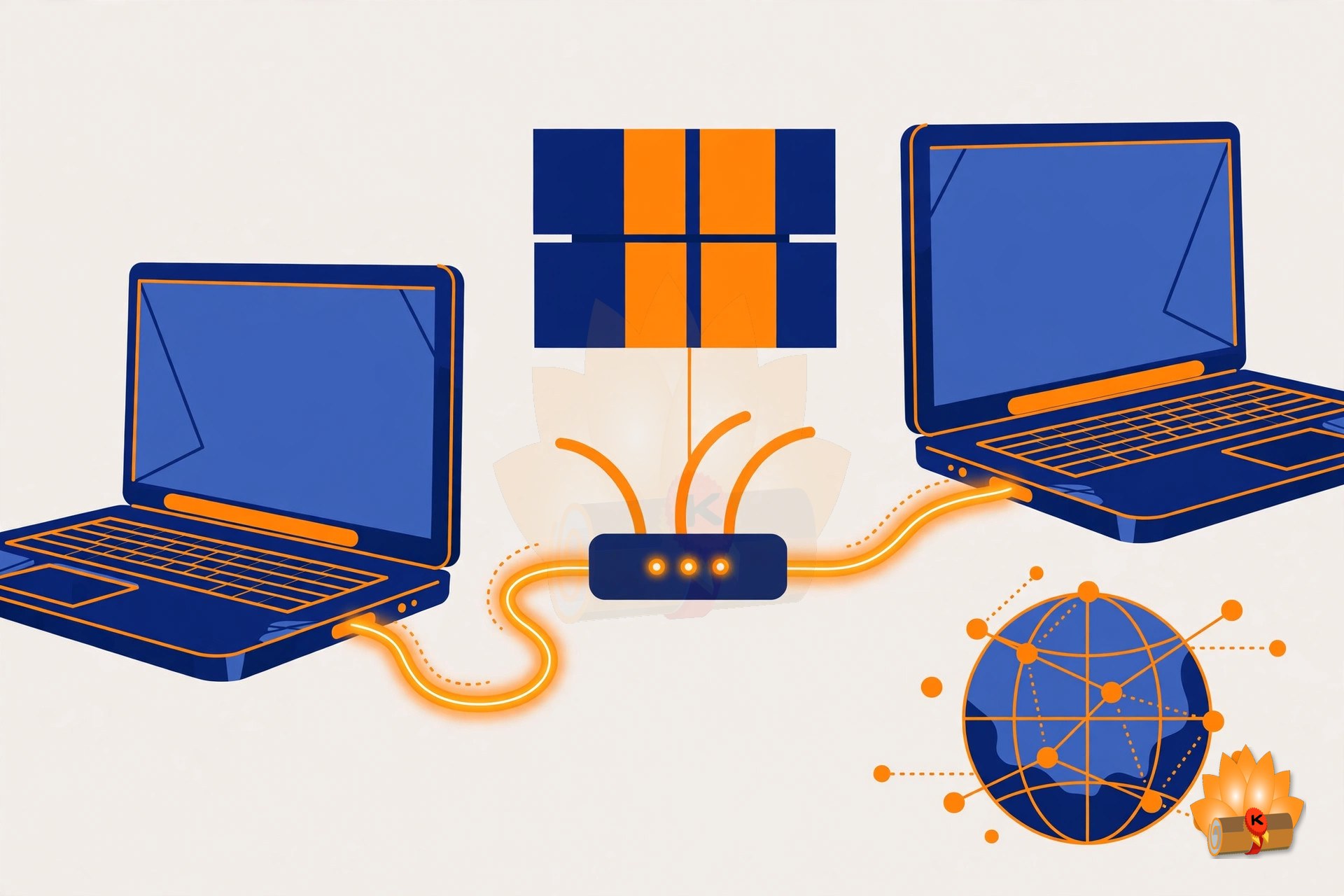
Computer Network — What This Subject Is About
To understand the functioning of computer networks and popular networking protocols. By the end you should be able to: explain data communication fundamentals; describe the physical layer and data link layer; explain IP addressing and key network-layer protocols; describe the transport layer; and recognise network devices and network management systems.
Subject 3.3 (Practicum) • Total 100 Marks • 4 Credits • L 2 – P 4 • 3rd Semester — Computer Science & Engineering • Session 2026–27
What You Will Study
Unit 1 — Introduction (6 Periods, 12%)
Introduction to computer networks; network models — OSI reference model, TCP/IP model.
The two famous layered models that explain how data travels from one computer to another, layer by layer.
Unit 2 — Data Communication and Communication Methodologies (10 Periods, 25%)
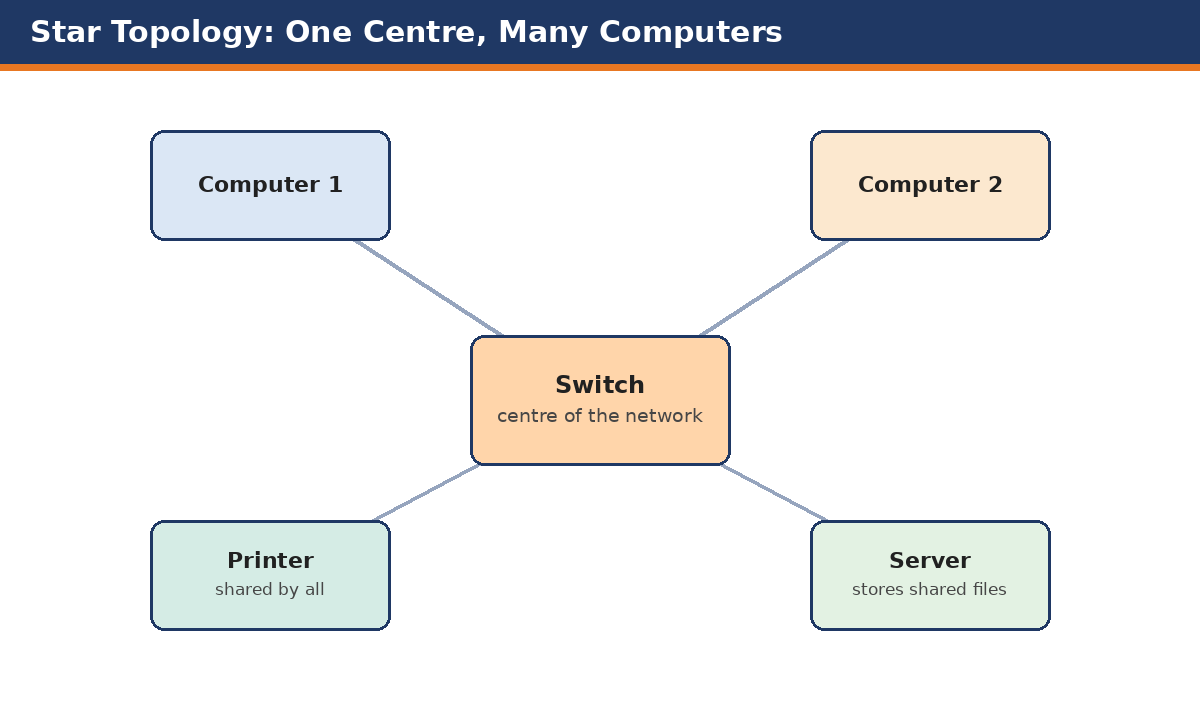
Transmission media — principles, issues and examples; wired media (coaxial, UTP, STP, fibre optic cables); wireless media (HF, VHF, UHF, microwave, Ku band); network topologies; data link layer — design issues and example protocols (Ethernet, WLAN, Bluetooth); switching techniques (circuit, packet, message).
The physical ways data travels — cables and wireless — the shapes networks take, and how data is switched from sender to receiver.
Unit 3 — Network Layer (10 Periods, 25%)
Network layer — design issues and example protocols (IPv4); concept of IPv6; routing principles, issues, algorithms (distance-vector, link-state) and protocols (RIP, OSPF).
How data finds its way across many networks: IP addresses, IPv6, and the routing algorithms that choose the path.
Unit 4 — Transport Layer (8 Periods, 25%)
Transport layer — design issues and example protocols (TCP/UDP); application layer protocols (SMTP, DNS).
Reliable vs fast delivery (TCP vs UDP), and the everyday application protocols behind email and website names.
Unit 5 — Network Devices (8 Periods, 13%)
Functioning of network devices — NIC, hub, bridge, switch, router, WiFi devices; network management system and example protocol (SNMP).
What each box in a network actually does, and how whole networks are monitored and managed.
Practical Work
- Study a network simulation tool (Wireshark, Cisco Packet Tracer, NS-2, GNS3, etc.).
- Observe how data travels through the OSI layers using network tools.
- Show various types of networking cables and connectors and identify them clearly.
- Study specifications of cables and connectors of various companies on the internet and find out the differences.
- Make patch cords using different types of cables and connectors — crimping, splicing, etc.
- Demonstrate different types of cable testers and use them for testing patch cords.
The complete list of 10 practicals is in the Complete Syllabus section below — and in the PDF.
Complete Syllabus
The full examination scheme, the complete practicals list and the reference books from the official syllabus. The unit-wise topics are in the "What You Will Study" section above.
Examination Scheme
| Code | Paper | Type | L – P | Credits | Internal | External | Total |
|---|---|---|---|---|---|---|---|
| 3.3 | Computer Network | Practicum | 2 – 4 | 4 | 40 | 60 (3 hrs) | 100 |
| Computer Network Total | 4 | 40 | 60 | 100 | |||
Units at a Glance
| Unit | Topic | Periods | Marks Share |
|---|---|---|---|
| 1 | Introduction | 6 | 12% |
| 2 | Data Communication and Communication Methodologies | 10 | 25% |
| 3 | Network Layer | 10 | 25% |
| 4 | Transport Layer | 8 | 25% |
| 5 | Network Devices | 8 | 13% |
Complete Practicals List
This is the complete list of practicals from the official syllabus.
- Study a network simulation tool (Wireshark, Cisco Packet Tracer, NS-2, GNS3, etc.).
- Observe how data travels through the OSI layers using network tools.
- Show various types of networking cables and connectors and identify them clearly.
- Study specifications of cables and connectors of various companies on the internet and find out the differences.
- Make patch cords using different types of cables and connectors — crimping, splicing, etc.
- Demonstrate different types of cable testers and use them for testing patch cords.
- Configure computing devices (PC, laptop, mobile) for a network — IP address, gateway, DNS and security options.
- TCP communication between two devices.
- Show various networking devices — NICs, hub, bridge, switch, router, gateway, WiFi access point, etc.
- Study specifications of various networking devices of various companies on the internet and find out the differences.
Reference Books
As listed in the syllabus:
- Computer Networks, 4th Edition (or later) — Andrew S. Tanenbaum, PHI
- TCP/IP Illustrated, Volume 1 — W. Richard Stevens, Addison Wesley
- Data and Computer Communications — William Stallings, PHI
- An Engineering Approach to Computer Networking — S. Keshav, Pearson
- An Integrated Approach to Computer Networks — Bhavneet Sidhu, Khanna Publishing House
- Data Communications and Networking — Behrouz A. Forouzan, McGraw-Hill
- Cisco Press books on CCNA
Frequently Asked Questions
How many marks is Computer Network worth?
100 marks, 4 credits. It is a practicum subject (2 lecture + 4 practical hours a week): internal 40, external 60.
Which units carry the most weightage in Computer Network?
Data Communication, Network Layer and Transport Layer, 25% each. Introduction is 12% and Network Devices is 13%.
What practical work is there in Computer Network?
Wireshark and Packet Tracer, making patch cords, configuring IP/gateway/DNS on computers, TCP communication between two devices, and studying NICs, hubs, switches and routers. The complete list is in the Complete Syllabus section above.
Do I need to learn IPv6 for this subject?
Yes. Unit 3 covers IPv6 along with IPv4 and the routing protocols RIP and OSPF.
Which books should I refer to for Computer Network?
The syllabus lists Tanenbaum’s Computer Networks, Stevens’ TCP/IP Illustrated, Stallings’ Data and Computer Communications and Forouzan’s Data Communications and Networking, plus Cisco CCNA books. The full list is in the Complete Syllabus section above.
How can I download the Computer Network syllabus PDF?
The PDF is free to download — use the download link in the Download section below. It is prepared by KAMALDNP from the official BTEUP syllabus.
Related Syllabus Posts
- BTEUP CSE 3rd Semester Syllabus 2026-27
- BTEUP CSE Complete Syllabus 2026-27 — 1st, 3rd & 5th Semester (All Subjects)
- Operating Systems — BTEUP CSE 3rd Semester Syllabus 2026-27
- Advance Computer Networks — BTEUP CSE 5th Semester Syllabus 2026-27
- Fundamentals of Internet of Things — BTEUP CSE 5th Semester Syllabus 2026-27
Notes, Question Bank & Practice Sets — Computer Network
The syllabus PDF on this page stays 100% FREE — no login, no payment, always. The study material below is a paid KAMALDNP product: buy once for just ₹10 and you get both the Hindi and English PDFs. Every PDF is generated with your name and enrolment number and is password-locked, so it remains personal to you. After purchase, the PDF is also sent to your email, and it is always available for download on the My Downloads page.
Short Notes (English + Hindi) — ₹10
Unit-wise short revision notes prepared from the official BTEUP 2026-27 syllabus of this subject.
Buy / Download — My DownloadsQuestion Bank (English + Hindi) — ₹10
One original practice (model) paper with a model-answer outline. This is a KAMALDNP practice paper — NOT a BTEUP board paper, and no question in it is promised to appear in your exam.
Buy / Download — My DownloadsPractice Sets (English + Hindi) — ₹10
10 Practice Sets — practice/guess sets only (no verified previous-year board papers available for this subject yet)
Buy / Download — My DownloadsAlready purchased? You will find the Download button on the same My Downloads page — you will not be charged again.
Download the Computer Network Syllabus PDF
Download the complete Computer Network syllabus PDF below — prepared by KAMALDNP, with the full topic list, practicals and reference books.
Download the Computer Network Syllabus PDF
Source: BTEUP 2nd Year curriculum (folder2627), approved in C.D.C. meeting held on 16.07.2026. Topic lists follow the official syllabus; short explanations are the author's own plain-English summaries, not syllabus text. Please confirm with your own polytechnic for any local changes.

Comments (0)
Share your question or experience about this syllabus. Your comment will appear after review.
No comments yet — be the first to share your thoughts!