
Public Health Engineering — यह विषय किस बारे में है
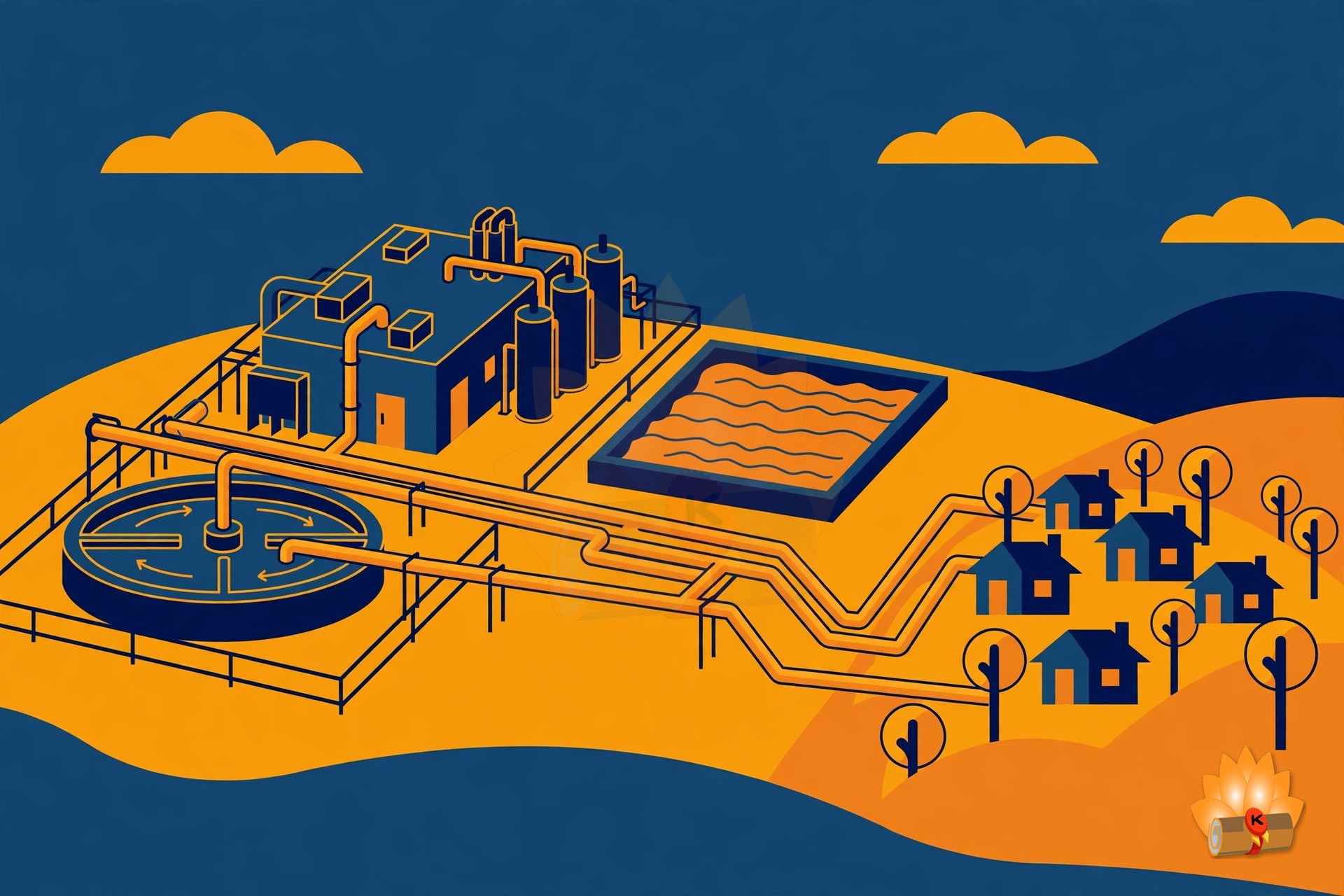
हर शहर को दो अदृश्य systems चाहिए: साफ़ पानी अंदर आना, और sewage सुरक्षित रूप से बाहर जाना। Public Health Engineering वह विषय है जो आपको दोनों सिखाता है। यह एक practicum विषय (4.9) है, 100 अंकों और 2 क्रेडिट का, जिसमें 1 lecture और 2 practical hours प्रति हफ़्ता हैं, और उसकी lab एक water-testing lab है — pH, turbidity, chlorine, dissolved oxygen, BOD और COD।
आप किसी शहर की population और उसकी पानी की demand का पूर्वानुमान लगाएँगे, water treatment plant design करेंगे (sedimentation, filtration, chlorination), distribution system का layout बनाएँगे, sewers और उनके appurtenances design करेंगे, और sewage की primary व secondary treatment सीखेंगे — जिसमें sewage या water treatment plant की field visit भी शामिल है।
विषय 4.9 (Practicum/Theory) • कुल 100 अंक • 2 क्रेडिटs • L 1 – P 2 • चौथा सेमेस्टर — Civil Engineering • सत्र 2026–27
नोट: 4th-semester scheme के totals से पता चलता है कि इस विषय के 40 internal अंक Practical assessment के तहत आते हैं, जबकि उसके 60 external अंक Theory के तहत आते हैं (extract की गई table के columns की alignment गड़बड़ है — NOTES देखें)। यहाँ दी गई lab work subject 4.9 का ही हिस्सा है।
आप क्या पढ़ेंगे
Unit 1 — Sources, Demand and Quality of Water (3 Periods, 20%)
Water supply schemes — objectives, components; sources of water: surface and subsurface sources of water, intake structures, definition and types, factors governing the location of an intake structure, types of intakes; demand of water: factors affecting rate of demand, variations of water demands, forecasting of population, methods of forecasting of population (simple problems on forecasting of population), design period, estimating of quantity of water supply required for city or town; quality of water: need for analysis of water, characteristics of water — physical, chemical and biological, testing of water for total solids, hardness, chlorides, dissolved oxygen, pH, fluoride, nitrogen and its compounds, bacteriological tests, E. coli, B. coli index, MPN, sampling of water, water quality standards as per IS 10500.
खुद पानी — उसके sources, शहर को कितना पानी चाहिए, उसकी population का पूर्वानुमान कैसे होता है, और IS 10500 के quality standards।
Unit 2 — Purification of Water (3 Periods, 20%)
Purification of water: objectives of water treatment, aeration — objects and methods of aeration, plain sedimentation, sedimentation with coagulation, principles of coagulation, types of coagulants, jar test, process of coagulation, types of sedimentation tanks, clariflocculator; filtration — mechanism of filtration, classification of filters: slow sand filter, rapid sand filter, pressure filter; construction and working of slow sand filter and rapid sand filter, operational problems in filtration; disinfection: objects, methods of disinfection, chlorination — application of chlorine, forms of chlorination, types of chlorination practices, residual chlorine and its importance, flow diagram of water treatment plants; miscellaneous water treatments: introduction to water softening, dechlorination and defluoridation techniques.
Purification — aeration, coagulation के साथ sedimentation, slow और rapid sand filters, और chlorination।
Unit 3 — Conveyance and Distribution of Water (2 Periods, 20%)
Conveyance: types of pipes used for conveyance of water, choice of pipe material, types of joints and types of valves — their use, location and function on a pipeline and other related appurtenances; distribution of water: methods of distribution of water — gravity, pumping, and combined system, service reservoirs — functions and types, layouts of distribution of water — dead end system, grid iron system, circular system, radial system; their suitability, advantages and disadvantages; laying of pipe, testing of pipe lines, building water supply (practical aspect only).
Conveyance और distribution — pipes, joints और valves, और dead-end, grid-iron, circular व radial layouts।
Unit 4 — Domestic Sewage and Sewerage System (3 Periods, 20%)
Introduction: purpose of sanitation, necessity of systematic collection and disposal of waste, definition of terms in sanitary engineering, collection and conveyance of sewage, conservancy and water carriage systems, their advantages and disadvantages; (a) surface drains (only sketches): various types, suitability; (b) types of sewage: domestic, industrial, storm water and its seasonal variation; sewerage system: types of sewerage systems, materials for sewers, their sizes and joints; appurtenance: location, function and construction features — manholes, drop manholes, tank hole, catch basin, inverted siphon, flushing tanks, grease and oil traps, storm regulators, ventilating shafts; laying and construction of sewers: setting out/alignment of sewers, excavations, checking the gradient with boning rods, preparation of bedding, handling and jointing, testing and back filling of sewers/pipes; construction of surface drains and different sections required.
Sewage और sewers — conservancy और water carriage systems, sewer appurtenances, और sewers को lay करना व test करना।
Unit 5 — Characteristics and Treatment of Sewage (3 Periods, 20%)
Sewage characteristics: properties of sewage and IS standards for analysis of sewage, physical, chemical and bacteriological parameters; natural methods of sewerage disposal: general composition of sewage and disposal methods, disposal by dilution, self purification of stream, disposal by land treatment, nuisance due to disposal; sewage treatment: meaning and principle of primary and secondary treatment and activated sludge process, their flow diagrams, introduction and uses of screens, grit chambers, detritus tanks, skimming tanks, plain sedimentation tanks, primary clarifiers, secondary clarifiers, filters, control beds, intermittent sand filters, trickling filters, sludge treatment and disposal, oxidation ponds (visit to a sewage treatment plant), oxidation ditch, duckweed pond, vermiculture; building drainage: aims of building drainage and its requirements, different sanitary fittings and installations, traps; introduction to smart water supply and waste water management: a field visit may be planned to explain and show the relevant things.
Sewage treatment — primary और secondary treatment, activated sludge process, oxidation ponds, और building drainage।
प्रैक्टिकल कार्य
- Determine pH value of given sample of water.
- Determine the turbidity of the given sample of water.
- Determine residual chlorine in a given sample of water.
- Determine suspended, dissolved solids and total solids of given sample of water.
- Determine the dissolved oxygen in a sample of water.
- Determine the optimum dose of coagulant in a given raw water sample by jar test.
और भी बहुत कुछ — 12 practicals की पूरी सूची PDF के अंदर है।
पूरा सिलेबस
आधिकारिक सिलेबस से पूरी परीक्षा योजना, practicals की पूरी सूची और संदर्भ पुस्तकें। यूनिट के अनुसार topics ऊपर “आप क्या पढ़ेंगे” वाले हिस्से में दिए गए हैं।
परीक्षा योजना
| कोड | पेपर | प्रकार | L – P | क्रेडिट | आंतरिक | बाह्य | कुल |
|---|---|---|---|---|---|---|---|
| 4.9 | Public Health Engineering | Practicum/Theory | 1 – 2 | 2 | 40 | Theory 60 (3 hrs) | 100 |
| Public Health Engineering Total | 2 | 40 | 60 | 100 | |||
एक नज़र में यूनिट्स
| यूनिट | विषय | पीरियड | अंकों का हिस्सा |
|---|---|---|---|
| 1 | Sources, Demand and Quality of Water | 3 | 20% |
| 2 | Purification of Water | 3 | 20% |
| 3 | Conveyance and Distribution of Water | 2 | 20% |
| 4 | Domestic Sewage and Sewerage System | 3 | 20% |
| 5 | Characteristics and Treatment of Sewage | 3 | 20% |
प्रैक्टिकल्स की पूरी सूची
यह आधिकारिक सिलेबस से practicals की पूरी सूची है।
- Determine pH value of given sample of water.
- Determine the turbidity of the given sample of water.
- Determine residual chlorine in a given sample of water.
- Determine suspended, dissolved solids and total solids of given sample of water.
- Determine the dissolved oxygen in a sample of water.
- Determine the optimum dose of coagulant in a given raw water sample by jar test.
- Determine B.O.D. of given sample of sewage.
- Determine pH value of given sample of sewage.
- Determine suspended solids, dissolved and total solids for sample of sewage.
- Determine the dissolved oxygen in the given sample of sewage.
- Determine C.O.D. of given sample of sewage.
- Prepare a report of a field visit to sewage treatment plant or water treatment plant.
संदर्भ पुस्तकें
सिलेबस में दिए अनुसार:
- Sharma S.C, Environmental Engineering, Khanna Publishing House, New Delhi.
- Garg, S.K., Environmental Engineering Vol. I and Vol. II, Khanna Publishers.
- Birdie, G. S. and Birdie, J. S., Water Supply and Sanitary Engineering, Dhanpat Rai.
- Gupta, O.P., Elements of Environmental Pollution Control, Khanna Publishing House, Delhi.
- Rao, C.S., Environmental Pollution Control Engineering, New Age International.
- Punmia, B C, Environmental Engineering, vol. I and II, Laxmi Publishers.
- D.V. Gupta, Vikram Singh, Water & Waste Water Engineering, Asian Publishers, Muzaffarnagar, ISBN: 978-93-91541-52-1.
- Peavy H S, Rowe D R, and Tchobanoglous G, Environmental Engineering, McGraw.
- Basak N N, Environmental Engineering, McGraw Hill Publishers.
अक्सर पूछे जाने वाले प्रश्न
Public Health Engineering चौथा सेमेस्टर में कितने अंकों का है?
कुल 100 अंक और 2 क्रेडिट। Public Health Engineering: 100 अंक (आंतरिक 40, बाह्य Theory 60 (3 hrs))।
Public Health Engineering में किन यूनिट्स का weightage सबसे ज़्यादा है?
हर यूनिट का weightage बराबर है — प्रत्येक 20% — इसलिए किसी को भी छोड़ा नहीं जा सकता।
Public Health Engineering में क्या प्रैक्टिकल कार्य है?
12 experiments, जिनमें Determine pH value of given sample of water.; Determine the turbidity of the given sample of water.; Determine residual chlorine in a given sample of water. शामिल हैं। पूरी सूची ऊपर “पूरा सिलेबस” वाले हिस्से में है।
Public Health Engineering के लिए किन किताबों को देखें?
सिलेबस में 9 किताबें दी गई हैं, जिनमें Sharma S.C, Environmental Engineering, Khanna Publishing House, New Delhi. और Garg, S.K., Environmental Engineering Vol. I and Vol. II, Khanna Publishers. सहित अन्य किताबें शामिल हैं। पूरी सूची ऊपर “पूरा सिलेबस” वाले हिस्से में है।
क्या Public Health Engineering theory विषय है या practical विषय?
Public Health Engineering practicum/theory है (L–P 1 – 2)।
Public Health Engineering सिलेबस PDF कैसे डाउनलोड करें?
PDF मुफ़्त में डाउनलोड के लिए उपलब्ध है — नीचे Download वाले हिस्से में दिए गए download link का उपयोग करें। यह KAMALDNP Academy द्वारा आधिकारिक BTEUP सिलेबस से तैयार किया गया है।
संबंधित सिलेबस पोस्ट
- BTEUP Civil चौथा सेमेस्टर सिलेबस 2026-27
- BTEUP Civil Engineering पूरा सिलेबस 2026-27 — सभी वर्ष, सभी सेमेस्टर
- Hydraulics — BTEUP Civil चौथा सेमेस्टर सिलेबस 2026-27
- Advance Surveying — BTEUP Civil चौथा सेमेस्टर सिलेबस 2026-27
- Theory of Structure — BTEUP Civil चौथा सेमेस्टर सिलेबस 2026-27
- Design of RCC Structures — BTEUP Civil चौथा सेमेस्टर सिलेबस 2026-27
Public Health Engineering सिलेबस PDF डाउनलोड करें
नीचे पूरा Public Health Engineering सिलेबस PDF डाउनलोड करें — KAMALDNP Academy द्वारा तैयार, जिसमें topics की पूरी सूची, practicals और संदर्भ पुस्तकें हैं।
Public Health Engineering सिलेबस PDF डाउनलोड करें
स्रोत: BTEUP द्वितीय वर्ष पाठ्यक्रम (आधिकारिक पाठ्यक्रम की IIMT mirror प्रति), C.D.C. की 16.07.2026 को हुई बैठक में स्वीकृत। Topic सूचियाँ आधिकारिक सिलेबस के अनुसार हैं; छोटे सारांश लेखक के अपने सरल शब्दों में लिखे गए हैं, सिलेबस का मूल पाठ नहीं हैं। कृपया अपने पॉलिटेक्निक से किसी भी स्थानीय बदलाव की पुष्टि कर लें।
Comments (0)
Share your question or experience about this syllabus. Your comment will appear after review.
No comments yet — be the first to share your thoughts!