
Construction Materials — यह विषय किस बारे में है
आप जो भी building देखते हैं, वह किसी के चुने हुए materials से बनी होती है — stone, brick, cement, timber, steel, glass — और गलत material चुनने से दीवार में दरार आ सकती है, छत leak कर सकती है या बहुत पैसा बर्बाद हो सकता है। Construction Materials वह विषय है जो आपको सिखाता है कि हर material क्या है, वह कैसे behave करता है, और वह कहाँ इस्तेमाल होता है। यह 3rd semester का पहला विषय है, और बाद में आप जो कुछ भी पढ़ेंगे — building construction, concrete technology, यहाँ तक कि estimating भी — उसी पर टिका है।
विषय में 28 periods में materials के पाँच groups आते हैं: stone, timber और lime जैसे natural materials; bricks, cement और glass जैसे artificial materials; waterproofing और insulation के लिए special materials; और plaster of Paris, paints और industrial waste जैसे processed materials। Lab का काम शुरू से ही hands-on है — aggregates की पहचान, bricks की testing, lime slaking और brick bonds के 3D models बनाना।
विषय 3.1 (Practicum/Theory) • कुल 100 अंक • 3 क्रेडिटs • L 2 – P 2 • तीसरा सेमेस्टर — Civil Engineering • सत्र 2026–27
नोट: 3rd-semester scheme के totals से पता चलता है कि इस विषय के 40 internal अंक Practical assessment के तहत आते हैं (extract की गई table के columns की alignment गड़बड़ है — NOTES देखें)। यहाँ दी गई lab work subject 3.1 का ही हिस्सा है।
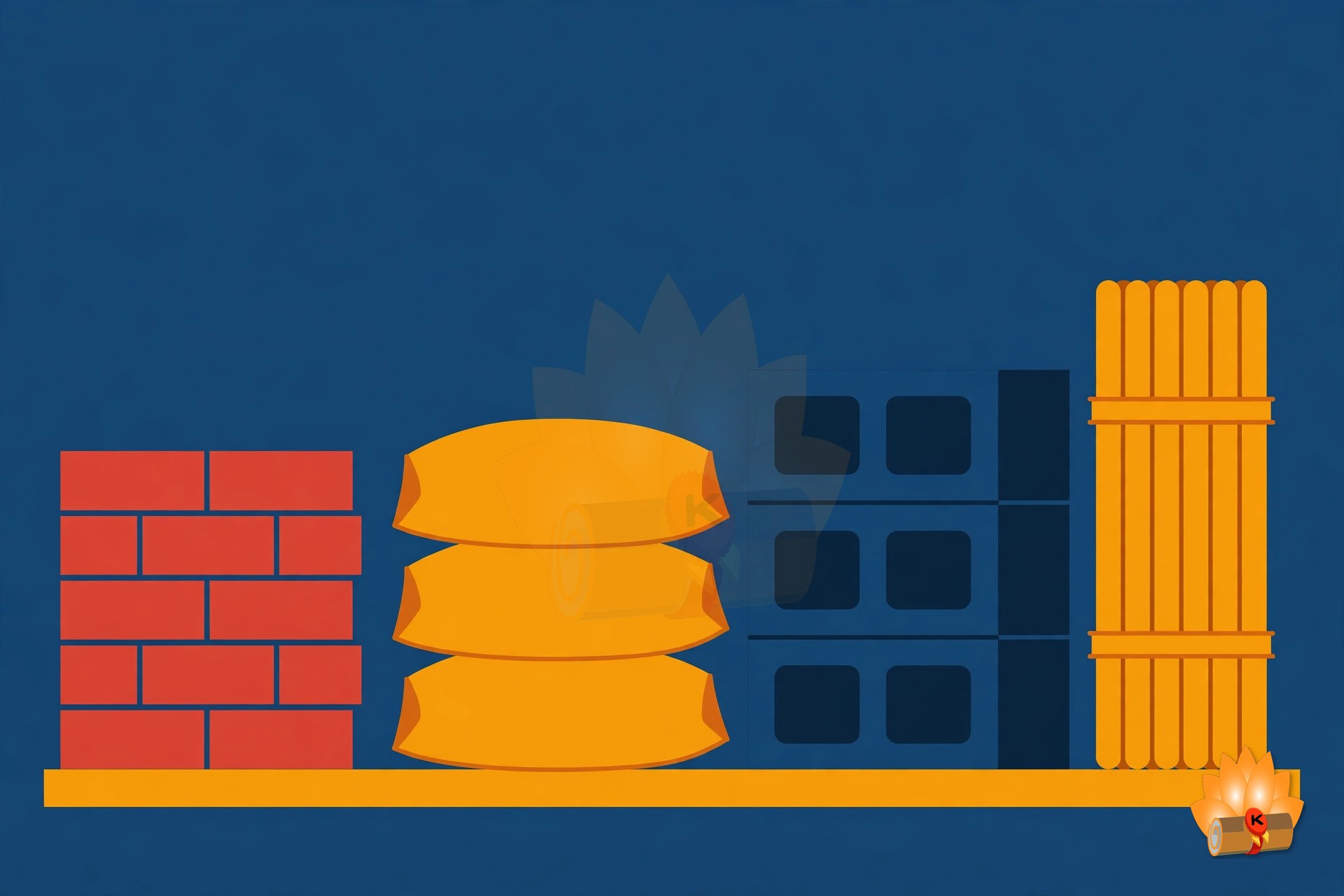
आप क्या पढ़ेंगे
Unit 1 — Overview of Construction Materials (4 Periods, 15%)
Scope of construction materials in Building Construction, Transportation Engineering, Environmental Engineering, Irrigation Engineering (applications only); selection of materials for different civil engineering structures on the basis of strength, durability, eco-friendly nature and economy; broad classification of materials — Natural, Artificial, special, finishing and recycled.
Materials क्यों मायने रखते हैं — वे buildings, सड़कों और irrigation works में कहाँ इस्तेमाल होते हैं, और strength, durability, eco-friendliness और cost के आधार पर material कैसे चुना जाता है।
Unit 2 — Natural Construction Materials (6 Periods, 20%)
Requirements of good building stone; general characteristics of stone; quarrying and dressing methods and tools for stone; classification of rocks — geological, physical and chemical classification; structure of timber, general properties and uses of good timber, different methods of seasoning for preservation of timber, defects in timber, use of bamboo in construction; asphalt, bitumen and tar used in construction, properties and uses; types of lime, properties of lime and uses, slaking of lime; properties of sand and uses; classification of aggregate according to size.
प्रकृति से मिलने वाले materials — stone, timber, bamboo, lime, sand और aggregates — उनकी quarrying, seasoning और testing कैसे होती है, और अच्छा material क्या होता है।
Unit 3 — Artificial Construction Materials (8 Periods, 30%)
Constituents of brick earth; conventional/traditional bricks, modular and standard bricks; special bricks — fly ash bricks; characteristics of good brick, field tests on bricks, classification of burnt clay bricks and their suitability; manufacturing process of burnt clay brick, fly ash bricks, aerated concrete blocks (AAC); flooring tiles — types, uses; manufacturing process of cement — dry and wet (only flow chart), types of cement and its uses, field tests on cement; pre-cast concrete blocks — hollow, solid, pavement blocks — and their uses; plywood, particle board, veneers, laminated board and their uses; types of glass — soda lime glass, lead glass, borosilicate glass, toughened glass, reinforced glass, fibre glass — and their uses; ferrous and non-ferrous metals and their uses.
Factory में बनने वाले materials — bricks, cement, tiles, concrete blocks, plywood और glass — वे कैसे बनाए जाते हैं और अच्छी brick या अच्छे cement को खराब से कैसे पहचाना जाता है।
Unit 4 — Special Construction Materials (4 Periods, 15%)
Types of material and suitability in construction works of: water proofing, termite proofing; thermal and sound insulating materials; fibres and its types — jute, glass, plastic, asbestos fibres (only uses).
Specialist materials — waterproofing, termite proofing, thermal और sound insulation, और fibres — और उनमें से हर एक कहाँ इस्तेमाल होता है।
Unit 5 — Processed Construction Materials (6 Periods, 20%)
Constituents and uses of POP (Plaster of Paris), POP finishing boards, sizes and uses; gypsum and gypsum based material; paints — whitewash, cement paint, distempers, oil paints and varnishes — with their uses (situations where used); industrial waste materials — fly ash, blast furnace slag, granite and marble polishing waste — and their uses; agro waste materials — rice husk, bagasse, coir fibres — and their uses; special processed construction materials — geo-synthetic, ferrocrete, artificial timber, artificial sand — and their uses.
Finished और recycled materials — plaster of Paris, gypsum, paints और varnishes, industrial और agro waste, और geo-synthetics व artificial sand जैसी नई materials।
प्रैक्टिकल कार्य
- Identify various sizes of available coarse aggregates from sample of 10 kg in laboratory and prepare report (60, 40, 20, 10 mm).
- Identify the available construction materials in the laboratory on the basis of their sources.
- Prepare the lime putty by mixing lime (1 kg) with water in appropriate proportion and prepare report on slaking of lime.
- Select first class, second class and third-class bricks from the stake of bricks and prepare report on the basis of its properties.
- Measure dimensions of 10 bricks and find average dimension and weight. Perform field tests — dropping, striking and scratching by nail — and correlate the results obtained.
- Identify different types of flooring tiles such as vitrified tiles, ceramic tiles, glazed tiles, mosaic tiles, anti-skid tiles, chequered tiles, paving blocks and prepare report about the specifications.
और भी बहुत कुछ — 12 practicals की पूरी सूची PDF के अंदर है।
पूरा सिलेबस
आधिकारिक सिलेबस से पूरी परीक्षा योजना, practicals की पूरी सूची और संदर्भ पुस्तकें। यूनिट के अनुसार topics ऊपर “आप क्या पढ़ेंगे” वाले हिस्से में दिए गए हैं।
परीक्षा योजना
| कोड | पेपर | प्रकार | L – P | क्रेडिट | आंतरिक | बाह्य | कुल |
|---|---|---|---|---|---|---|---|
| 3.1 | Construction Materials | Practicum/Theory | 2 – 2 | 3 | 40 | Theory 60 (3 hrs) | 100 |
| Construction Materials Total | 3 | 40 | 60 | 100 | |||
एक नज़र में यूनिट्स
| यूनिट | विषय | पीरियड | अंकों का हिस्सा |
|---|---|---|---|
| 1 | Overview of Construction Materials | 4 | 15% |
| 2 | Natural Construction Materials | 6 | 20% |
| 3 | Artificial Construction Materials | 8 | 30% |
| 4 | Special Construction Materials | 4 | 15% |
| 5 | Processed Construction Materials | 6 | 20% |
प्रैक्टिकल्स की पूरी सूची
यह आधिकारिक सिलेबस से practicals की पूरी सूची है।
- Identify various sizes of available coarse aggregates from sample of 10 kg in laboratory and prepare report (60, 40, 20, 10 mm).
- Identify the available construction materials in the laboratory on the basis of their sources.
- Prepare the lime putty by mixing lime (1 kg) with water in appropriate proportion and prepare report on slaking of lime.
- Select first class, second class and third-class bricks from the stake of bricks and prepare report on the basis of its properties.
- Measure dimensions of 10 bricks and find average dimension and weight. Perform field tests — dropping, striking and scratching by nail — and correlate the results obtained.
- Identify different types of flooring tiles such as vitrified tiles, ceramic tiles, glazed tiles, mosaic tiles, anti-skid tiles, chequered tiles, paving blocks and prepare report about the specifications.
- Apply the relevant termite chemical on given damaged sample of timber.
- Identify the type of glasses from the given samples.
- To determine the compressing strength of bricks, CLC and AAC blocks.
- To determine the water absorption of bricks and efflorescence of bricks.
- Construct a brick masonary 3D models of Flemish / English bonds.
- Construct a 3D models on sustainable construction practices.
संदर्भ पुस्तकें
सिलेबस में दिए अनुसार:
- Ghose, D. N., Construction Materials, Tata McGraw Hill, New Delhi.
- S.K. Sharma, Civil Engineering Construction Materials, Khanna Publishing House, Delhi.
- Varghese, P.C., Building Materials, PHI learning, New Delhi.
- Rangwala, S.C., Engineering Materials, Charator publisher, Ahemdabad.
- Somayaji, Shan, Civil Engineering Materials, Pearson education, New Delhi.
- D.V.Gupta, Vikram Singh, Construction Materials, Asian Publishers, Muzaffarnagar, ISBN no. 978-93-5502-020-8.
- Rajput, R.K, Engineering Materials, S. Chand and Co., New Delhi.
- Sood H., Laboratory Manual on Testing of Engineering Materials, New Age Publishers, New Delhi.
- Sharma C. P., Engineering Materials, PHI Learning, New Delhi.
- Duggal, S. K, Building Materials, New International, New Delhi.
अक्सर पूछे जाने वाले प्रश्न
Construction Materials तीसरा सेमेस्टर में कितने अंकों का है?
कुल 100 अंक और 3 क्रेडिट। Construction Materials: 100 अंक (आंतरिक 40, बाह्य Theory 60 (3 hrs))।
Construction Materials में किन यूनिट्स का weightage सबसे ज़्यादा है?
Artificial Construction Materials (30%, 8 पीरियड) — इस विषय में सबसे ज़्यादा weightage। यूनिट के अनुसार weightage की पूरी table ऊपर “पूरा सिलेबस” वाले हिस्से में है।
Construction Materials में क्या प्रैक्टिकल कार्य है?
12 experiments, जिनमें Identify various sizes of available coarse aggregates from sample of 10 kg in laboratory and prepare report (60, 40, 20, 10 mm).; Identify the available construction materials in the laboratory on the basis of their sources.; Prepare the lime putty by mixing lime (1 kg) with water in appropriate proportion and prepare report on slaking of lime. शामिल हैं। पूरी सूची ऊपर “पूरा सिलेबस” वाले हिस्से में है।
Construction Materials के लिए किन किताबों को देखें?
सिलेबस में 10 किताबें दी गई हैं, जिनमें Ghose, D. N., Construction Materials, Tata McGraw Hill, New Delhi. और S.K. Sharma, Civil Engineering Construction Materials, Khanna Publishing House, Delhi. सहित अन्य किताबें शामिल हैं। पूरी सूची ऊपर “पूरा सिलेबस” वाले हिस्से में है।
क्या Construction Materials theory विषय है या practical विषय?
Construction Materials practicum/theory है (L–P 2 – 2)।
Construction Materials सिलेबस PDF कैसे डाउनलोड करें?
PDF मुफ़्त में डाउनलोड के लिए उपलब्ध है — नीचे Download वाले हिस्से में दिए गए download link का उपयोग करें। यह KAMALDNP Academy द्वारा आधिकारिक BTEUP सिलेबस से तैयार किया गया है।
संबंधित सिलेबस पोस्ट
- BTEUP Civil तीसरा सेमेस्टर सिलेबस 2026-27
- BTEUP Civil Engineering पूरा सिलेबस 2026-27 — सभी वर्ष, सभी सेमेस्टर
- Basic Surveying — BTEUP Civil तीसरा सेमेस्टर सिलेबस 2026-27
- Mechanics of Material — BTEUP Civil तीसरा सेमेस्टर सिलेबस 2026-27
- Building Construction — BTEUP Civil तीसरा सेमेस्टर सिलेबस 2026-27
- Building Planning and Drawings — BTEUP Civil तीसरा सेमेस्टर सिलेबस 2026-27
Construction Materials सिलेबस PDF डाउनलोड करें
नीचे पूरा Construction Materials सिलेबस PDF डाउनलोड करें — KAMALDNP Academy द्वारा तैयार, जिसमें topics की पूरी सूची, practicals और संदर्भ पुस्तकें हैं।
Construction Materials सिलेबस PDF डाउनलोड करें
स्रोत: BTEUP द्वितीय वर्ष पाठ्यक्रम (आधिकारिक पाठ्यक्रम की IIMT mirror प्रति), C.D.C. की 16.07.2026 को हुई बैठक में स्वीकृत। Topic सूचियाँ आधिकारिक सिलेबस के अनुसार हैं; छोटे सारांश लेखक के अपने सरल शब्दों में लिखे गए हैं, सिलेबस का मूल पाठ नहीं हैं। कृपया अपने पॉलिटेक्निक से किसी भी स्थानीय बदलाव की पुष्टि कर लें।
Comments (0)
Share your question or experience about this syllabus. Your comment will appear after review.
No comments yet — be the first to share your thoughts!