Energy Conservation and Audit — What This Subject Is About
Saving energy is often cheaper than generating it — and on a construction site or in a building, the savings are everywhere: motors, pumps, lighting, boilers, air conditioning. Energy Conservation and Audit is Open Elective-02, Option B (or you can take Renewable Energy Technology, or an Advance Skill Development certification instead). It is a 50-mark internal-only subject, so it does not add to the semester total.
The subject starts with the basics of energy and the Energy Conservation Act 2001, then walks through the places energy is lost — electrical supply systems and motors, lighting and DG systems, boilers, furnaces and cooling towers — then the Energy Conservation Building Code (ECBC), and ends with everyday energy saving tips and what an energy audit actually is: its types, methodology, instruments and reporting format.
Subject 6.3 (Open Elective-02, Option B) • 50 Marks Internal Only • 2 Credits • L 2 • Total NA — not counted in semester total • Choose this OR Renewable Energy Technology (OR Advance Skill Development) • 6th Semester — Civil Engineering • Session 2026–27
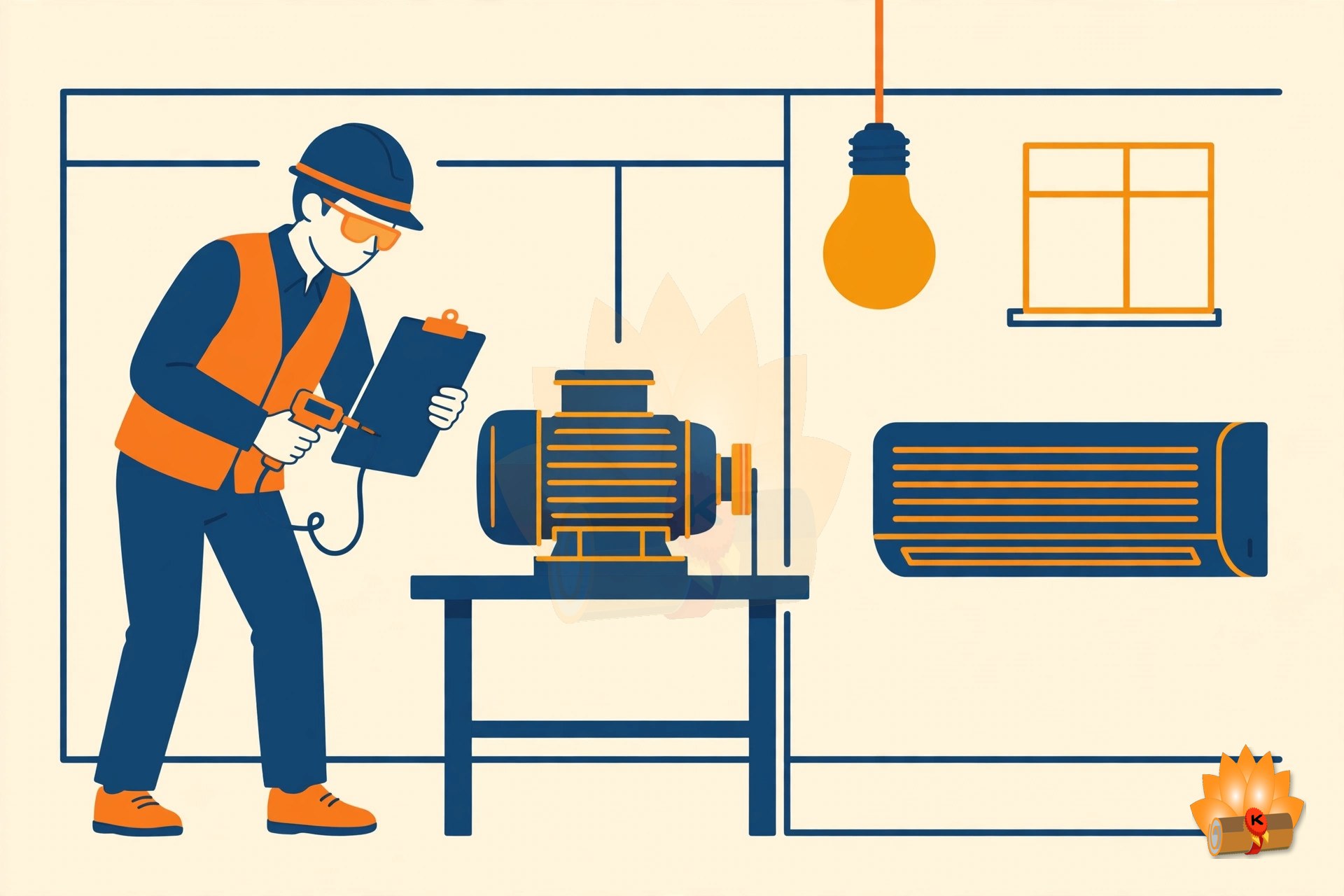
What You Will Study
Unit 1 — Basics of Energy (6 Periods, 20%)
Classification of energy — primary and secondary energy, commercial and non-commercial energy, non-renewable and renewable energy with special reference to solar energy; capacity factor of solar and wind power generators; global fuel reserve; energy scenario in India and state of U.P.; sector-wise energy consumption (domestic, industrial, agricultural and other sectors); impact of energy usage on climate; Energy Conservation and EC Act 2001. Introduction to energy management: energy conservation, energy efficiency and its need; salient features of Energy Conservation Act 2001 and The Energy Conservation (Amendment) Act, 2010 and its importance; prominent organisations at centre and state level responsible for its implementation; standards and labelling: concept of star rating and its importance, types of product available for star rating.
The basics of energy — primary and secondary, commercial and non-commercial, renewable and non-renewable — the energy scenario in India and U.P., and the Energy Conservation Act 2001.
Unit 2 — Electrical Supply System and Motors (7 Periods, 25%)
Types of electrical supply system, single line diagram, losses in electrical power distribution system, understanding electricity bill: transformers, tariff structure, components of power (kW, kVA and kVAR) and power factor, improvement of power factor, concept of sanctioned load, maximum demand, contract demand and monthly minimum charges (MMC). Transformers: introduction, losses in transformer, transformer loading, tips for energy savings in transformers. Electric motors: types of motors, losses in induction motors, features and characteristics of energy efficient motors, estimation of motor loading, variation in efficiency and power factor with loading, tips for energy savings in motors. Energy efficiency in electrical utilities. Pumps: introduction to pump and its applications, efficient pumping system operation, energy efficiency in agriculture pumps, tips for energy saving in pumps. Compressed air system: types of air compressor and its applications, leakage test, energy saving opportunities in compressors. Energy conservation in HVAC and refrigeration system: introduction, concept of Energy Efficiency Ratio (EER), energy saving opportunities in heating, ventilation and air conditioning (HVAC) and refrigeration systems.
The electrical side — supply systems, transformers, tariffs, power factor, motors, pumps, compressed air and HVAC — and where energy is wasted in each.
Unit 3 — Lighting and DG Systems (6 Periods, 20%)
Lighting systems: basic definitions — lux, lumen and efficacy; types of different lamps and their features; energy efficient practices in lighting. DG systems: introduction, energy efficiency opportunities in DG systems, loading estimation. Energy efficiency in thermal utilities. Thermal basics: thermal energy, energy content in fuels, energy units and its conversions in terms of Metric Tonne of Oil Equivalent (MTOE). Energy conservation in boilers and furnaces: introduction and types of boilers, energy performance assessment of boilers, concept of stoichiometric air and excess air for combustion, energy conservation in boilers and furnaces, do's and don'ts for efficient use of boilers and furnaces. Cooling towers: basic concept of cooling towers, tips for energy savings in cooling towers, efficient steam utilisation.
Lighting and diesel generator systems, boilers and furnaces, and cooling towers — and the energy-saving opportunities in each.
Unit 4 — Energy Conservation Building Code (ECBC) (4 Periods, 15%)
ECBC and its salient features; tips for energy savings in buildings: new buildings, existing buildings; waste heat recovery and co-generation: concept, classification and benefits of waste heat recovery, concept and types of co-generation system.
The Energy Conservation Building Code (ECBC) — its salient features and tips for saving energy in new and existing buildings, plus waste heat recovery and co-generation.
Unit 5 — General Energy Saving Tips (5 Periods, 20%)
Energy saving tips in: lighting, room air conditioner, refrigerator, water heater, computer, fan, heater, blower and washing machine, colour television, water pump, cooking, transport; energy audit, types and methodology, energy audit instruments, energy auditing reporting format.
Everyday energy saving — lights, AC, fridge, fans, pumps, cooking and transport — and what an energy audit is, its types, methodology and instruments.
Instead of This Elective — Advance Skill Development
The 6th-semester scheme allows an Advance Skill Development certification course to be taken instead of Open Elective-02. No course name is given for the 6th-semester option in the PDF (unlike the 5th semester, which names Advanced Plumbing, TATA TECH.). No detailed contents for this certification course are given in the PDF.
Complete Syllabus
The full examination scheme, the complete practicals list and the reference books from the official syllabus. The unit-wise topics are in the “What You Will Study” section above.
Examination Scheme
| Code | Paper | Type | L – P | Credits | Internal | External | Total |
|---|---|---|---|---|---|---|---|
| 6.3 | Open Elective-02: Energy Conservation and Audit | Theory | 2 – 0 | 2 | 50 | — | NA |
| Open Elective-02 Total | 2 | 50 | — | NA | |||
Units at a Glance
| Unit | Topic | Periods | Marks Share |
|---|---|---|---|
| 1 | Basics of Energy | 6 | 20% |
| 2 | Electrical Supply System and Motors | 7 | 25% |
| 3 | Lighting and DG Systems | 6 | 20% |
| 4 | Energy Conservation Building Code (ECBC) | 4 | 15% |
| 5 | General Energy Saving Tips | 5 | 20% |
Reference Books
As listed in the syllabus:
- Electric Energy Generation, Utilization and Conservation — Sivaganaraju, S, Pearson, New Delhi, 2012.
- Project Management, Prasanna Chandra, Tata Mcgraw Hill, New Delhi.
- Energy Conservations in Buildings, O.P. Jakhar, Khanna Publishing House, New Delhi.
- Financial Management, Prasanna Chandra, Tata Mcgraw Hill, New Delhi.
- Energy management Handbook, Prasanna Chandra, Tata Mcgraw Hill, New Delhi.
- Energy Technology, O.P. Gupta, Khanna Publishing House, New Delhi (ed. 2018).
- E-books/e-tools to be used as recommended by AICTE/NITTTR, Chandigarh.
- Website for reference: http://swayam.gov.in
Frequently Asked Questions
How many marks is Energy Conservation and Audit worth in the 6th semester?
50 marks internal only — the total is marked “NA” in the scheme, so it is not counted in the semester total. It carries 2 credits.
Which units carry the most weightage in Energy Conservation and Audit?
Electrical Supply System and Motors (25%, 7 periods) — the highest weightage in the subject. The complete unit-wise weightage table is in the Complete Syllabus section above.
Is Energy Conservation and Audit a theory subject or a practical subject?
Open Elective-02: Energy Conservation and Audit is theory (L–P 2 – 0).
Is Energy Conservation and Audit counted in the 6th semester total of 650 marks?
No. Energy Conservation and Audit (Open Elective-02) is 50 marks internal only, and its total is marked “NA” in the scheme — it is not counted in the semester total of 650 marks.
Can I take an Advance Skill Development course instead of this elective?
Yes. The scheme allows an Advance Skill Development certification course instead of Open Elective-02. Unlike the 5th semester, no course name is given for the 6th-semester option in the syllabus PDF, and no detailed contents are given.
How can I download the Energy Conservation and Audit syllabus PDF?
The PDF is free to download — use the download link in the Download section below. It is prepared by KAMALDNP Academy from the official BTEUP syllabus.
Related Syllabus Posts
- BTEUP Civil 6th Semester Syllabus 2026-27
- BTEUP Civil Complete Syllabus 2026-27 — 5th & 6th Semester (All Subjects)
- Construction Management — BTEUP Civil 6th Semester Syllabus 2026-27
- Advance Construction Technology — BTEUP Civil 6th Semester Syllabus 2026-27
- Entrepreneurship and Start-up — BTEUP Civil 6th Semester Syllabus 2026-27
- Renewable Energy Technology — BTEUP Civil 6th Semester Syllabus 2026-27
Download the Energy Conservation and Audit Syllabus PDF
Download the complete Energy Conservation and Audit syllabus PDF below — prepared by KAMALDNP Academy, with the full topic list, practicals and reference books.
Download the Energy Conservation and Audit Syllabus PDF
Source: BTEUP 3rd Year curriculum (folder2627), approved in C.D.C. meeting held on 16.07.2026. Topic lists follow the official syllabus; short explanations are the author's own plain-English summaries, not syllabus text. Please confirm with your own polytechnic for any local changes.



Comments (0)
Share your question or experience about this syllabus. Your comment will appear after review.
No comments yet — be the first to share your thoughts!