
4th Semester Is Here — RCC Design Begins
The 4th semester is where the second year turns serious. Surveying moves from the chain and compass to the theodolite, the total station and GPS; structures move from mechanics of material to the theory of structures and the design of RCC; and two water subjects arrive — Hydraulics and Water Resource Engineering — alongside Public Health Engineering and a qualifying audit course on the Indian Knowledge System.
One thing to know before you start: the 2026-27 syllabus is the updated NEP-2020 curriculum, approved by the Board of Technical Education, UP in its meeting on 16 July 2026. The 3rd and 4th semester contents here are verified from the IIMT mirror of the official 2nd-year curriculum. If you are studying from the old syllabus, stop — subject names, codes and structure have all changed.
4th Semester At A Glance — The Full Picture
A total of 950 marks and 20 credits. The heaviest subjects are Hydraulics and Advance Surveying — 200 marks each, theory plus lab. Theory of Structure, Design of RCC Structures, RCC Structures Drawing, Water Resource Engineering and Public Health Engineering are 100 marks each. Essence of Indian Knowledge and Tradition is a qualifying audit course — 50 internal marks, not counted in the total — and SCA adds 50 marks. Note: the semester total of 950 marks reconciles exactly (internal 470 / external 480) only if Public Health Engineering's (4.9) 40 internal marks count as Practical and the 50 internal marks of the audit course (4.10, marked *) are excluded; the scheme table's column alignment is garbled in the source, so this split is inferred from the totals, not read directly.
| Code | Subject | Type | Credits | Marks |
|---|---|---|---|---|
| 4.1 | Hydraulics | Theory | 2 | 100 |
| 4.2 | Hydraulics Lab. | Practical | 1 | 100 |
| 4.3 | Advance Surveying | Theory | 2 | 100 |
| 4.4 | Advance Surveying Lab. | Practical | 2 | 100 |
| 4.5 | Theory of Structure | Theory | 3 | 100 |
| 4.6 | Design of Reinforced Cement Concrete Structures | Theory | 3 | 100 |
| 4.7 | Reinforced Cement Concrete Structures Drawing | Practicum/Practical | 3 | 100 |
| 4.8 | Water Resource Engineering | Theory | 2 | 100 |
| 4.9 | Public Health Engineering | Practicum/Theory | 2 | 100 |
| 4.10 | Essence of Indian Knowledge and Tradition (Q) | Audit Course | — | — |
| — | Student Centred Activities (SCA) | Activity | — | 50 |
| Total (4th Semester) | 20 | 950 marks | ||
Note: the semester total of 950 marks reconciles exactly (internal 470 / external 480) only if Public Health Engineering's (4.9) 40 internal marks count as Practical and the 50 internal marks of the audit course (4.10, marked *) are excluded — the audit course is qualifying only. The scheme table's column alignment is garbled in the source, so this split is inferred from the totals, not read directly.
What You Study In Each Subject — In Simple Words
1. Hydraulics (Theory + Lab)
To understand the parameters associated with fluid flow and hydrostatic pressure, know head loss and water hammer in fluid flowing through pipes, and learn the different types of pumps and their uses — so that you can measure pressure, work out head loss, find flow in open channels, and select the right pump for a job.

2. Advance Surveying (Theory + Lab)
To know the methods of plane table surveying and theodolite surveying and their uses, learn tachometric surveying and curve setting, understand the principles of electronic distance measurement equipment and total station and their use, and know the concept of remote sensing, GPS and GIS.

3. Theory of Structure (Theory)
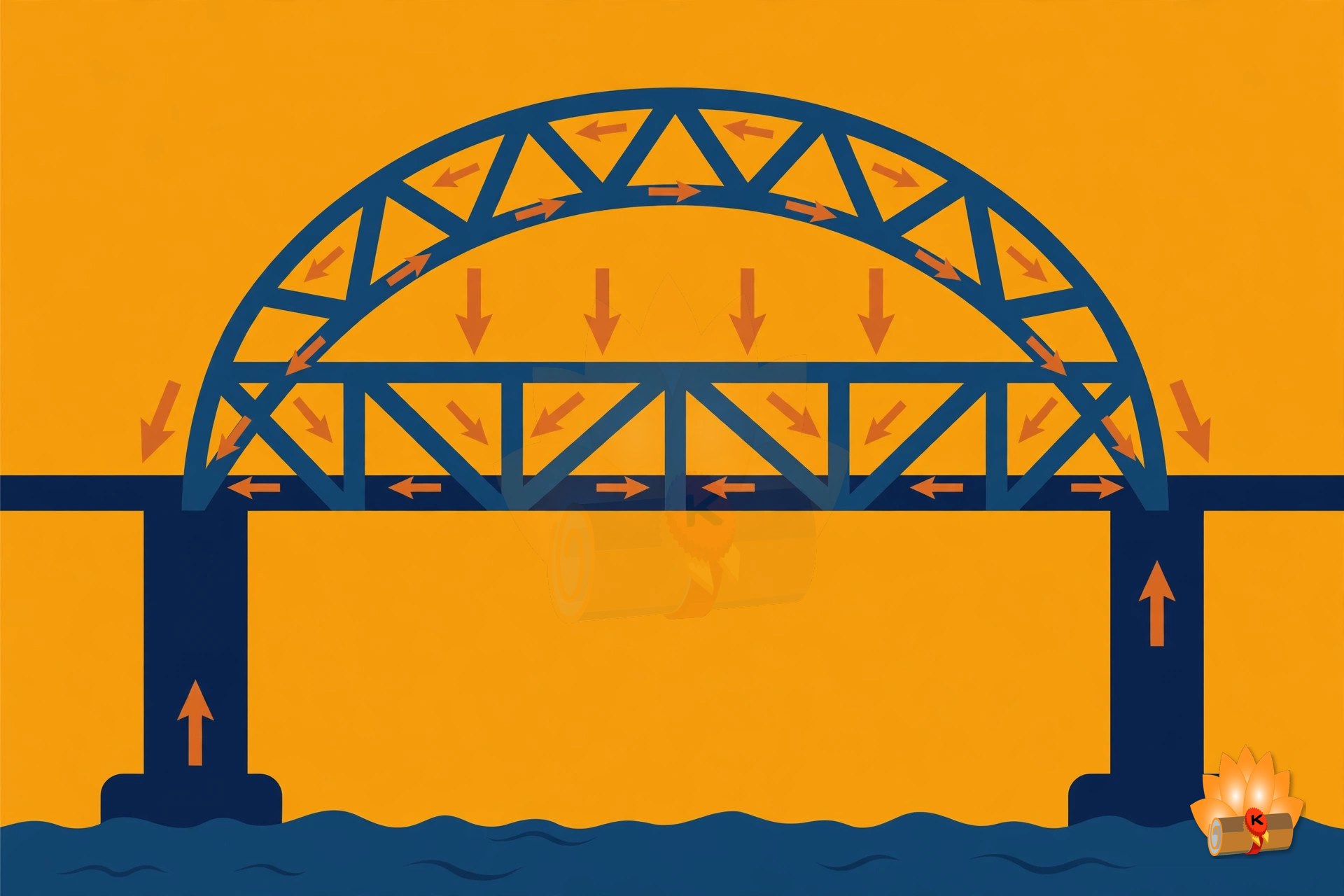
To learn the concept of eccentric loading and stresses in vertical members like columns, chimneys and dams, analyse beams using methods like slope deflection, three moment and moment distribution, and understand different methods of finding axial forces in trusses.
4. Design of RCC Structures (Theory)
To learn the concept of limit state design for tension and compression members and steel beams, understand the design of RCC elements, and know the design of short and long RCC columns.

5. RCC Structures Drawing (Practicum)
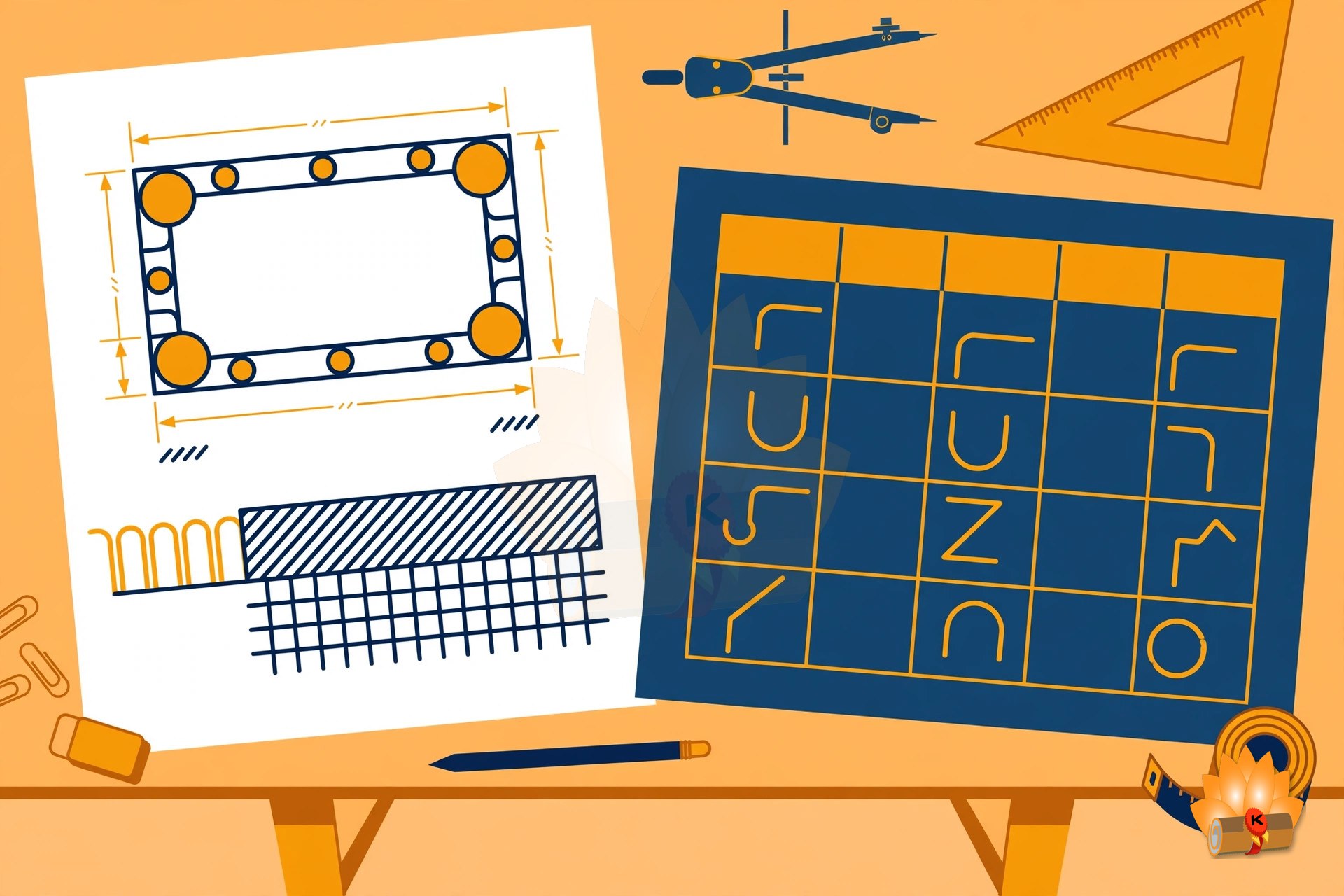
To learn the concept of limit state design of tension and compression members and steel beams, understand the design of RCC beams and columns, and draw their reinforcement details with bar bending schedules.
6. Water Resource Engineering (Theory)
To learn estimation of hydrological parameters, understand water demand of crops and provisions to meet the same, know planning of reservoirs and dams, and design irrigation projects, canals and other diversion works.

7. Public Health Engineering (Practicum)
To learn the principles for identification of sources of surface and subsurface water, learn calculation of population and requirement of drinking water, understand the plotting of a water supply scheme highlighting different features, and know evaluation of characteristics and treatment of sewage.
8. Essence of Indian Knowledge and Tradition (Audit Course, Qualifying + SCA)
To understand the fundamental aspects of the Indian Knowledge System, its integration with modern science, principles of Yoga and holistic healthcare, and practical applications in contemporary contexts.

Essence Of Indian Knowledge And Tradition And SCA — The Qualifying Course
Not every subject in the diploma is about concrete and steel. Essence of Indian Knowledge and Tradition is about the knowledge system India built over thousands of years — the Vedas, the Upavedas, the Vedangas and the Upangas — and how that knowledge connects with modern science, yoga and holistic healthcare. It is an audit course, marked (Q): you must appear for it and pass it, but its 50 internal marks are not added to your percentage or division, and it carries no credits.
The subject has four units of 7 periods each: an introduction to the Indian Knowledge System, modern science and the Indian Knowledge System, yoga and holistic healthcare, and case studies showing the relevance of the Indian Knowledge System in modern times. No books list is given in the PDF for this subject. Alongside it, Student Centred Activities (SCA) carry 50 marks — and unlike the audit course, the SCA marks are counted in the semester total of 950.
How To Prepare For The 4th Semester — A Practical Approach
Start with the two 200-mark subjects — Hydraulics and Advance Surveying — because their labs (10 and 13 experiments) take the most time. Design of RCC Structures and RCC Structures Drawing go together: learn the design in one, draw it in the other, in the same week. Theory of Structure needs the 3rd semester's Mechanics of Material, so revise shear force and bending moment diagrams before the semester begins. And remember the audit course: you must appear and pass it, even though its marks do not count.
Complete Syllabus
The full examination scheme for the 4th semester, with lecture and practical hours and internal and external marks, followed by the unit-wise topics and the complete practicals list of every subject.
Examination Scheme — Full Detail
| Code | Paper | Type | L – P | Credits | Internal | External | Total |
|---|---|---|---|---|---|---|---|
| 4.1 | Hydraulics | Theory | 2 – 0 | 2 | Theory 40 | Theory 60 (3 hrs) | 100 |
| 4.2 | Hydraulics Lab. | Practical | 0 – 2 | 1 | Practical 60 | Practical 40 (3 hrs) | 100 |
| 4.3 | Advance Surveying | Theory | 2 – 0 | 2 | Theory 40 | Theory 60 (3 hrs) | 100 |
| 4.4 | Advance Surveying Lab. | Practical | 0 – 4 | 2 | Practical 60 | Practical 40 (3 hrs) | 100 |
| 4.5 | Theory of Structure | Theory | 2 – 0 | 3 | Theory 40 | Theory 60 (3 hrs) | 100 |
| 4.6 | Design of Reinforced Cement Concrete Structures | Theory | 2 – 0 | 3 | Theory 40 | Theory 60 (3 hrs) | 100 |
| 4.7 | Reinforced Cement Concrete Structures Drawing | Practicum/Practical | 1 – 4 | 3 | Practical 60 | Practical 40 (3 hrs) | 100 |
| 4.8 | Water Resource Engineering | Theory | 2 – 0 | 2 | Theory 40 | Theory 60 (3 hrs) | 100 |
| 4.9 | Public Health Engineering | Practicum/Theory | 1 – 2 | 2 | 40 | Theory 60 (3 hrs) | 100 |
| 4.10 | Essence of Indian Knowledge and Tradition (Q) | Audit Course | 2 – 0 | — | 50* | — | — |
| — | Student Centred Activities (SCA) | Activity | 0 – 8 | — | 50 | — | 50 |
| Total (4th Semester) | 20 | 470 | 480 | 950 | |||
Note: the semester total of 950 marks reconciles exactly (internal 470 / external 480) only if Public Health Engineering's (4.9) 40 internal marks count as Practical and the 50 internal marks of the audit course (4.10, marked *) are excluded — the audit course is qualifying only. The scheme table's column alignment is garbled in the source, so this split is inferred from the totals, not read directly.
Hydraulics
Units at a Glance
| Unit | Topic | Periods | Marks Share |
|---|---|---|---|
| 1 | Pressure Measurement and Hydrostatic Pressure | 6 | 20% |
| 2 | Fluid Flow Parameters | 4 | 15% |
| 3 | Flow through Pipes | 8 | 25% |
| 4 | Flow through Open Channel | 5 | 20% |
| 5 | Hydraulic Pumps | 5 | 20% |
Complete Practicals List
This is the complete list of practicals from the official syllabus.
- Use piezometer to measure pressure at a given point.
- Use U-tube differential manometer to measure pressure difference between two given points.
- Use Reynold's apparatus to determine type of flow.
- Use Bernoulli's apparatus to apply Bernoulli's theorem to get total energy line for a flow in a closed conduit of varying cross sections.
- Determine minor losses in pipe fittings due to sudden contraction and sudden enlargement.
- Calibrate venturimeter to find out the discharge in a pipe.
- Calibrate the orifice to find out the discharge through a tank.
- Use current meter to measure the velocity of flow of water in open channel.
- Use Pitot tube to measure the velocity of flow of water in open channel.
- Use rectangular and triangular notch to measure the discharge through open channel.
Reference Books
As listed in the syllabus:
- Modi, P. N. and Seth, S.M., Hydraulics and Fluid Mechanics, Standard book house, Delhi.
- S.S. Rattan, Fluid Mechanics & Hydraulic Machines, Khanna Book Publishing Co., New Delhi.
- Ramamrutham, and Narayan, R., Hydraulics, Fluid Mechanics and Fluid Machines, Dhanpat Rai Publishing, New Company Delhi.
- Khurmi R S, Hydraulics, Fluid Mechanics, Hydraulic machines, S. Chand Publishers.
- Rajput, R K, Fluid Mechanics, S Chand, New Delhi.
- Ojha, C S P, Berndtsson, R, and Chandramoulli P. N., Fluid Mechanics and Machinery, Oxford University Press, New Delhi.
Advance Surveying
Units at a Glance
| Unit | Topic | Periods | Marks Share |
|---|---|---|---|
| 1 | Plane Table Surveying | 4 | 20% |
| 2 | Theodolite Surveying | 6 | 20% |
| 3 | Tacheometric Surveying and Curve Setting | 6 | 20% |
| 4 | Advanced Surveying Equipments | 6 | 20% |
| 5 | Remote Sensing, GPS and GIS | 6 | 20% |
Complete Practicals List
This is the complete list of practicals from the official syllabus.
- Use plane table survey to prepare plans of a plot of seven sided closed traverse by radiation method.
- Use plane table survey to prepare plans, locate details by intersection method and resection method (two point problem and three point problem).
- Use plane table survey to prepare plans, locate details by traversing method.
- Use plane table survey to carry out survey project for closed traverse for minimum five sides around a building.
- Use transit theodolite to measure horizontal and vertical angle by direct method.
- Plot the traverse on A1 size imperial drawing sheet for the collected data from preceding theodolite survey project.
- Set out a circular curve by Rankine's method of deflection angles.
- Use EDM to measure horizontal distance.
- Use total station instrument to measure horizontal distances.
- Use total station instrument to measure vertical angle.
- Use total station instrument to carry out survey project for closed traverse for minimum five sides.
- Plot the traverse on A1 size imperial drawing sheet for the collected data from preceding total station survey project.
- Use GPS to locate the coordinates of a station.
Reference Books
As listed in the syllabus:
- Kanetkar, T. P.; Kulkarni, S. V., Surveying and Levelling Part I and II, Pune Vidyarthi Gruh Prakashan, Pune.
- Basak, N. N., Surveying and Levelling, McGraw Hill Education (India) Pvt. Ltd., Noida.
- Duggal, S. K., Survey I and Survey II, Tata McGraw Hill Education Pvt. Ltd., Noida.
- Saikia, M D.; Das. B.M.; Das. M.M., Surveying, PHI Learning Pvt. Ltd., New Delhi.
- D.V. Gupta, Vikram Singh, Land Surveying-II, Asian Publishers, Muzaffarnagar, ISBN: 978-93-91541-59-0.
- Subramanian, R., Surveying and Levelling, Oxford University Press, New Delhi.
- Punmia, B.C.; Jain, Ashok Kumar; Jain, Arun Kumar, Surveying Vol. I and Surveying Vol. II, Laxmi Publications Pvt. Ltd., New Delhi.
- Rao, P. Venugopala Akella, Vijayalakshmi, Textbook of Surveying, PHI Learning Pvt. Ltd., New Delhi.
- Venkatramaiah, C, Textbook of Surveying, Universities Press, Hyderabad.
- Anderson, James M and Mikhail, Edward M, Surveying theory and practice, McGraw Hill Education, Noida.
- De, Alak, Plane Surveying, S.Chand Publications, New Delhi.
Theory of Structure
Units at a Glance
| Unit | Topic | Periods | Marks Share |
|---|---|---|---|
| 1 | Principal Stress and Strain | 6 | 20% |
| 2 | Combined Direct and Bending Stress | 6 | 20% |
| 3 | Strain Energy | 6 | 20% |
| 4 | Moment Distribution Method and Slope Deflection Method | 5 | 20% |
| 5 | Simple Trusses | 5 | 20% |
Reference Books
As listed in the syllabus:
- Ramamrutham. S, Theory of structures, Dhanpatrai & Sons.
- Khurmi, R. S., Theory of Structures, S. Chand and Co., New Delhi.
- Bhavikatti, S S, Structural Analysis Vol-1, Vikas Publishing House Pvt Ltd., New Delhi.
- Dr. Vijay Mittal, Amit Verma, Structural Mechanics, Asian Publishers, Muzaffarnagar, ISBN: 978-93-91541-23-1.
- Junnarkar, S. B., Mechanics of structures, Volume-I and II, Charotar Publishing House, Anand.
- Pandit, G.S. and Gupta, S.P., Theory of Structures, Tata McGraw Hill, New Delhi.
- Agor R, Structural Analysis, Khanna Publishing House, Delhi.
Design of RCC Structures
Units at a Glance
| Unit | Topic | Periods | Marks Share |
|---|---|---|---|
| 1 | Introduction | 8 | 20% |
| 2 | Concept of Limit State Method | 8 | 20% |
| 3 | Design of Reinforced Concrete Beams by Limit State Method | 9 | 20% |
| 4 | Design of One Way and Two Way Slab | 9 | 20% |
| 5 | Design of Axially Loaded RCC Column and Pre-stressed Concrete | 9 | 20% |
Reference Books
As listed in the syllabus:
- Shah, V. L., and Karve, S.R., Limit State Theory and Design of Reinforced Concrete Structures, Structures Publications, Pune, 2014.
- Sinha N.C., and Roy S.K., Fundamentals of Reinforced Concrete, S. Chand & Co., New Delhi.
- D.V. Gupta, Vikram Singh, Reinforced Concrete Technology, Asian Publishers, Muzaffarnagar, ISBN: 978-93-5502-123-6.
- Krishna Raju, and N. Pranesh, R.N., Reinforced Concrete Design Principles and Practice, New Age International, Mumbai.
- Pillai, S.U., and Menon, Devdas, Reinforced Concrete Design, McGraw Hill Publications, New Delhi.
- Varghese, P. C., Limit State Design of Reinforced Concrete, Prentice Hall India Learning Private Limited, Delhi.
RCC Structures Drawing
Complete Practicals List
This is the complete list of practicals from the official syllabus.
- Reinforcement details from the given data for the following structural elements with bar bending schedules.
- General instruction and rules, Drawing 1 — lap, joint, development drawing: length, rings, hook etc.
- Drawing No. 2: RC Slabs — one way slab, two way slab and cantilever slab.
- Drawing No. 3: Beams — singly and doubly reinforced rectangular beams and cantilever beam (all beams with vertical stirrups), T beam, tapered beam.
- Drawing No. 4: Columns and footings — square, rectangular and circular columns with lateral ties and their isolated sloped column footings, column and beam junction.
- Drawing No. 5: Portal frame — three bay two storey RC portal frame with blow up of column beam junctions.
- Drawing of cantilever retaining wall showing details of all the members and reinforcement.
- Drawing of Intze type water tank showing details of all the members and reinforcement.
Reference Books
As listed in the syllabus:
- Shah, V. L., and Karve, S.R., Limit State Theory and Design of Reinforced Concrete Structures, Structures Publications, Pune, 2014.
- Sinha N.C., and Roy S.K., Fundamentals of Reinforced Concrete, S. Chand & Co., New Delhi.
- Krishna Raju, and N. Pranesh, R.N., Reinforced Concrete Design Principles and Practice, New Age International, Mumbai.
- Pillai, S.U., and Menon, Devdas, Reinforced Concrete Design, McGraw Hill Publications, New Delhi.
- Varghese, P. C., Limit State Design of Reinforced Concrete, Prentice Hall India Learning Private Limited, Delhi.
Water Resource Engineering
Units at a Glance
| Unit | Topic | Periods | Marks Share |
|---|---|---|---|
| 1 | Introduction to Hydrology | 5 | 20% |
| 2 | Crop Water Requirement | 6 | 20% |
| 3 | Methods of Irrigation | 5 | 20% |
| 4 | Diversion Head Works & Canals | 6 | 20% |
| 5 | Dams and Spillways and River Training Works | 6 | 20% |
Reference Books
As listed in the syllabus:
- Punmia, B.C., Pande, B, Lal, Irrigation and Water Power Engineering, Laxmi Publications.
- Subramanayan, Engineering Hydrology, McGraw Hill.
- D.V. Gupta, Vikram Singh, Irrigation Engineering, Asian Publishers, Muzaffarnagar, ISBN: 978-93-5502-115-1.
- Mutreja K N, Applied Hydrology, McGraw Hill.
- Sharma, R.K. and Sharma, T.K., Irrigation Engineering, S.Chand.
- Basak, N.N., Irrigation Engineering, McGraw Hill Education.
- Asawa, G.L., Irrigation and water resource Engineering, New Age.
- Dahigaonkar, J.G., Irrigation Engineering, Asian Book Pvt. Ltd., New Delhi.
- Garg, S K, Irrigation and Hydraulic Structures, Khanna Publishers, Delhi.
- Priyani V.B., Irrigation Engineering, Charotar Book Stall, Anand.
Public Health Engineering
Units at a Glance
| Unit | Topic | Periods | Marks Share |
|---|---|---|---|
| 1 | Sources, Demand and Quality of Water | 3 | 20% |
| 2 | Purification of Water | 3 | 20% |
| 3 | Conveyance and Distribution of Water | 2 | 20% |
| 4 | Domestic Sewage and Sewerage System | 3 | 20% |
| 5 | Characteristics and Treatment of Sewage | 3 | 20% |
Complete Practicals List
This is the complete list of practicals from the official syllabus.
- Determine pH value of given sample of water.
- Determine the turbidity of the given sample of water.
- Determine residual chlorine in a given sample of water.
- Determine suspended, dissolved solids and total solids of given sample of water.
- Determine the dissolved oxygen in a sample of water.
- Determine the optimum dose of coagulant in a given raw water sample by jar test.
- Determine B.O.D. of given sample of sewage.
- Determine pH value of given sample of sewage.
- Determine suspended solids, dissolved and total solids for sample of sewage.
- Determine the dissolved oxygen in the given sample of sewage.
- Determine C.O.D. of given sample of sewage.
- Prepare a report of a field visit to sewage treatment plant or water treatment plant.
Reference Books
As listed in the syllabus:
- Sharma S.C, Environmental Engineering, Khanna Publishing House, New Delhi.
- Garg, S.K., Environmental Engineering Vol. I and Vol. II, Khanna Publishers.
- Birdie, G. S. and Birdie, J. S., Water Supply and Sanitary Engineering, Dhanpat Rai.
- Gupta, O.P., Elements of Environmental Pollution Control, Khanna Publishing House, Delhi.
- Rao, C.S., Environmental Pollution Control Engineering, New Age International.
- Punmia, B C, Environmental Engineering, vol. I and II, Laxmi Publishers.
- D.V. Gupta, Vikram Singh, Water & Waste Water Engineering, Asian Publishers, Muzaffarnagar, ISBN: 978-93-91541-52-1.
- Peavy H S, Rowe D R, and Tchobanoglous G, Environmental Engineering, McGraw.
- Basak N N, Environmental Engineering, McGraw Hill Publishers.
Essence of Indian Knowledge and Tradition
Units at a Glance
| Unit | Topic | Periods | Marks Share |
|---|---|---|---|
| 1 | Introduction to Indian Knowledge System | 7 | 30% |
| 2 | Modern Science and Indian Knowledge System | 7 | 25% |
| 3 | Yoga and Holistic Healthcare | 7 | 25% |
| 4 | Case Studies / Assignment | 7 | 20% |
Student Centred Activities (SCA) — 50 Marks
A provision for overall personality development, including co-curricular activities such as extension lectures, games, hobby clubs (for example photography, painting and singing), seminars, declamation contests, educational field visits, NCC, NSS, library work, cultural activities and self-study. Maximum marks for SCA: 50, distributed as: (i) 15 marks for general behaviour and discipline (by HODs in consultation with all the teachers of the department); (ii) 10 marks for attendance — 75–80% = 6 marks, 80–85% = 8 marks, above 85% = 10 marks; (iii) 25 marks maximum for sports / NCC / cultural / co-curricular / NSS activities — 25 for state/national level participation, 20 for participation in two of the above activities, 15 for inter-polytechnic level participation. Note: there should be no marks for attendance in the internal sessional of different subjects.
Frequently Asked Questions
How many total marks are there in the 4th semester?
950 marks, 20 credits. Two 200-mark subjects (Hydraulics, Advance Surveying), five 100-mark subjects (Theory of Structure, Design of RCC Structures, RCC Structures Drawing, Water Resource Engineering, Public Health Engineering), and 50 marks for SCA. The 50 internal marks of the audit course (4.10) are qualifying only and are not counted.
Why is the 4th semester total 950 marks and not 1000?
Because Essence of Indian Knowledge and Tradition (4.10) is a qualifying audit course marked (Q). Its 50 internal marks are excluded from the semester total; only the 50 SCA marks are counted. 200 + 200 + 100 + 100 + 100 + 100 + 100 + 50 = 950.
Which subjects carry the most marks?
Hydraulics and Advance Surveying — 200 marks each (theory + lab). Together they are 400 of the 950 marks.
What is the audit course in the 4th semester?
Essence of Indian Knowledge and Tradition (4.10), marked (Q). You must appear for it and pass it, but its 50 internal marks are not included in your percentage or division, and the subject carries no credits.
Why is there a note about the internal marks of Public Health Engineering?
The 4th-semester scheme table's column alignment is garbled in the source. The semester total of 950 marks reconciles exactly (internal 470 / external 480) only if Public Health Engineering's (4.9) 40 internal marks count as Practical (its 60 external marks count as Theory) and the audit course's 50 internal marks are excluded. That split is inferred from the totals, not read directly — it is recorded here honestly, not silently corrected.
How can I download the subject-wise syllabus PDFs?
Use the download link in the Download section below for the complete 3rd–4th semester PDF, or open any subject post from the Related Syllabus Posts list — each subject post has its own PDF download.
Related Syllabus Posts
- BTEUP Civil Engineering Complete Syllabus 2026-27 — All Years, All Semesters
- BTEUP Civil 3rd Semester Syllabus 2026-27
- Hydraulics — BTEUP Civil 4th Semester Syllabus 2026-27
- Advance Surveying — BTEUP Civil 4th Semester Syllabus 2026-27
- Theory of Structure — BTEUP Civil 4th Semester Syllabus 2026-27
- Design of RCC Structures — BTEUP Civil 4th Semester Syllabus 2026-27
- RCC Structures Drawing — BTEUP Civil 4th Semester Syllabus 2026-27
- Water Resource Engineering — BTEUP Civil 4th Semester Syllabus 2026-27
- Public Health Engineering — BTEUP Civil 4th Semester Syllabus 2026-27
- Essence of Indian Knowledge and Tradition — BTEUP Civil 4th Semester Syllabus 2026-27
Download The Complete Syllabus PDF
Download the complete 3rd–4th semester syllabus PDF below — all 15 subjects in one file, prepared by KAMALDNP Academy.
Download The Complete 3rd–4th Semester Syllabus PDF
Source: BTEUP 2nd Year curriculum (IIMT mirror of the official curriculum), approved in C.D.C. meeting held on 16.07.2026. Topic lists follow the official syllabus; short explanations are the author's own plain-English summaries, not syllabus text. Please confirm with your own polytechnic for any local changes.


Comments (0)
Share your question or experience about this syllabus. Your comment will appear after review.
No comments yet — be the first to share your thoughts!