
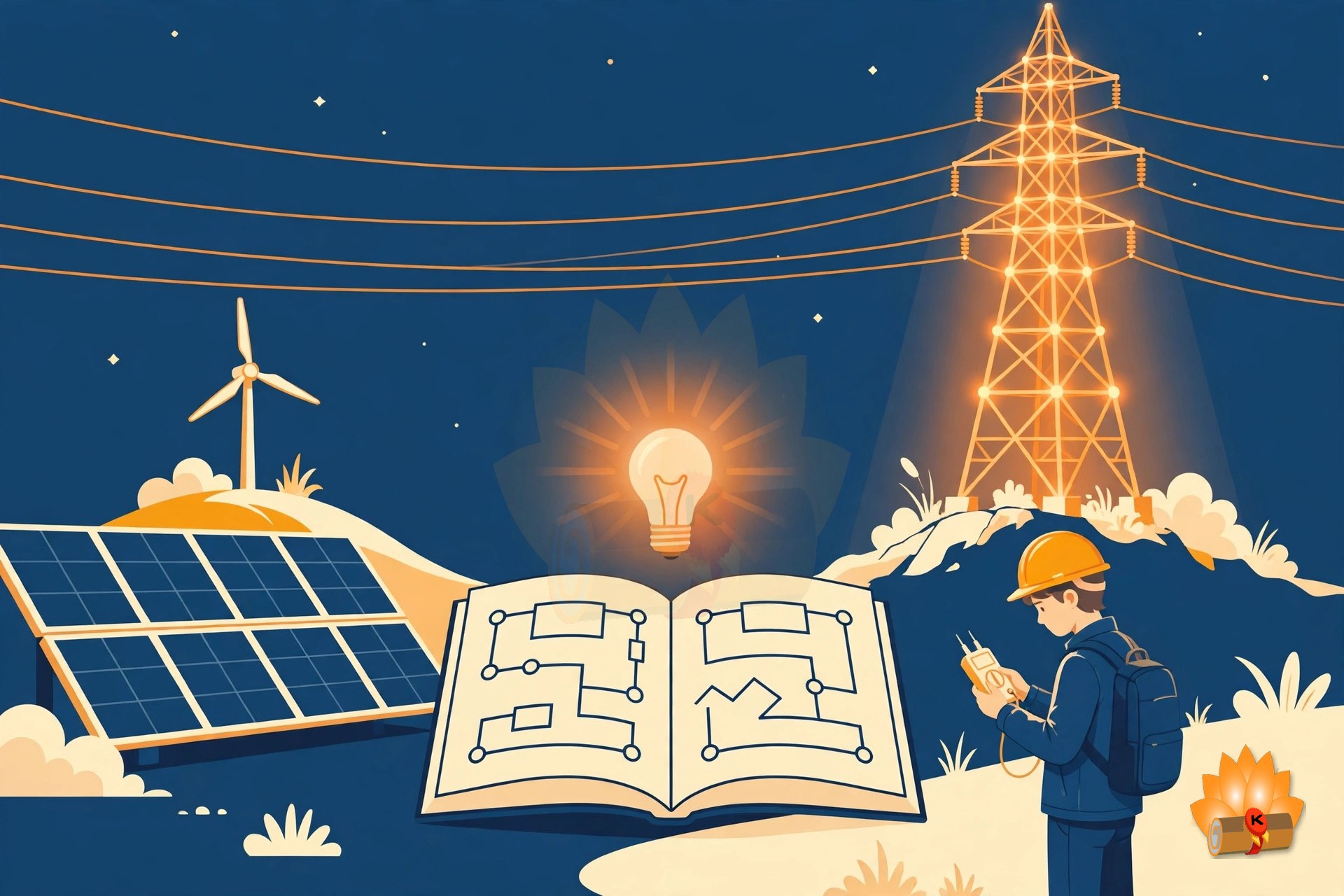
BTEUP Electrical Engineering पूरा सिलेबस 2026-27 — सभी वर्ष, सभी सेमेस्टर, PDF डाउनलोड
यह पूरे diploma के लिए BTEUP Electrical Engineering का पूरा सिलेबस 2026-27 है — Electrical syllabus 2026-27 all semesters एक ही जगह, एक ही मुफ़्त PDF में। 1st year (11 विषय, सभी 41 engineering branches के लिए common), पूरा 3rd सेमेस्टर (600 अंक, 20 क्रेडिट), पूरा 4th सेमेस्टर (650 अंक, 20 क्रेडिट), पूरा 5th सेमेस्टर (650 अंक, 20 क्रेडिट) और पूरा 6th सेमेस्टर (650 अंक, 20 क्रेडिट) — सभी यहाँ हैं, examination schemes, units, practicals और अंकों के साथ। BTEUP Electrical syllabus PDF download मुफ़्त है, और नीचे हर विषय अपने विस्तृत पोस्ट और अपने subject PDF से जुड़ा है।
एक ईमानदार बात पहले ही बता देते हैं: 2nd year (3rd और 4th सेमेस्टर) अब इस file में शामिल है। यह official 2nd Year Electrical Engineering curriculum (folder2627) से लिया गया है, जो Board of Technical Education, U.P. Lucknow द्वारा 16.07.2026 को हुई C.D.C. meeting में approved हुआ था — approval line file के हर page पर है (95 बार)। एक बात जान लें: BTEUP की अपनी file के cover पर “YEAR 2025-2026” छपा है, जबकि उसमें दी गई scheme 2025-26 scheme से एक जैसी है — इसलिए content दोनों तरह से एक ही है।
PDF के बारे में — यह क्या है, कैसे बना है, कैसे इस्तेमाल करें
यह PDF KAMALDNP Academy ने official BTEUP 2026-27 curriculum (NEP-2020) से तैयार की है। 3rd और 4th सेमेस्टर की सामग्री Board of Technical Education, U.P. Lucknow द्वारा 16.07.2026 को हुई C.D.C. meeting में approved official 2nd Year Electrical Engineering curriculum (folder2627) से ली गई है। 5th और 6th सेमेस्टर की सामग्री Board of Technical Education, U.P. Lucknow द्वारा 16.07.2026 को हुई C.D.C. meeting में approved 3rd Year Electrical Engineering curriculum से ली गई है। 1st-year की सामग्री official 1st-year common curriculum से ली गई है। Topic lists official syllabus के अनुसार हैं; छोटे-छोटे सरल English explanations लेखक की अपनी summary हैं, syllabus का text नहीं।
डाउनलोड कैसे करें: इस post के नीचे Download section में जाएँ और download button पर click करें। 15 सेकंड का timer चलेगा, फिर PDF अपने आप download हो जाएगा — कोई sign-up नहीं, कोई payment नहीं। इस्तेमाल कैसे करें: PDF के शुरू में contents page पर हर विषय अपने असली starting page के साथ दिया है। अपना सेमेस्टर खोजें, उस page पर जाएँ और वह विषय पढ़ें। हर विषय नए page से शुरू होता है, और scheme tables में हर विषय के अंक और क्रेडिट दिए हैं, ताकि आप weightage के हिसाब से पढ़ाई की योजना बना सकें।
दो बातें PDF में साफ़-साफ़ लिखी हैं, क्योंकि वे ज़रूरी हैं। पहली, 1st year की scheme अब official 1st-year curriculum से सत्यापित है — 1st सेमेस्टर में 18 क्रेडिट और 900 अंक हैं, और 2nd सेमेस्टर में 22 क्रेडिट और 1050 अंक हैं, जैसा नीचे 1st Year section में दिखाया गया है। दूसरी, official curriculum में In-House Project (6.3) के लिए कोई विस्तृत syllabus section नहीं है — कोई units, practicals या किताबें नहीं हैं — इसलिए उस PDF में सिर्फ़ scheme figures हैं (400 अंक, 12 क्रेडिट)। और 6th सेमेस्टर Industrial Pathway में Entrepreneurship (6.1) और Seminar (6.4) के लिए internal/external split ठीक वैसे ही दिया गया है जैसे curriculum में पढ़ा गया था; कृपया इसे अपने institute से confirm कर लें।
1st Year (सभी Branches के लिए Common)
BTEUP diploma का पहला साल सभी 41 engineering branches के लिए एक common curriculum पर चलता है, इसलिए ये 11 विषय Electrical, Computer Science, Mechanical या Civil — सबके लिए एक जैसे हैं। नीचे दी गई scheme official 1st-year curriculum (folder2627, NEP-2020) से ली गई है, जो Board of Technical Education, U.P. Lucknow की 16.07.2026 की C.D.C. बैठक में corrected and approved हुई थी। हर period 60 मिनट का है, हर session 16 हफ़्ते का है, और कम से कम 14 हफ़्ते effective teaching होती है।
1st सेमेस्टर — 18 क्रेडिट, 900 अंक
| क्र. सं. | विषय | L–T–P | क्रेडिट | आंतरिक | बाह्य | कुल अंक |
|---|---|---|---|---|---|---|
| 1.1 | Mathematics-I | 2–1–0 | 3 | Th 40 | Th 60 | 100 |
| 1.2 | Applied Physics-I | 3–0–2 | 4 | Th 40 + Pr 60 | Th 60 + Pr 40 | 200 |
| 1.3 | Applied Chemistry OR Introduction to IT and AI | 3–0–2 / 2–0–4 | 4 | Th 40 + Pr 60 | Th 60 + Pr 40 | 200 |
| 1.4 | Communication Skills in English OR Fundamentals of Electrical & Electronics Engineering | 3–0–2 | 4 | Th 40 + Pr 60 | Th 60 + Pr 40 | 200 |
| 1.5 | Engineering Graphics OR Engineering Workshop Practice | 0–0–4 | 2 | Graphics: Pr 40 / Workshop: Pr 60 | Graphics: Th 60 / Workshop: Pr 40 | 100 |
| 1.6 | Sports & Yoga | 0–0–2 | 1 | Pr 50 | — | 50 |
| — | Student Centred Activities (SCA) | 0–0–10 | — | Pr 50 | — | 50 |
| 1st सेमेस्टर कुल | 18 | — | — | 900 | ||
2nd सेमेस्टर — 22 क्रेडिट, 1050 अंक
| क्र. सं. | विषय | L–T–P | क्रेडिट | आंतरिक | बाह्य | कुल अंक |
|---|---|---|---|---|---|---|
| 2.1 | Mathematics-II | 3–1–0 | 4 | Th 40 | Th 60 | 100 |
| 2.2 | Applied Physics-II | 3–0–2 | 4 | Th 40 + Pr 60 | Th 60 + Pr 40 | 200 |
| 2.3 | Introduction to IT and AI OR Applied Chemistry | 2–0–4 / 3–0–2 | 4 | Th 40 + Pr 60 | Th 60 + Pr 40 | 200 |
| 2.4 | Fundamentals of Electrical & Electronics Engineering OR Communication Skills in English | 3–0–2 | 4 | Th 40 + Pr 60 | Th 60 + Pr 40 | 200 |
| 2.5 | Engineering Mechanics | 2–1–2 | 4 | Th 40 + Pr 60 | Th 60 + Pr 40 | 200 |
| 2.6 | Engineering Workshop Practice OR Engineering Graphics | 0–0–4 | 2 | Workshop: Pr 60 / Graphics: Pr 40 | Workshop: Pr 40 / Graphics: Th 60 | 100 |
| 2.7 | (Q) Environmental Sciences | 3–0–0 | — (Audit) | — | Th 60* | — |
| — | Student Centred Activities (SCA) | 0–0–4 | — | Pr 50 | — | 50 |
| 2nd सेमेस्टर कुल | 22 | — | — | 1050 | ||
OR विकल्पों के बारे में: क्र. सं. 1.3, 1.4 और 1.5 पर संस्थान तय करता है कि 1st सेमेस्टर में कौन-सा विकल्प चलेगा; दूसरा विकल्प फिर 2nd सेमेस्टर में चलता है (1.3 ↔ 2.3, 1.4 ↔ 2.4, 1.5 ↔ 2.6)। 1st सेमेस्टर में चुना गया विकल्प 2nd सेमेस्टर में दोबारा नहीं चुना जाता।
पेपर कोड नहीं हैं: आधिकारिक प्रथम वर्ष के पाठ्यक्रम में कोई पेपर कोड नहीं दिए गए हैं — विषय केवल 1st सेमेस्टर में 1.1–1.6 और 2nd सेमेस्टर में 2.1–2.7 क्रमांक से दिए गए हैं।
Qualifying विषय: Environmental Sciences (2.7, Q) एक audit विषय है — इसमें उपस्थित होकर पास होना अनिवार्य है, लेकिन इसके 60 बाह्य अंक percentage या division में नहीं गिने जाते। 2nd सेमेस्टर की परीक्षा के बाद 4 हफ़्ते की summer internship (Internship–I) आयोजित होती है, जिसका मूल्यांकन 3rd सेमेस्टर में होता है।
1. Mathematics
Algebra, calculus, matrices और differential equations — वह गणितीय नींव जिस पर बाद के सभी विषय खड़े हैं। Mathematics पोस्ट पढ़ें | Mathematics PDF डाउनलोड करें
2. Physics
Motion, force, energy, light, sound और electricity — वह physics जो हर circuit के पीछे है। Physics पोस्ट पढ़ें | Physics PDF डाउनलोड करें
3. Chemistry
Materials, water, fuels और corrosion — वह practical chemistry जो engineers को labs और industry में मिलती है। Chemistry पोस्ट पढ़ें | Chemistry PDF डाउनलोड करें
4. English Communication
Reading, writing, speaking और workplace communication — वह skill जो हर report, email और interview के पीछे है। English Communication पोस्ट पढ़ें | English Communication PDF डाउनलोड करें
5. Engineering Graphics
वह भाषा जिसमें engineers drawing बनाते हैं — lines, projections, sections और computer-aided drawing। Engineering Graphics पोस्ट पढ़ें | Engineering Graphics PDF डाउनलोड करें
6. Workshop Practice
Fitting, carpentry, welding और sheet metal का hands-on काम — असली tools, सुरक्षित और सही तरीके से। Workshop Practice पोस्ट पढ़ें | Workshop Practice PDF डाउनलोड करें
7. IT Systems
Computer fundamentals, operating systems, internet और office tools — branch subjects शुरू होने से पहले की नींव। IT Systems पोस्ट पढ़ें | IT Systems PDF डाउनलोड करें
8. Electrical & Electronics Fundamentals
Current, voltage, circuits और components — बिल्कुल शुरू से — Electrical branch की सीधी नींव। Electrical & Electronics Fundamentals पोस्ट पढ़ें | Electrical & Electronics Fundamentals PDF डाउनलोड करें
9. Engineering Mechanics
Forces ठहरी हुई और चलती हुई चीज़ों पर कैसे काम करती हैं — machines और structures की नींव। Engineering Mechanics पोस्ट पढ़ें | Engineering Mechanics PDF डाउनलोड करें
10. Environmental Science
Pollution, resources और sustainability — और environment के प्रति engineer की ज़िम्मेदारी। Environmental Science पोस्ट पढ़ें | Environmental Science PDF डाउनलोड करें
11. Sports and Yoga
Sports और yoga से fitness, discipline और focus — वे आदतें जो आपको पूरे diploma में साथ देती हैं। Sports and Yoga पोस्ट पढ़ें | Sports and Yoga PDF डाउनलोड करें
2nd Year — 3rd और 4th Semester
2nd year वह जगह है जहाँ Electrical Engineering सामान्य से असली काम में बदलने लगता है। 3rd सेमेस्टर (600 अंक, 20 क्रेडिट) में core बनता है — power generation, machines, circuits और measurements — और अंत में 4 हफ्ते की summer internship। 4th सेमेस्टर (650 अंक, 20 क्रेडिट) में transmission और distribution, power electronics, automation और renewable energy आती है। दोनों सेमेस्टर official 2nd Year Electrical Engineering curriculum (folder2627) से लिए गए हैं, जो Board of Technical Education, U.P. Lucknow द्वारा 16.07.2026 को हुई C.D.C. meeting में approved हुआ था — approval line file के हर page पर है (95 बार)। एक ईमानदार बात: BTEUP की अपनी file के cover पर “YEAR 2025-2026” छपा है। उसमें दी गई scheme 2025-26 scheme से विषय-दर-विषय और अंक-दर-अंक एक जैसी है, इसलिए content दोनों तरह से एक ही है — folder की जगह और 16.07.2026 की approval के आधार पर इसे यहाँ 2026-27 syllabus माना गया है।
Examination Scheme — 3rd Semester (600 अंक, 20 क्रेडिट)
| कोड | पेपर | प्रकार | L – P | क्रेडिट | आंतरिक | बाह्य | कुल |
|---|---|---|---|---|---|---|---|
| 3.1 | Basics of Power Generation Systems | Theory | 3 – 0 | 3 | 40 | 60 (3 hrs) | 100 |
| 3.2 | Electric Machine- 1 | Theory | 4 – 0 | 4 | 40 | 60 (3 hrs) | 100 |
| 3.3 | Electrical Circuits | Practicum | 1 – 4 | 3 | 60 | 40 (3 hrs) | 100 |
| 3.4 | Electrical and Electronic Measurements | Practicum | 2 – 4 | 4 | 60 | 40 (3 hrs) | 100 |
| 3.5 | Electric Machine- 1 (Lab) | Practical | 0 – 4 | 2 | 60 | 40 (3 hrs) | 100 |
| 3.6 | Advance Skill Development (Open Elective-1) (Q) | Theory | 2 – 0 | 2 | 50 | — | NA |
| 3.7 | Summer Internship (4 Weeks) | Internship | — | 2 | 50 | — | 50 |
| # | Student Centred Activities (SCA) | Activity | 0 – 12 | — | 50 | — | 50 |
| 3rd Semester Total | 20 | 360 | 240 | 600 | |||
Open Elective-1 (3.6): Engineering Economics & Accountancy या Disaster Management में से एक चुनें। Summer Internship-I (3.7) II सेमेस्टर के बाद 4 हफ्ते की industrial training है, जिसका मूल्यांकन 3rd सेमेस्टर में होता है। 3rd Semester overview पोस्ट पढ़ें | 3rd Semester scheme PDF डाउनलोड करें
1. Basics of Power Generation Systems (3.1 — Theory, 100 अंक, 3 क्रेडिट)
To help students maintain the efficient operation of various electric power generating plants — thermal, hydro, solar, wind, biomass and others — and to select the adequate mix of power generation based on economic operation. (5 units; सबसे भारी: Power Plants: Coal, Gas, Diesel and Nuclear-based (24%); 12 संदर्भ पुस्तकें।) Basics of Power Generation Systems पोस्ट पढ़ें | Basics of Power Generation Systems PDF डाउनलोड करें
2. Electric Machine-1 (3.2 — Theory, 100 अंक, 4 क्रेडिट)
To help students maintain electric motors and transformers — DC generators and motors, single-phase and three-phase transformers, and special-purpose transformers. (5 units; सबसे भारी: Single Phase Transformers (23%); 9 संदर्भ पुस्तकें।) Electric Machine-1 पोस्ट पढ़ें | Electric Machine-1 PDF डाउनलोड करें
3. Electrical Circuits (3.3 — Practicum, 100 अंक, 3 क्रेडिट)
To help students maintain electrical systems by applying AC and DC circuit fundamentals — single-phase and three-phase circuits, network analysis and network theorems. (5 units; सबसे भारी: Single Phase A.C Series Circuits (23%); 17 practicals; 11 संदर्भ पुस्तकें।) Electrical Circuits पोस्ट पढ़ें | Electrical Circuits PDF डाउनलोड करें
4. Electrical and Electronic Measurements (3.4 — Practicum, 100 अंक, 4 क्रेडिट)
To help students use the relevant measuring instrument in different electrical applications — voltage, current, power, energy and circuit parameters. (5 units; सबसे भारी: Circuit Parameter Measurement through CRO and Other Meters (30%); 15 practicals; 7 संदर्भ पुस्तकें।) Electrical and Electronic Measurements पोस्ट पढ़ें | Electrical and Electronic Measurements PDF डाउनलोड करें
5. Electric Machine-1 (Lab) (3.5 — Practical, 100 अंक, 2 क्रेडिट)
(15 practicals।) Electric Machine-1 (Lab) पोस्ट पढ़ें | Electric Machine-1 (Lab) PDF डाउनलोड करें
6. Engineering Economics & Accountancy (3.6.1 — Open Elective-1, Option 1; Theory (Q), 50 अंक Internal, 2 क्रेडिट)
To acquire knowledge of basic economics to facilitate the process of economic decision making, to acquire knowledge on basic financial management aspects, and to develop the basic skills to analyze financial statements. (5 units; सबसे भारी: Financial Accounting (Elementary Treatment) (23%); 5 संदर्भ पुस्तकें।) Engineering Economics & Accountancy पोस्ट पढ़ें | Engineering Economics & Accountancy PDF डाउनलोड करें
7. Disaster Management (3.6.2 — Open Elective-1, Option 2; Theory (Q), 50 अंक Internal, 2 क्रेडिट)
To learn about various types of natural and man-made disasters, pre- and post-disaster management, the organisations involved in disaster management in India, and the technological tools used in disaster management. (5 units; सबसे भारी: Disaster Management Cycle and Framework (28%); 6 संदर्भ पुस्तकें।) Disaster Management पोस्ट पढ़ें | Disaster Management PDF डाउनलोड करें
8. Summer Internship-I & SCA (3.7 — Internship, 50 अंक, 2 क्रेडिट; SCA 50 Marks)
II सेमेस्टर के बाद गर्मी की छुट्टियों में चार हफ्ते की अनिवार्य industrial training, जिसका मूल्यांकन 3rd सेमेस्टर में 50 अंकों के लिए होता है (आंतरिक, viva-voce), साथ ही Student Centred Activities — व्यक्तित्व विकास के लिए 50 अंक (सामान्य व्यवहार और अनुशासन 15, उपस्थिति 10, गतिविधियाँ 25)। Curriculum में कोई विस्तृत internship syllabus और scheme से आगे अंकों का कोई breakup नहीं दिया गया है। Summer Internship-I & SCA पोस्ट पढ़ें | Summer Internship-I & SCA PDF डाउनलोड करें
Examination Scheme — 4th Semester (650 अंक, 20 क्रेडिट)
| कोड | पेपर | प्रकार | L – P | क्रेडिट | आंतरिक | बाह्य | कुल |
|---|---|---|---|---|---|---|---|
| 4.1 | Electric Power Transmission and Distribution | Theory | 3 – 0 | 3 | 40 | 60 (3 hrs) | 100 |
| 4.2 | Electric Machine- II | Theory | 3 – 0 | 3 | 40 | 60 (3 hrs) | 100 |
| 4.3 | Fundamentals of Power Electronics | Practicum | 2 – 4 | 4 | 60 | 40 (3 hrs) | 100 |
| 4.4 | Program Elective -1 | Practicum | 1 – 4 | 3 | 60 | 40 (3 hrs) | 100 |
| 4.5 | Program Elective -2 | Theory | 3 – 0 | 3 | 40 | 60 (3 hrs) | 100 |
| 4.6 | Electric Machine- II (Lab) | Practical | 0 – 4 | 2 | 60 | 40 (3 hrs) | 100 |
| 4.7 | Advance Skill Development (Open Elective-2) (Q) | Theory | 2 – 0 | 2 | 50 | — | NA |
| 4.8 | Essence of Indian Knowledge and Tradition (Q) | Audit Course | 2 – 0 | — | 50 | — | NA |
| # | Student Centred Activities (SCA) | Activity | 0 – 8 | — | 50 | — | 50 |
| 4th Semester Total | 20 | 350 | 300 | 650 | |||
Program Elective-1 (4.4): Industrial Automation and Control या Industrial Instrumentation and Condition Monitoring में से एक चुनें। Program Elective-2 (4.5): Renewable Energy Power Plants या Biomass and Micro-Hydro Power Plants में से एक चुनें। Open Elective-2 (4.7): Economic Policies in India या Mechatronics में से एक चुनें। Essence of Indian Knowledge and Tradition (4.8) एक audit course है — सिर्फ़ qualifying। Student Centred Activities (SCA) के 50 आंतरिक अंक हैं। 4th Semester overview पोस्ट पढ़ें | 4th Semester scheme PDF डाउनलोड करें
9. Electric Power Transmission and Distribution (4.1 — Theory, 100 अंक, 3 क्रेडिट)
To help students maintain the proper functioning of the electrical transmission and distribution systems. (5 units; सबसे भारी: AC Transmission (25%); 11 संदर्भ पुस्तकें।) Electric Power Transmission and Distribution पोस्ट पढ़ें | Electric Power Transmission and Distribution PDF डाउनलोड करें
10. Electric Machine-2 (4.2 — Theory, 100 अंक, 3 क्रेडिट)
To help students maintain induction, synchronous and special electric machines (SEM) used in different applications. (5 units; सबसे भारी: Three Phase Induction Motor (25%); 10 संदर्भ पुस्तकें।) Electric Machine-2 पोस्ट पढ़ें | Electric Machine-2 PDF डाउनलोड करें
11. Fundamentals of Power Electronics (4.3 — Practicum, 100 अंक, 4 क्रेडिट)
To help students maintain the proper functioning of power electronic devices. (4 units; सबसे भारी: Power Electronic Devices (30%); 18 practicals; 9 संदर्भ पुस्तकें।) Fundamentals of Power Electronics पोस्ट पढ़ें | Fundamentals of Power Electronics PDF डाउनलोड करें
12. Industrial Automation and Control (4.4.1 — Program Elective-1, Option 1; Practicum, 100 अंक, 3 क्रेडिट)
To help students maintain industrial automation systems. (5 units; सबसे भारी: PLC Programming and Applications (28%); 13 practicals; 7 संदर्भ पुस्तकें।) Industrial Automation and Control पोस्ट पढ़ें | Industrial Automation and Control PDF डाउनलोड करें
13. Industrial Instrumentation and Condition Monitoring (4.4.2 — Program Elective-1, Option 2; Practicum, 100 अंक, 3 क्रेडिट)
To help students use instrumentation equipment for condition monitoring and control. (5 units; सबसे भारी: Measurement of Non-Electrical Quantities (25%); 11 practicals; 5 संदर्भ पुस्तकें।) Industrial Instrumentation and Condition Monitoring पोस्ट पढ़ें | Industrial Instrumentation and Condition Monitoring PDF डाउनलोड करें
14. Renewable Energy Power Plants (4.5.1 — Program Elective-2, Option 1; Theory, 100 अंक, 3 क्रेडिट)
To help students maintain the efficient operation of various types of renewable energy power plants. (5 units; सबसे भारी: Solar PV and Concentrated Solar Power Plants (20%); 9 संदर्भ पुस्तकें।) Renewable Energy Power Plants पोस्ट पढ़ें | Renewable Energy Power Plants PDF डाउनलोड करें
15. Biomass and Micro-Hydro Power Plants (4.5.2 — Program Elective-2, Option 2; Theory, 100 अंक, 3 क्रेडिट)
To help students maintain the efficient operation of various types of biomass and micro-hydro power plants. (5 units; सबसे भारी: Different Types of Gasifiers (23%); 5 संदर्भ पुस्तकें।) Biomass and Micro-Hydro Power Plants पोस्ट पढ़ें | Biomass and Micro-Hydro Power Plants PDF डाउनलोड करें
16. Electric Machine-2 (Lab) (4.6 — Practical, 100 अंक, 2 क्रेडिट)
(15 practicals।) Electric Machine-2 (Lab) पोस्ट पढ़ें | Electric Machine-2 (Lab) PDF डाउनलोड करें
17. Economic Policies in India (4.7.1 — Open Elective-2, Option 1; Theory (Q), 50 अंक Internal, 2 क्रेडिट)
To familiarise students of different streams with the basic concepts, structure, problems and issues concerning the Indian economy. (5 units; सबसे भारी: Basic features and problems of Indian Economy (23%); 6 संदर्भ पुस्तकें।) Economic Policies in India पोस्ट पढ़ें | Economic Policies in India PDF डाउनलोड करें
18. Mechatronics (4.7.2 — Open Elective-2, Option 2; Theory (Q), 50 अंक Internal, 2 क्रेडिट)
To build an understanding of mechatronics — its systems and elements, drives, and hydraulic and pneumatic systems — and to identify problems and decide applications for future development. (5 units; सबसे भारी: Elements in Mechatronics (23%); 5 संदर्भ पुस्तकें।) Mechatronics पोस्ट पढ़ें | Mechatronics PDF डाउनलोड करें
19. Essence of Indian Knowledge and Tradition (4.8 — Audit Course (Q), 50 अंक Internal, 0 क्रेडिट)
To understand the fundamental aspects of the Indian Knowledge System, its integration with modern science, principles of Yoga and holistic healthcare, and practical applications in contemporary contexts. (4 units; सबसे भारी: Introduction to Indian Knowledge System (50%)।) Essence of Indian Knowledge and Tradition पोस्ट पढ़ें | Essence of Indian Knowledge and Tradition PDF डाउनलोड करें
3rd Year — 5th और 6th Semester
अंतिम वर्ष वह जगह है जहाँ Electrical Engineering असली काम में बदल जाता है। 5th सेमेस्टर (650 अंक, 20 क्रेडिट) में switchgear और protection, solar power या electric traction में से एक program elective, energy conservation और audit, testing और commissioning या illumination में से दूसरा elective, Indian Constitution, estimation और contracting, और 6 हफ्ते की summer internship आती है। 6th सेमेस्टर (650 अंक, 20 क्रेडिट) In-House Project के इर्द-गिर्द बना है — एक ही विषय में 400 अंक और 12 क्रेडिट — साथ में building electrification, entrepreneurship और project management या Internet of Things में से एक open elective। दोनों सेमेस्टर 16.07.2026 को approved official 2026-27 curriculum से लिए गए हैं।
Examination Scheme — 5th Semester (650 अंक, 20 क्रेडिट)
| कोड | विषय | प्रकार | L – P | क्रेडिट | आंतरिक | बाह्य | कुल |
|---|---|---|---|---|---|---|---|
| 5.1 | Switch Gear and Protection | Theory | 3 – 0 | 4 | 40 | 60 (3 hrs) | 100 |
| 5.2 | Program Elective-3 | Theory | 3 – 0 | 3 | 40 | 60 (3 hrs) | 100 |
| 5.3 | Energy Conservation and Audit | Practicum | 2 – 4 | 4 | 60 | 40 (3 hrs) | 100 |
| 5.4 | Program Elective-4 | Practicum | 1 – 4 | 3 | 60 | 40 (3 hrs) | 100 |
| 5.5 | Indian Constitution (Q) | Audit Course | 2 – 0 | — | 50 | — | N/A |
| 5.6 | Electrical Estimation and Contracting | Practicum | 2 – 4 | 4 | 60 | 40 (3 hrs) | 100 |
| 5.7 | Summer Internship (6 Weeks) | Internship | — | 2 | 60 | 40 (3 hrs) | 100 |
| # | Student Centred Activities (SCA) | Activity | 0 – 10 | — | 50 | — | 50 |
| 5th Semester Total | 20 | 370 | 280 | 650 | |||
Program Elective-3 (5.2): Solar Power Technologies या Electric Traction में से एक चुनें। Program Elective-4 (5.4): Electrical Testing and Commissioning या Illumination Practices में से एक चुनें। Indian Constitution (Q) qualifying विषय है — पास होना अनिवार्य है, लेकिन उसके अंक percentage और division में नहीं गिने जाते। 5th Semester overview पोस्ट पढ़ें | 5th Semester scheme PDF डाउनलोड करें
1. Switch Gear and Protection (5.1 — Theory, 100 अंक, 4 क्रेडिट)
Switchgear और protection schemes को maintain करना — circuit breakers, isolators और protective relays, जो fault को एक सेकंड के अंश में पहचानकर सिर्फ़ खराब हिस्से को अलग कर देते हैं। Switch Gear and Protection पोस्ट पढ़ें | Switch Gear and Protection PDF डाउनलोड करें
2. Solar Power Technologies (5.2.1 — Program Elective-3, Option 1; Theory, 100 अंक, 3 क्रेडिट)
Solar power technologies को maintain करना — concentrated solar power plants, PV panels और installation, charge controllers, inverters और off-grid व grid-tied systems। Solar Power Technologies पोस्ट पढ़ें | Solar Power Technologies PDF डाउनलोड करें
3. Electric Traction (5.2.2 — Program Elective-3, Option 2; Theory, 100 अंक, 3 क्रेडिट)
Electric traction systems को maintain करना — power supply arrangements, overhead equipment, electric locomotives, traction motors और signalling। Electric Traction पोस्ट पढ़ें | Electric Traction PDF डाउनलोड करें
4. Energy Conservation and Audit (5.3 — Practicum, 100 अंक, 4 क्रेडिट)
Energy conservation और energy audit करना — motors और transformers, installations और lighting में बिजली बचाना, और किसी असली electrical system का audit करना। Energy Conservation and Audit पोस्ट पढ़ें | Energy Conservation and Audit PDF डाउनलोड करें
5. Electrical Testing and Commissioning (5.4.1 — Program Elective-4, Option 1; Practicum, 100 अंक, 3 क्रेडिट)
Electrical equipment की testing और commissioning में standard safety procedures अपनाना — safety और insulation, installation, testing, troubleshooting और maintenance। Electrical Testing and Commissioning पोस्ट पढ़ें | Electrical Testing and Commissioning PDF डाउनलोड करें
6. Illumination Practices (5.4.2 — Program Elective-4, Option 2; Practicum, 100 अंक, 3 क्रेडिट)
Illumination schemes और buildings की electrification design करना — lamps, lighting control, interior lighting और streets, factories व दूसरी जगहों की lighting। Illumination Practices पोस्ट पढ़ें | Illumination Practices PDF डाउनलोड करें
7. Indian Constitution (5.5 — Audit Course (Q), 50 अंक आंतरिक, 0 क्रेडिट)
भारतीय संविधान का इतिहास और दर्शन, और Union, State व local सरकारों, न्यायपालिका और Election Commission की संरचना, शक्तियाँ और कार्य। Indian Constitution पोस्ट पढ़ें | Indian Constitution PDF डाउनलोड करें
8. Electrical Estimation and Contracting (5.6 — Practicum, 100 अंक, 4 क्रेडिट)
Tendering के लिए costing के साथ electrical installations design करना — estimates, contracts, tenders और quotations, और residential, industrial व distribution installations की design। Electrical Estimation and Contracting पोस्ट पढ़ें | Electrical Estimation and Contracting PDF डाउनलोड करें
9. Summer Internship-II & SCA (5.7 — Internship, 100 अंक, 2 क्रेडिट; SCA 50 अंक)
4th सेमेस्टर की परीक्षाओं के बाद 6 हफ्ते की industrial training, जिसका मूल्यांकन 5th सेमेस्टर में seminar और viva से होता है, साथ में व्यक्तित्व विकास के लिए student centred activities। Summer Internship-II & SCA पोस्ट पढ़ें | Summer Internship-II & SCA PDF डाउनलोड करें
Examination Scheme — 6th Semester, Normal Pathway (650 अंक, 20 क्रेडिट)
| कोड | विषय | प्रकार | L – P | क्रेडिट | आंतरिक | बाह्य | कुल |
|---|---|---|---|---|---|---|---|
| 6.1 | Building Electrification | Practicum | 2 – 4 | 4 | 60 | 40 (3 hrs) | 100 |
| 6.2 | Entrepreneurship and Start-Ups | Theory | 2 – 0 | 2 | 40 | 60 (3 hrs) | 100 |
| 6.3 | In-House Project | Project | 4 – 16 | 12 | 240 | 160 | 400 |
| 6.4 | Advance Skill Development (Open Elective-3) (Q) | Theory | 2 – 0 | 2 | 50 | — | N/A |
| # | Student Centred Activities (SCA) | Activity | 0 – 6 | — | 50 | — | 50 |
| 6th Semester Total (Normal Pathway) | 20 | 390 | 260 | 650 | |||
Open Elective-3 (6.4): Project Management या Internet of Things में से एक चुनें, या कम से कम 20 घंटों का certification course करें। 6th सेमेस्टर Industrial Pathway के रूप में भी है — In-House Project की जगह कम से कम 14 हफ्तों की industrial training, जिसमें Entrepreneurship and Start-Ups online लिया जाता है। Industrial Pathway में Entrepreneurship (6.1) और Seminar (6.4) के लिए internal/external split PDF में ठीक वैसे ही दिया गया है जैसे curriculum में पढ़ा गया था; कृपया इसे अपने institute से confirm कर लें। 6th Semester overview पोस्ट पढ़ें | 6th Semester scheme PDF डाउनलोड करें
10. Building Electrification (6.1 — Practicum, 100 अंक, 4 क्रेडिट)
Building complexes में electrical installation systems design करना — wiring tools और accessories, wires और cables, wiring methods, residential electrification और earthing के साथ protective devices। Building Electrification पोस्ट पढ़ें | Building Electrification PDF डाउनलोड करें
11. Entrepreneurship and Start-Ups (6.2 — Theory, 100 अंक, 2 क्रेडिट)
अपना कुछ बनाना — business ideas खोजना, business plan लिखना, management, financing और ideas की सुरक्षा, और succession व harvesting। Entrepreneurship and Start-Ups पोस्ट पढ़ें | Entrepreneurship and Start-Ups PDF डाउनलोड करें
12. In-House Project (6.3 — Project, 400 अंक, 12 क्रेडिट)
पूरे diploma का सबसे बड़ा विषय — एक ही विषय में 400 अंक और 12 क्रेडिट, 6th सेमेस्टर के आधे से ज़्यादा अंक — जहाँ पिछले पाँच सेमेस्टरों की सब कुछ एक working project में आ जाती है, जो in-house बनता है। Official curriculum में इसके लिए कोई विस्तृत syllabus नहीं है (कोई units, practicals या किताबें नहीं), इसलिए सिर्फ़ scheme figures दिए गए हैं। In-House Project पोस्ट पढ़ें | In-House Project PDF डाउनलोड करें
13. Project Management (6.4.1 — Open Elective-3, Option 1; Theory (Q), 50 अंक आंतरिक, 2 क्रेडिट)
Project plan बनाना — project की concept, capital budgeting, financial estimates, budgeting techniques और CPM व PERT के साथ project administration। Project Management पोस्ट पढ़ें | Project Management PDF डाउनलोड करें
14. Internet of Things (6.4.2 — Open Elective-3, Option 2; Theory (Q), 50 अंक आंतरिक, 2 क्रेडिट)
Internet of Things की बुनियादी जानकारी — architecture, embedded devices, interfacing और networking, data handling और platforms, और smart homes से smart farming तक असली applications। Internet of Things पोस्ट पढ़ें | Internet of Things PDF डाउनलोड करें
अक्सर पूछे जाने वाले सवाल (FAQ)
इस पूरे Electrical syllabus में कौन-से साल और सेमेस्टर शामिल हैं?
1st year (11 विषय, सभी branches के लिए common), पूरा 3rd सेमेस्टर (600 अंक, 20 क्रेडिट), पूरा 4th सेमेस्टर (650 अंक, 20 क्रेडिट), और पूरे 5th व 6th सेमेस्टर — 14 final-year विषय और चारों semester schemes — सब एक ही PDF में।
क्या यह 2026-27 के लिए official BTEUP Electrical syllabus है?
हाँ — जो कुछ इसमें है, उसके लिए। 3rd और 4th सेमेस्टर की सामग्री official 2nd Year Electrical Engineering curriculum (folder2627) से ली गई है, जो 16.07.2026 को हुई C.D.C. meeting में BTEUP द्वारा approved हुआ था, और approval line file के हर page पर है (95 बार)। 5th और 6th सेमेस्टर की सामग्री उसी meeting में approved official 3rd Year Electrical Engineering curriculum से ली गई है, और 1st-year के subject areas official 1st-year common curriculum से लिए गए हैं। एक ईमानदार बात: BTEUP की अपनी 2nd-year file के cover पर “YEAR 2025-2026” छपा है, जबकि उसमें दी गई scheme 2025-26 scheme से एक जैसी है — इसलिए content दोनों तरह से एक ही है।
पूरा Electrical syllabus PDF कैसे डाउनलोड करूँ?
नीचे Download section में जाएँ और download button पर click करें। 15 सेकंड का timer चलेगा, फिर PDF अपने आप download हो जाएगा। यह मुफ़्त है — कोई sign-up नहीं, कोई payment नहीं।
2nd-year file के cover पर 2025-2026 लिखा है — क्या यह सच में 2026-27 syllabus है?
यह file BTEUP के 2026-27 folder (folder2627) में है और उसमें 16.07.2026 की approval line हर page पर है (95 बार), इसलिए इसे यहाँ 2026-27 syllabus माना गया है। उसमें दी गई scheme 2025-26 scheme से विषय-दर-विषय और अंक-दर-अंक एक जैसी है — इसलिए content दोनों तरह से एक ही है। अगर आपका polytechnic कोई अलग 2nd-year scheme देता है, तो अपने polytechnic की ही मानें।
Subject-wise posts और PDFs कहाँ हैं?
इस post में हर विषय अपने विस्तृत blog post और अपने subject PDF से जुड़ा है — 11 first-year विषय, 3rd और 4th सेमेस्टर के विषय, और 14 final-year विषय। 3rd, 4th, 5th और 6th सेमेस्टर के overview posts नीचे Related Posts section में भी दिए हैं।
क्या PDF सच में मुफ़्त है?
हाँ। पूरा BTEUP Electrical Engineering syllabus 2026-27 PDF मुफ़्त में download किया जा सकता है, जिसे KAMALDNP Academy ने official BTEUP curriculum से तैयार किया है।
संबंधित पोस्ट
- BTEUP Electrical 3rd Semester Syllabus 2026-27
- BTEUP Electrical 4th Semester Syllabus 2026-27
- BTEUP Electrical 5th Semester Syllabus 2026-27
- BTEUP Electrical 6th Semester Syllabus 2026-27
- BTEUP Electrical Complete Syllabus 2026-27 — 5th & 6th Semester (All Subjects)
BTEUP Electrical Engineering पूरा सिलेबस 2026-27 PDF डाउनलोड करें
नीचे पूरा Electrical Engineering syllabus 2026-27 PDF डाउनलोड करें — 1st year, 3rd, 4th, 5th और 6th सेमेस्टर, सभी साल एक ही file में, जिसे KAMALDNP Academy ने official BTEUP curriculum से तैयार किया है।
BTEUP Electrical Engineering पूरा सिलेबस 2026-27 PDF डाउनलोड करें
Source: BTEUP 1st-year common curriculum (folder2627), 2nd Year Electrical Engineering curriculum (folder2627) and 3rd Year Electrical Engineering curriculum (folder2627), approved in C.D.C. meeting held on 16.07.2026. Topic lists follow the official syllabi; short explanations are the author's own plain-English summaries, not syllabus text. 2nd-year file के cover पर ‘YEAR 2025-2026’ छपा है, जबकि उसमें 16.07.2026 की approval हर page पर है; scheme 2025-26 scheme से एक जैसी है। किसी भी local बदलाव के लिए कृपया अपने polytechnic से confirm करें।
Comments (0)
Share your question or experience about this syllabus. Your comment will appear after review.
No comments yet — be the first to share your thoughts!