
One Complete Syllabus — Every Year, Every Semester
This is the complete BTEUP Civil Engineering syllabus 2026-27, all years in one place: the 1st year common curriculum (11 subjects, the same for all 41 engineering branches), the full 3rd semester (1000 marks, 20 credits), the full 4th semester (950 marks, 20 credits), the full 5th semester (850 marks, 20 credits) and the full 6th semester (650 marks, 20 credits). Download the whole thing as one PDF below, or pick any single subject from the tables.
The syllabus is the updated NEP-2020 curriculum. The 3rd-year syllabus (5th and 6th semester) was approved by the Board of Technical Education, UP in its meeting on 16 July 2026. The 2nd year (3rd and 4th semester) is now confirmed as the 2026-27 syllabus too — verified against the IIMT mirror of the official BTEUP 2nd-year curriculum, which carries the approval line “UPDATED AND APPROVED BY BOARD OF TECHNICAL EDUCATION U.P. LUCKNOW IN C.D.C MEETING HELD ON 16.07.2026” on every page, and whose 3rd-semester scheme table matches the syllabus here exactly (20 credits, 1000 marks). Nothing here has been invented to fill a gap.
About the PDF — What It Is, How It Is Made, How to Use It
What it is: this PDF is compiled by KAMALDNP Academy from the official BTEUP 2026-27 curriculum (NEP-2020), approved 16.07.2026 — the 1st-year common curriculum, the 2nd-year Civil Engineering curriculum (confirmed from the IIMT mirror of the official curriculum) and the 3rd-year Civil Engineering curriculum. It contains 42 subject-wise syllabus PDFs in one file: 11 first-year subjects, the 7 subjects of the 3rd semester, the 8 subjects of the 4th semester, the 10 subjects of the 5th semester and the 6 subjects of the 6th semester. Each subject keeps its own pages, examination scheme, unit-wise topics, practicals and reference books.
How it is made: every topic list follows the official syllabus exactly; the short plain-English explanations are the author's own summaries, not syllabus text. Where the official PDF itself is inconsistent, the inconsistency is recorded honestly in the PDF and in the notes below — nothing has been silently “fixed”. The two known cases are the 6th-semester total row (its internal/external split does not match its subject rows) and the 6.4 Project internal assessment criteria (which add up to 290, not the printed 240).
How to download: click the Download button in the Download section below. A 15-second timer runs, and then the PDF downloads automatically. The PDF is free.
How to use it: open the contents page at the front of the PDF — it lists every subject with its real starting page. Find your semester, then your subject; each subject starts on a new page. The scheme tables show the subject code, type, credits and marks (internal and external). If you only need one subject, use the subject-wise PDF links in the tables below instead.
1st Year (Common for All Branches)
The first year of a BTEUP diploma runs on one common curriculum for all 41 engineering branches, so these 11 subjects are the same whether you are in Civil, Computer Science, Mechanical or Electrical Engineering.
Note on the 1st year: the scheme below is from the official 1st-year curriculum (folder2627, NEP-2020), corrected and approved by the Board of Technical Education, U.P. Lucknow in the C.D.C. meeting held on 16.07.2026. Each period is 60 minutes, each session is 16 weeks, with at least 14 effective teaching weeks.
1st Semester — 18 Credits, 900 Marks
| Sr. No. | Subject | L–T–P | Credits | Internal | External | Total Marks |
|---|---|---|---|---|---|---|
| 1.1 | Mathematics-I | 2–1–0 | 3 | Th 40 | Th 60 | 100 |
| 1.2 | Applied Physics-I | 3–0–2 | 4 | Th 40 + Pr 60 | Th 60 + Pr 40 | 200 |
| 1.3 | Applied Chemistry OR Introduction to IT and AI | 3–0–2 / 2–0–4 | 4 | Th 40 + Pr 60 | Th 60 + Pr 40 | 200 |
| 1.4 | Communication Skills in English OR Fundamentals of Electrical & Electronics Engineering | 3–0–2 | 4 | Th 40 + Pr 60 | Th 60 + Pr 40 | 200 |
| 1.5 | Engineering Graphics OR Engineering Workshop Practice | 0–0–4 | 2 | Graphics: Pr 40 / Workshop: Pr 60 | Graphics: Th 60 / Workshop: Pr 40 | 100 |
| 1.6 | Sports & Yoga | 0–0–2 | 1 | Pr 50 | — | 50 |
| — | Student Centred Activities (SCA) | 0–0–10 | — | Pr 50 | — | 50 |
| 1st Semester Total | 18 | — | — | 900 | ||
2nd Semester — 22 Credits, 1050 Marks
| Sr. No. | Subject | L–T–P | Credits | Internal | External | Total Marks |
|---|---|---|---|---|---|---|
| 2.1 | Mathematics-II | 3–1–0 | 4 | Th 40 | Th 60 | 100 |
| 2.2 | Applied Physics-II | 3–0–2 | 4 | Th 40 + Pr 60 | Th 60 + Pr 40 | 200 |
| 2.3 | Introduction to IT and AI OR Applied Chemistry | 2–0–4 / 3–0–2 | 4 | Th 40 + Pr 60 | Th 60 + Pr 40 | 200 |
| 2.4 | Fundamentals of Electrical & Electronics Engineering OR Communication Skills in English | 3–0–2 | 4 | Th 40 + Pr 60 | Th 60 + Pr 40 | 200 |
| 2.5 | Engineering Mechanics | 2–1–2 | 4 | Th 40 + Pr 60 | Th 60 + Pr 40 | 200 |
| 2.6 | Engineering Workshop Practice OR Engineering Graphics | 0–0–4 | 2 | Workshop: Pr 60 / Graphics: Pr 40 | Workshop: Pr 40 / Graphics: Th 60 | 100 |
| 2.7 | (Q) Environmental Sciences | 3–0–0 | — (Audit) | — | Th 60* | — |
| — | Student Centred Activities (SCA) | 0–0–4 | — | Pr 50 | — | 50 |
| 2nd Semester Total | 22 | — | — | 1050 | ||
About the OR choices: at Sr. No. 1.3, 1.4 and 1.5 the institute chooses which alternative runs in the 1st semester; the other alternative then runs in the 2nd semester (1.3 ↔ 2.3, 1.4 ↔ 2.4, 1.5 ↔ 2.6). An alternative once selected in the 1st semester is not selected again in the 2nd semester.
No paper codes: the official 1st-year curriculum gives no paper codes — subjects are numbered 1.1–1.6 in the 1st semester and 2.1–2.7 in the 2nd semester only.
Qualifying subject: Environmental Sciences (2.7, Q) is an audit subject — you must appear and pass, but its 60 external marks are not counted for percentage or division. A 4-week summer internship (Internship–I) is organised after the 2nd-semester examination and is evaluated in the 3rd semester.
Mathematics — the algebra, calculus and matrices every later subject stands on. Physics — motion, force, energy, light, sound and electricity, with simple experiments. Chemistry — materials, water, fuels and corrosion, with safe laboratory practice. English Communication — reading technical material, writing clearly, and speaking confidently in interviews and at work. Engineering Graphics — the language engineers draw in: lines, projections and sections, by hand and on computer. Workshop Practice — hands-on measuring, cutting, fitting, joining and finishing with real tools. IT Systems — hardware, software, operating systems, the internet and everyday office tools. Electrical & Electronics Fundamentals — current, voltage, circuits and components, from the ground up. Engineering Mechanics — how forces act on bodies at rest and in motion. Environmental Science — pollution, resources and sustainability, and the engineer's responsibility towards them. Sports and Yoga — physical fitness, discipline and focus through sports and yoga.
2nd Year — 3rd & 4th Semester
The 2nd year is the first full year of Civil Engineering itself — materials, surveying, structures and concrete, then water, design and drawing. The 3rd semester is worth 1000 marks (20 credits) and the 4th semester 950 marks (20 credits). Both semesters are verified from the official 2nd-year curriculum, approved in the C.D.C. meeting held on 16.07.2026 (confirmed from the IIMT mirror of the official curriculum).
3rd Semester — 1000 Marks, 20 Credits
| Code | Paper | Type | L – P | Credits | Internal | External | Total |
|---|---|---|---|---|---|---|---|
| 3.1 | Construction Materials | Practicum/Theory | 2 – 2 | 3 | 40 | Theory 60 (3 hrs) | 100 |
| 3.2 | Basic Surveying | Theory | 1 – 0 | 1 | Theory 40 | Theory 60 (3 hrs) | 100 |
| 3.3 | Basic Surveying Lab. | Practical | 0 – 4 | 2 | Practical 60 | Practical 40 (3 hrs) | 100 |
| 3.4 | Mechanics of Material | Theory | 2 – 0 | 2 | Theory 40 | Theory 60 (3 hrs) | 100 |
| 3.5 | Mechanics of Material Lab. | Practical | 0 – 2 | 1 | Practical 60 | Practical 40 (3 hrs) | 100 |
| 3.6 | Building Construction | Practicum/Theory | 2 – 2 | 3 | 40 | Theory 60 (3 hrs) | 100 |
| 3.7 | Building Planning and Drawings | Practicum/Practical | 1 – 4 | 3 | Practical 60 | Practical 40 (3 hrs) | 100 |
| 3.8 | Concrete Technology | Theory | 2 – 0 | 2 | Theory 40 | Theory 60 (3 hrs) | 100 |
| 3.9 | Concrete Technology Lab. | Practical | 0 – 4 | 2 | Practical 60 | Practical 40 (3 hrs) | 100 |
| 3.10 | Summer Internship-I (4 weeks after IInd Sem.) | Internship | — | 1 | 50 | — | 50 |
| — | Student Centred Activities (SCA) | Activity | 0 – 8 | — | 50 | — | 50 |
| 3rd Semester Total | 20 | 540 | 460 | 1000 | |||
Please note — the 3rd-semester internal split is inferred, not read directly: the semester total of 1000 marks reconciles exactly only if Construction Materials' (3.1) 40 internal marks count as Practical and Building Construction's (3.6) 40 internal marks count as Theory — the extracted scheme table's column alignment is garbled, so this split is inferred from the totals. Please confirm with your own polytechnic for any local changes.
Construction Materials — what construction materials are made of and which material suits which job — stone, timber, bricks, cement, glass, metals and paints. Read the post | PDF
Basic Surveying — chain and compass surveying, levelling and contouring, and measuring areas and volumes — the first surveying subject of the diploma. Read the post | PDF
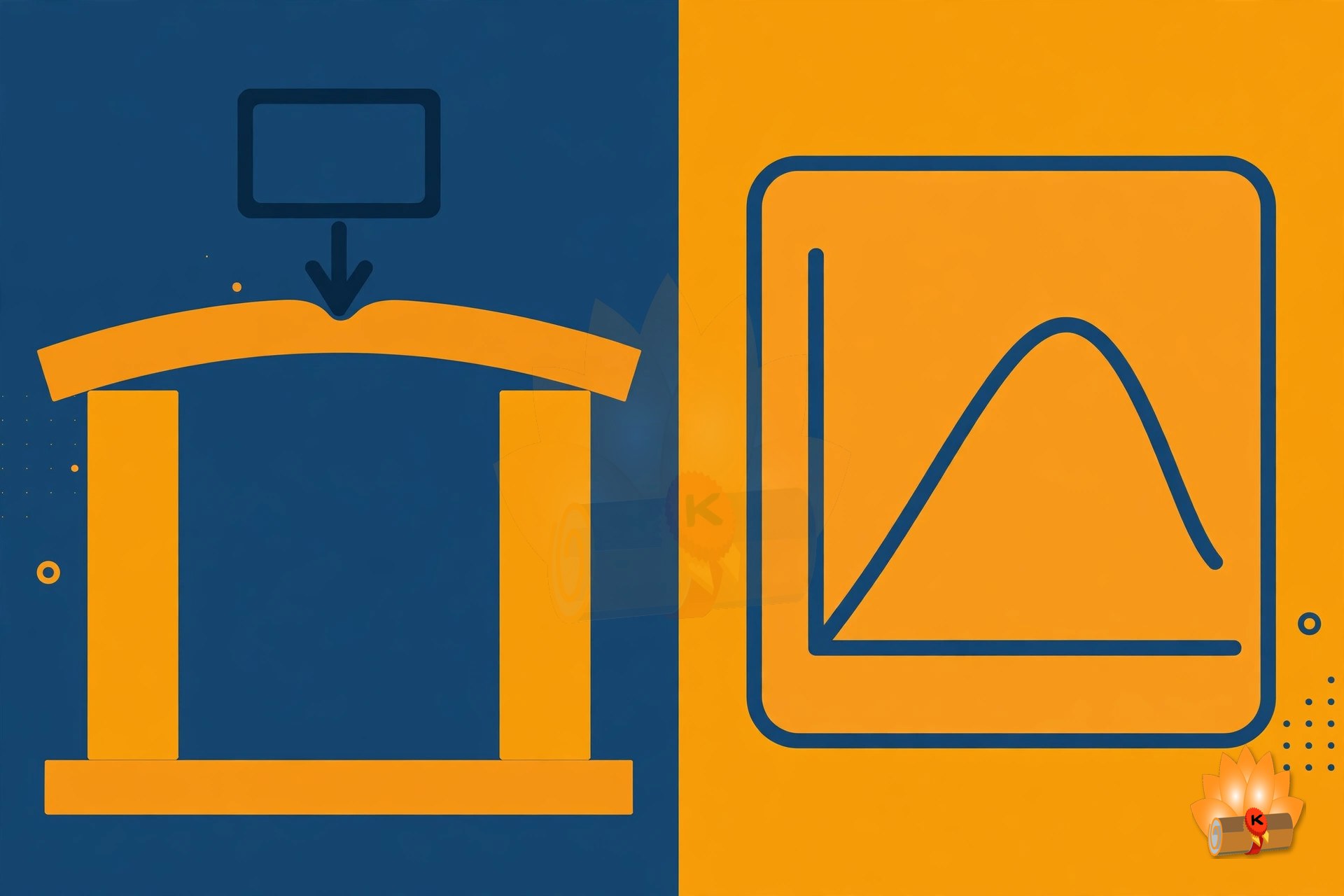
Mechanics of Material — stress and strain, shear force and bending moment, and how beams and columns behave under load. Read the post | PDF
Building Construction — the parts of a building, foundations, masonry, doors, windows, stairs and finishes. Read the post | PDF
Building Planning and Drawings — planning a building and drawing it: plans, elevations, sections, and CAD drawings. Read the post | PDF
Concrete Technology — cement, aggregates and water, making and testing concrete, and keeping its quality right. Read the post | PDF
Summer Internship-I & Student Centred Activities — 4 weeks of professional training after the 2nd semester (50 marks), plus student centred activities (50 marks). Read the post | PDF
4th Semester — 950 Marks, 20 Credits
| Code | Paper | Type | L – P | Credits | Internal | External | Total |
|---|---|---|---|---|---|---|---|
| 4.1 | Hydraulics | Theory | 2 – 0 | 2 | Theory 40 | Theory 60 (3 hrs) | 100 |
| 4.2 | Hydraulics Lab. | Practical | 0 – 2 | 1 | Practical 60 | Practical 40 (3 hrs) | 100 |
| 4.3 | Advance Surveying | Theory | 2 – 0 | 2 | Theory 40 | Theory 60 (3 hrs) | 100 |
| 4.4 | Advance Surveying Lab. | Practical | 0 – 4 | 2 | Practical 60 | Practical 40 (3 hrs) | 100 |
| 4.5 | Theory of Structure | Theory | 2 – 0 | 3 | Theory 40 | Theory 60 (3 hrs) | 100 |
| 4.6 | Design of Reinforced Cement Concrete Structures | Theory | 2 – 0 | 3 | Theory 40 | Theory 60 (3 hrs) | 100 |
| 4.7 | Reinforced Cement Concrete Structures Drawing | Practicum/Practical | 1 – 4 | 3 | Practical 60 | Practical 40 (3 hrs) | 100 |
| 4.8 | Water Resource Engineering | Theory | 2 – 0 | 2 | Theory 40 | Theory 60 (3 hrs) | 100 |
| 4.9 | Public Health Engineering | Practicum/Theory | 1 – 2 | 2 | 40 | Theory 60 (3 hrs) | 100 |
| 4.10 | Essence of Indian Knowledge and Tradition (Q) | Audit Course | 2 – 0 | — | 50* | — | — |
| — | Student Centred Activities (SCA) | Activity | 0 – 8 | — | 50 | — | 50 |
| 4th Semester Total | 20 | 470 | 480 | 950 | |||
The 4th-semester total of 950 marks counts only the subjects that carry a total: the 50 internal marks of Essence of Indian Knowledge and Tradition (Q) (4.10) are excluded — it is a qualifying audit course whose marks are not included in your percentage or division. The total also reconciles only if Public Health Engineering's (4.9) 40 internal marks count as Practical (its 60 external marks count as Theory) — the extracted scheme table's column alignment is garbled, so this split is inferred from the totals, not read directly. Please confirm with your own polytechnic for any local changes.
Hydraulics — pressure and fluid flow, pipes, open channels and pumps. Read the post | PDF
Advance Surveying — plane table and theodolite surveying, tacheometry, curve setting, total station, GPS and GIS. Read the post | PDF
Theory of Structure — stresses in columns, chimneys and dams, slope deflection and moment distribution, and trusses. Read the post | PDF
Design of Reinforced Cement Concrete Structures — limit state design of beams, slabs and columns, and pre-stressed concrete. Read the post | PDF
Reinforced Cement Concrete Structures Drawing — reinforcement details and bar bending schedules for slabs, beams, columns, footings and frames. Read the post | PDF
Water Resource Engineering — hydrology, crop water needs, irrigation, canals, dams and river training. Read the post | PDF
Public Health Engineering — water supply, purification and distribution, sewage and its treatment. Read the post | PDF
Essence of Indian Knowledge and Tradition (Audit Course, Q) — the Indian Knowledge System, modern science, yoga and holistic healthcare. You must appear and pass, but the marks are not included in your percentage or division. Read the post | PDF
3rd Year — 5th & 6th Semester
The 3rd year is the heart of the Civil Engineering diploma — roads and railways, soil and structures, estimating and project work. The 5th semester is worth 850 marks (20 credits) and the 6th semester 650 marks (20 credits). Both semesters are fully verified from the official 3rd-year curriculum, approved in the C.D.C. meeting held on 16.07.2026.
5th Semester — 850 Marks, 20 Credits
| Code | Paper | Type | L – P | Credits | Internal | External | Total |
|---|---|---|---|---|---|---|---|
| 5.1 | Transportation Engineering | Theory | 2 – 0 | 2 | Theory 40 | Theory 60 (3 hrs) | 100 |
| 5.7 | Transportation Engineering Lab. | Practical | 0 – 4 | 2 | Practical 60 | Practical 40 (3 hrs) | 100 |
| 5.2 | Estimating Costing and Valuation | Practicum/Theory | 1 – 4 | 3 | Theory 20 + Practical 20 | Theory 60 (3 hrs) | 100 |
| 5.3 | Geotechnical Engineering | Theory | 2 – 0 | 2 | Theory 40 | Theory 60 (3 hrs) | 100 |
| 5.8 | Geotechnical Engineering Lab. | Practical | 0 – 4 | 2 | Practical 60 | Practical 40 (3 hrs) | 100 |
| 5.4 | Design of Steel Structure and Drawing | Practicum/Theory | 1 – 4 | 3 | Theory 20 + Practical 20 | Theory 60 (3 hrs) | 100 |
| 5.5 | Program Elective-1: Green Building and Energy Conservation (Option A) or Repair and Maintenance of Building (Option B) | Theory | 2 – 0 | 2 | Theory 40 | Theory 60 (3 hrs) | 100 |
| 5.6 | Open Elective-01: Disaster Management (Option A) or Project Management (Option B) | Theory | 2 – 0 | 2 | 50 | — | NA |
| 5.9 | Indian Constitution (Q) | Audit Course | 2 – 0 | — | 50 | — | — |
| 5.10 | Summer Internship-II (4–6 weeks after IVth Sem.) | Internship | — | 2 | 60* | 40* (3 hrs) | 100* |
| — | Student Centred Activities (SCA) | Activity | 0 – 8 | — | 50 | — | 50 |
| 5th Semester Total | 20 | 430 | 420 | 850 | |||
The 5th-semester total of 850 marks counts only the subjects that carry a total: the 50 internal marks of Open Elective-01 (5.6) and the 50 internal marks of Indian Constitution (Q) (5.9) are both excluded from the semester total — both are marked total “NA” / “—” in the scheme, and Indian Constitution is a qualifying audit course whose marks are not included in your percentage or division.
Transportation Engineering — how highways and railways are planned, designed, built and maintained, from road alignment to track components. Read the post | PDF
Estimating Costing and Valuation — how to estimate and cost civil engineering works, do rate analysis, and use software for detailed estimates. Read the post | PDF
Geotechnical Engineering — soil properties and classification, permeability and shear strength, bearing capacity, and soil stabilisation. Read the post | PDF
Design of Steel Structure and Drawing — designing simple steel structural elements and drawing them, for supervising steel construction and fabrication. Read the post | PDF
Green Building and Energy Conservation (Program Elective-1, Option A) — green buildings, environmental impact assessment, and energy conservation policy and regulations. Choose this or Repair and Maintenance of Building. Read the post | PDF
Repair and Maintenance of Building (Program Elective-1, Option B) — maintenance techniques, causes of damage, repair materials, and retrofitting methods. Choose this or Green Building and Energy Conservation. Read the post | PDF
Disaster Management (Open Elective-01, Option A) — types of natural and man-made disasters, and pre- and post-disaster management. 50 marks, internal only — not counted in the semester total. Choose this or Project Management. Read the post | PDF
Project Management (Open Elective-01, Option B) — planning a project from goals to tasks, and the key skills of managing one. 50 marks, internal only — not counted in the semester total. Choose this or Disaster Management. Read the post | PDF
Indian Constitution (Audit Course, Q) — the history, principles and key institutions of the Indian Constitution. You must appear and pass, but the marks are not included in your percentage or division. Read the post | PDF
Summer Internship-II & Student Centred Activities — 4–6 weeks of professional training after the 4th semester (100 marks), plus student centred activities (50 marks). Read the post | PDF
6th Semester — 650 Marks, 20 Credits
| Code | Paper | Type | L – P | Credits | Internal | External | Total |
|---|---|---|---|---|---|---|---|
| 6.1 | Program Elective-02: Construction Management (Option A) or Advance Construction Technology (Option B) | Theory | 3 – 0 | 4 | Theory 40 | Theory 60 (3 hrs) | 100 |
| 6.2 | Entrepreneurship and Start-up | Theory | 2 – 0 | 2 | Theory 40 | Theory 60 (3 hrs) | 100 |
| 6.3 | Open Elective-02: Renewable Energy Technology (Option A) or Energy Conservation and Audit (Option B) | Theory | 2 – 0 | 2 | 50 | — | NA |
| 6.4 | Project (Industry Internship or Major Project) | Practical | 4 – 16 | 12 | Practical 240 | Practical 160 (3 hrs) | 400 |
| — | Student Centred Activities (SCA) | Activity | 0 – 8 | — | 50 | — | 50 |
| 6th Semester Total | 20 | 370 | 280 | 650 | |||
Please note — the 6th-semester total row as printed in the official PDF is inconsistent: it prints internal 310 + external 390 = 700, but the semester total printed is 650. The subject rows add up to internal 370 + external 280 = 650, which matches the printed total of 650. The total of 650 marks is therefore used here; the printed internal/external split (310/390) is unreliable and has not been silently “fixed”. There is a second inconsistency in the same semester: the 6.4 Project internal assessment criteria add up to 290 (Attendance 40 + Presentation-I 50 + Presentation-II 50 + Model & final Presentation 90 + Report Writing 60), not the printed total of 240 — the scheme's 240 internal / 160 external / 400 total is used in the Project pages. Please confirm with your own polytechnic for any local changes.
Construction Management (Program Elective-02, Option A) — contract management and labour laws, site layout, and scheduling construction activities. Choose this or Advance Construction Technology. Read the post | PDF
Advance Construction Technology (Program Elective-02, Option B) — advanced materials and concreting methods, and choosing the right method for a site. Choose this or Construction Management. Read the post | PDF
Entrepreneurship and Start-up — entrepreneurial spirit, and how to start and run your own enterprise. Read the post | PDF
Renewable Energy Technology (Open Elective-02, Option A) — solar, wind and bio-energy systems, and the present and future of world energy use. 50 marks, internal only — not counted in the semester total. Choose this or Energy Conservation and Audit. Read the post | PDF
Energy Conservation and Audit (Open Elective-02, Option B) — finding where energy is wasted in an industry and how to save it. 50 marks, internal only — not counted in the semester total. Choose this or Renewable Energy Technology. Read the post | PDF
Project & Student Centred Activities — the major project (industry internship or major project, 400 marks) plus student centred activities (50 marks). The project selected in the 5th semester is continued in the 6th semester. Read the post | PDF
Frequently Asked Questions
Which years are covered in this complete syllabus?
The 1st year (11 common subjects), the 3rd semester, the 4th semester, the 5th semester and the 6th semester — 42 subjects in one PDF. Every year of the diploma is covered; nothing is pending.
Is this the official BTEUP Civil Engineering syllabus for 2026-27?
The content is taken from the official BTEUP curriculum (NEP-2020). The 2nd-year syllabus (3rd and 4th semester) and the 3rd-year syllabus (5th and 6th semester) were approved by the Board of Technical Education, UP in its C.D.C. meeting held on 16.07.2026 — the 2nd year confirmed from the IIMT mirror of the official curriculum. The 1st-year scheme — 18 credits and 900 marks in the 1st semester, 22 credits and 1050 marks in the 2nd semester — is from the official 1st-year curriculum, approved in the C.D.C. meeting held on 16.07.2026. Please confirm with your own polytechnic for any local changes.
How do I download the complete syllabus PDF?
Use the Download button in the Download section below. A 15-second timer runs, and then the PDF downloads automatically. The PDF is free, and every subject is also available as a separate PDF from the tables above.
What if my semester is missing from this PDF?
No semester is missing: the 1st year and the 3rd, 4th, 5th and 6th semesters are all in this PDF — 42 subjects in total. If you still cannot find a subject, confirm its code and name with your own polytechnic and check the subject-wise tables above.
Where are the subject-wise posts for each subject?
Every subject in the tables above links to its own detailed post — with unit-wise topics, practicals, reference books and its own PDF. The 3rd, 4th, 5th and 6th semester overview posts are listed under Related Posts below.
Is this syllabus PDF free?
Yes. The complete PDF and every subject-wise PDF on this page are free to download — no sign-up, no payment. They are prepared by KAMALDNP Academy from the official BTEUP syllabus.
Related Posts
- BTEUP Civil 3rd Semester Syllabus 2026-27
- BTEUP Civil 4th Semester Syllabus 2026-27
- BTEUP Civil 5th Semester Syllabus 2026-27
- BTEUP Civil 6th Semester Syllabus 2026-27
- BTEUP Civil Complete Syllabus 2026-27 — 5th & 6th Semester (All Subjects)
Download the Complete Civil Engineering Syllabus PDF 2026-27
Download the complete BTEUP Civil Engineering syllabus 2026-27 — 1st year, 3rd, 4th, 5th and 6th semester, all 42 subjects in one 152-page PDF, with a contents page listing every subject's starting page.
Download the Complete Civil Engineering Syllabus PDF 2026-27
Source: BTEUP 1st Year common curriculum, 2nd Year Civil Engineering curriculum (confirmed from the IIMT mirror of the official curriculum, approved in C.D.C. meeting held on 16.07.2026) and 3rd Year Civil Engineering curriculum (folder2627), approved in C.D.C. meeting held on 16.07.2026. Topic lists follow the official syllabus; short explanations are the author's own plain-English summaries, not syllabus text. Please confirm with your own polytechnic for any local changes.

Comments (0)
Share your question or experience about this syllabus. Your comment will appear after review.
No comments yet — be the first to share your thoughts!